
keyword
variational autoencoder
A variational autoencoder is a deep generative model that learns to encode data into a low-dimensional probabilistic latent space and decode samples from that space to generate new, realistic data. Unlike standard autoencoders that map inputs to fixed, deterministic vectors, a variational autoencoder uses an encoder network to map input data to the statistical parameters of a continuous probability distribution, typically defined by a mean and variance. A decoder network then reconstructs the original input from latent vectors sampled from this distribution. The system is trained by optimizing the evidence lower bound, a joint objective that balances reconstruction accuracy against the Kullback-Leibler divergence between the learned latent distribution and a chosen prior distribution. This probabilistic structure prevents overfitting and ensures that the latent space remains smooth and continuous, enabling the generation of diverse, coherent synthetic data across domains such as images, audio, text, and molecular representations.
26 items
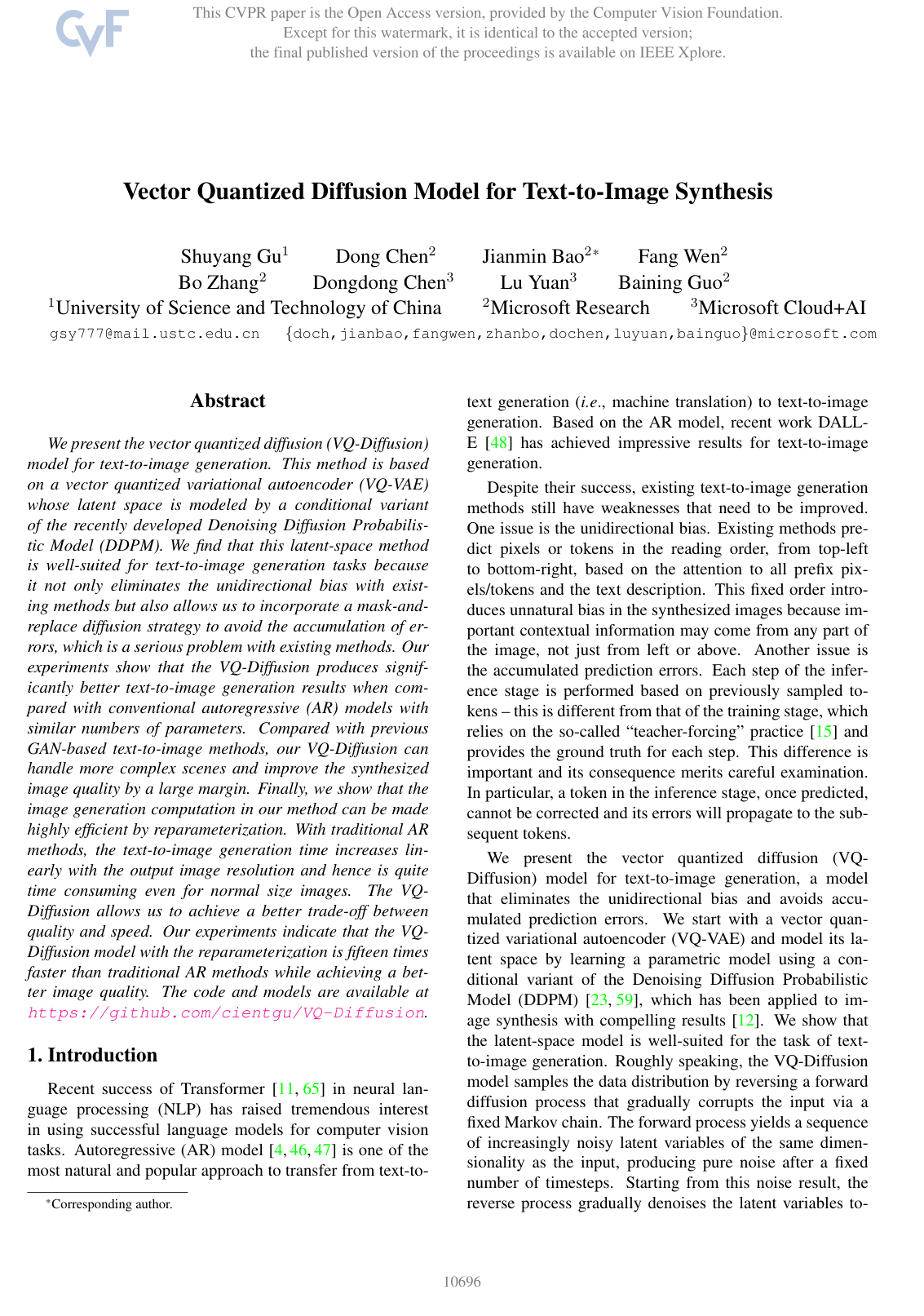
Vector Quantized Diffusion Model for Text-to-Image Synthesis
Shuyang Gu, Dong Chen, Jianmin Bao, Fang Wen, Bo Zhang, Dongdong Chen, Lu Yuan, Baining Guo
Why you should read this
Proposes a non-autoregressive text-to-image framework that models discrete VQ-VAE latent tokens with conditional diffusion, eliminating unidirectional bias and error accumulation while generating higher-quality images up to fifteen times faster than traditional autoregressive models.
We present the vector quantized diffusion (VQ-Diffusion) model for text-to-image generation. This method is based on a vector quantized variational autoencoder (VQ-VAE) whose latent space is modeled by a conditional variant of the recently developed Denoising Diffusion Probabilistic Model (DDPM). We find that this latent-space method is well-suited for text-to-image generation tasks because it not only eliminates the unidirectional bias with existing methods but also allows us to incorporate a mask-and-replace diffusion strategy to avoid the accumulation of errors, which is a serious problem with existing methods. Our experiments show that the VQ-Diffusion produces significantly better text-to-image generation results when compared with conventional autoregressive (AR) models with similar numbers of parameters. Compared with previous GAN-based text-to-image methods, our VQ-Diffusion can handle more complex scenes and improve the synthesized image quality by a large margin. Finally, we show that the image generation computation in our method can be made highly efficient by reparameterization. With traditional AR methods, the text-to-image generation time increases linearly with the output image resolution and hence is quite time consuming even for normal size images. The VQ-Diffusion allows us to achieve a better trade-off between quality and speed. Our experiments indicate that the VQ-Diffusion model with the reparameterization is fifteen times faster than traditional AR methods while achieving a better image quality. The code and models are available at https://github.com/cientgu/VQ-Diffusion.
Added
2026-10-04
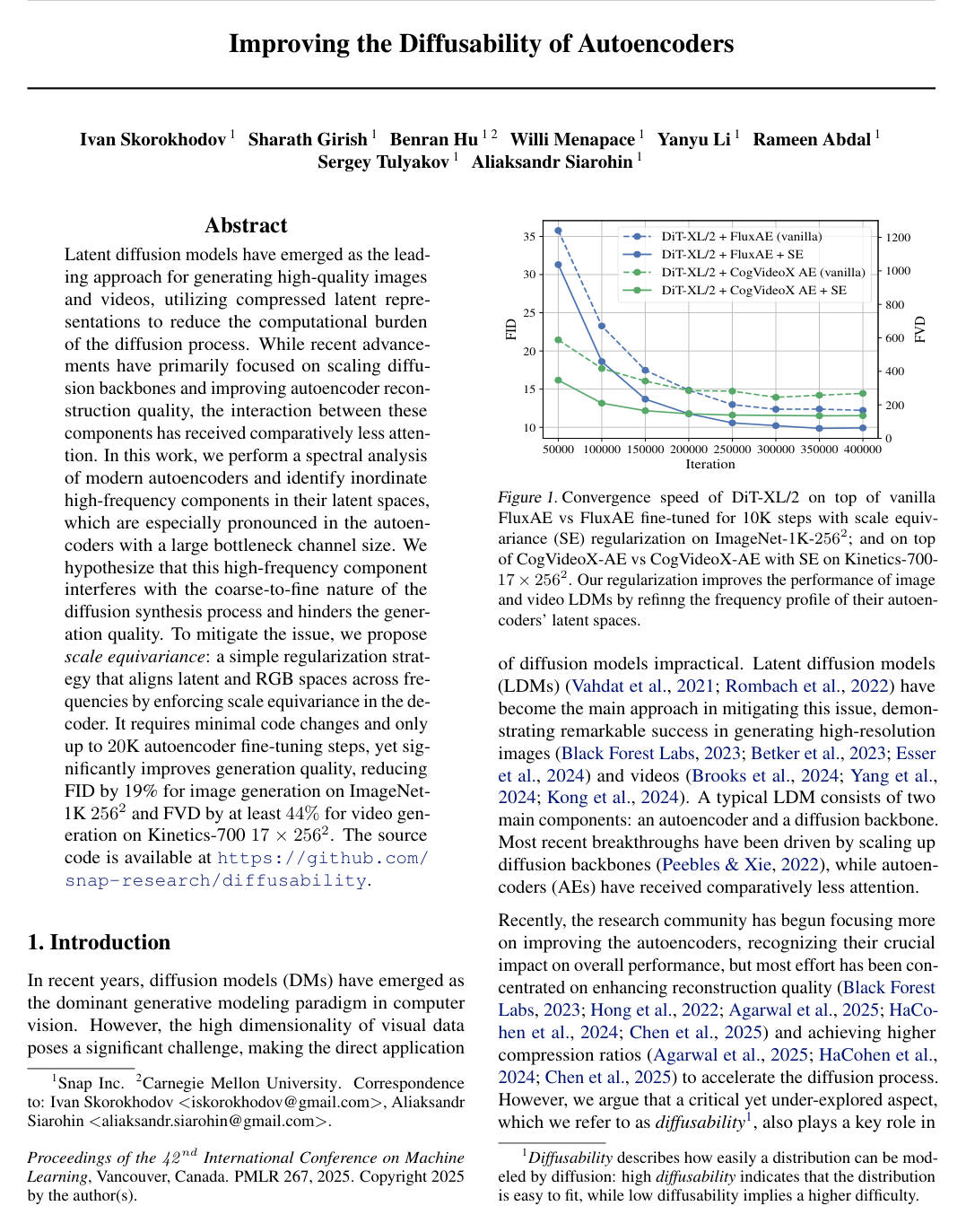
Improving the Diffusability of Autoencoders
Ivan Skorokhodov, Sharath Girish, Benran Hu, Willi Menapace, Yanyu Li, Rameen Abdal, Sergey Tulyakov, Aliaksandr Siarohin
Why you should read this
Proposes a scale-equivariant regularization strategy that aligns the frequency profiles of autoencoders with natural images to preserve coarse-to-fine synthesis, significantly boosting image and video generation quality in latent diffusion models with minimal fine-tuning.
Latent diffusion models have emerged as the leading approach for generating high-quality images and videos, utilizing compressed latent representations to reduce the computational burden of the diffusion process. While recent advancements have primarily focused on scaling diffusion backbones and improving autoencoder reconstruction quality, the interaction between these components has received comparatively less attention. In this work, we perform a spectral analysis of modern autoencoders and identify inordinate high-frequency components in their latent spaces, which are especially pronounced in the autoencoders with a large bottleneck channel size. We hypothesize that this high-frequency component interferes with the coarse-to-fine nature of the diffusion synthesis process and hinders the generation quality. To mitigate the issue, we propose scale equivariance: a simple regularization strategy that aligns latent and RGB spaces across frequencies by enforcing scale equivariance in the decoder. It requires minimal code changes and only up to 20K autoencoder fine-tuning steps, yet significantly improves generation quality, reducing FID by 19% for image generation on ImageNet-1K 256^2 and FVD by at least 44% for video generation on Kinetics-700 17 × 256^2. The source code is available at https://github.com/snap-research/diffusability.
Source
https://raw.githubusercontent.com/mlresearch/v267/main/assets/skorokhodov25a/skorokhodov25a.pdfAdded
2026-10-03
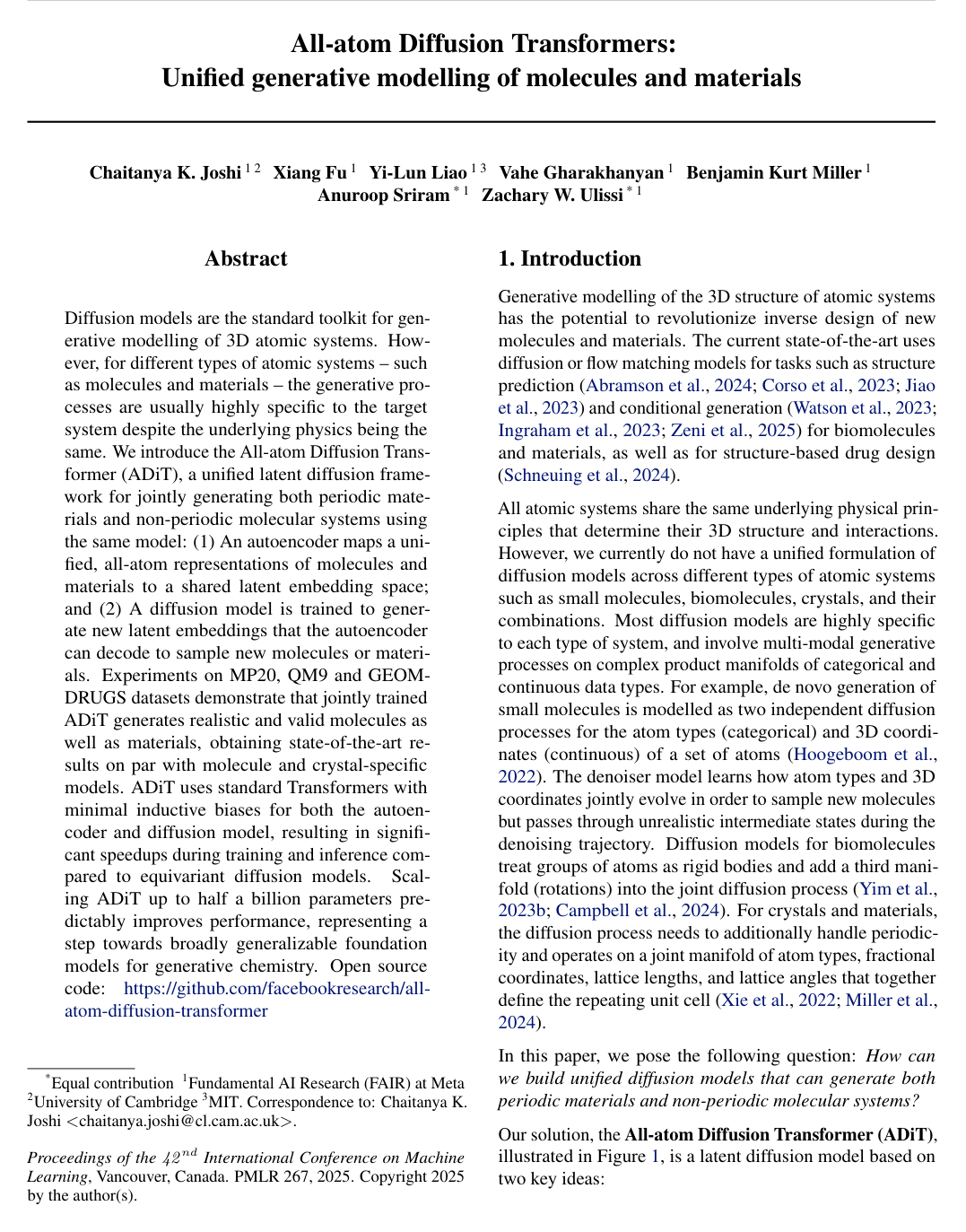
All-atom Diffusion Transformers: Unified generative modelling of molecules and materials
Chaitanya K. Joshi, Xiang Fu, Yi-Lun Liao, Vahe Gharakhanyan, Benjamin Kurt Miller, Anuroop Sriram, Zachary W. Ulissi
Why you should read this
Presents a unified latent diffusion framework that generates both periodic crystals and non-periodic molecules with a single standard Transformer architecture, achieving an order-of-magnitude faster sampling and state-of-the-art validity across chemical benchmarks.
Diffusion models are the standard toolkit for generative modelling of 3D atomic systems. However, for different types of atomic systems – such as molecules and materials – the generative processes are usually highly specific to the target system despite the underlying physics being the same. We introduce the All-atom Diffusion Transformer (ADiT), a unified latent diffusion framework for jointly generating both periodic materials and non-periodic molecular systems using the same model: (1) An autoencoder maps a unified, all-atom representations of molecules and materials to a shared latent embedding space; and (2) A diffusion model is trained to generate new latent embeddings that the autoencoder can decode to sample new molecules or materials. Experiments on MP20, QM9 and GEOM-DRUGS datasets demonstrate that jointly trained ADiT generates realistic and valid molecules as well as materials, obtaining state-of-the-art results on par with molecule and crystal-specific models. ADiT uses standard Transformers with minimal inductive biases for both the autoencoder and diffusion model, resulting in significant speedups during training and inference compared to equivariant diffusion models. Scaling ADiT up to half a billion parameters predictably improves performance, representing a step towards broadly generalizable foundation models for generative chemistry. Open source code: https://github.com/facebookresearch/all-atom-diffusion-transformer
Added
2026-10-03
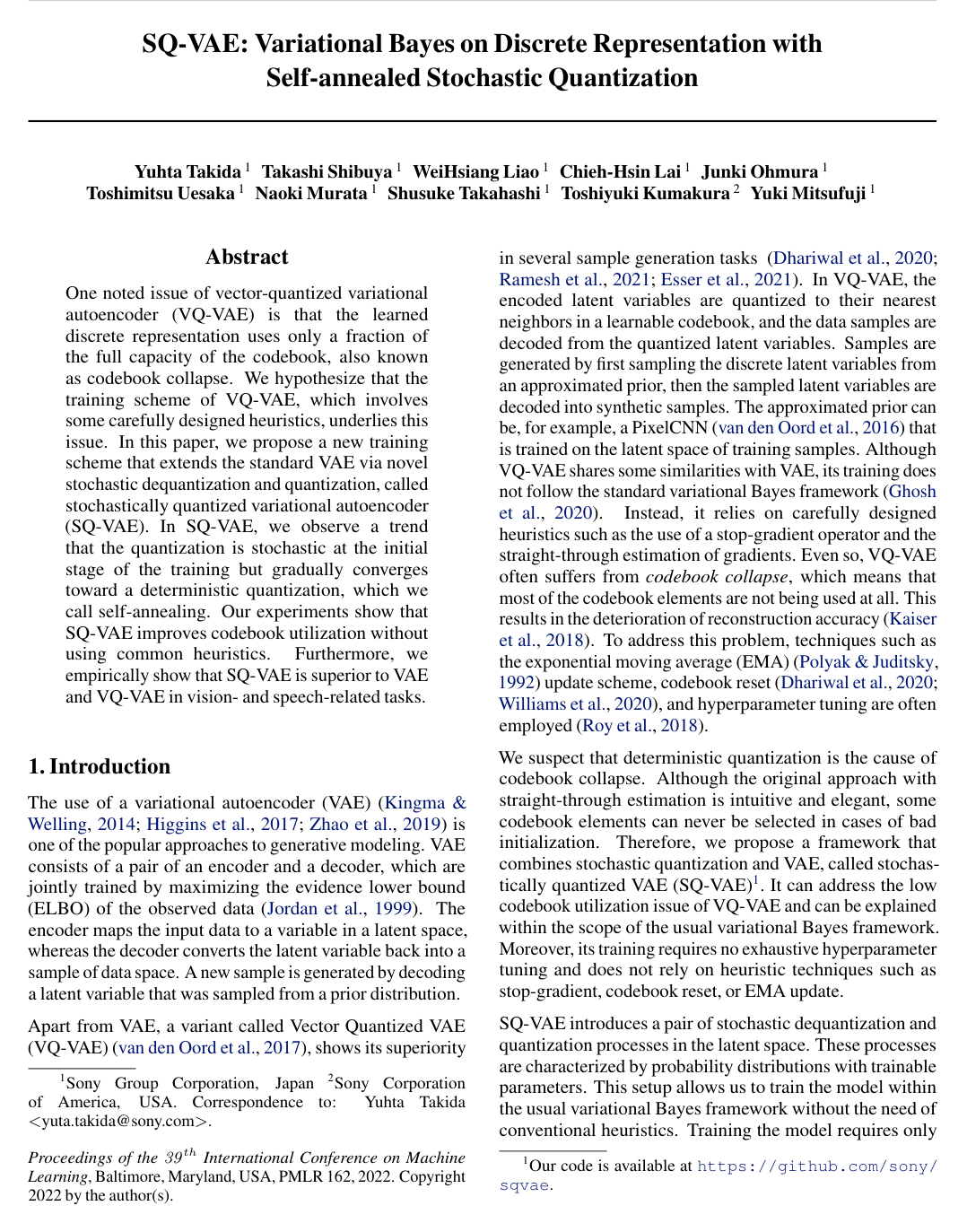
SQ-VAE: Variational Bayes on Discrete Representation with Self-annealed Stochastic Quantization
Yuhta Takida, Takashi Shibuya, Wei-Hsiang Liao, Chieh-Hsin Lai, Junki Ohmura, Toshimitsu Uesaka, Naoki Murata, Shusuke Takahashi, Toshiyuki Kumakura, Yuki Mitsufuji
Why you should read this
Proposes a principled variational Bayes framework for discrete latent representations that eliminates codebook collapse in VQ-VAEs through self-annealing stochastic quantization without relying on heuristic tricks.
One noted issue of vector-quantized variational autoencoder (VQ-VAE) is that the learned discrete representation uses only a fraction of the full capacity of the codebook, also known as codebook collapse. We hypothesize that the training scheme of VQ-VAE, which involves some carefully designed heuristics, underlies this issue. In this paper, we propose a new training scheme that extends the standard VAE via novel stochastic dequantization and quantization, called stochastically quantized variational autoencoder (SQ-VAE). In SQ-VAE, we observe a trend that the quantization is stochastic at the initial stage of the training but gradually converges toward a deterministic quantization, which we call self-annealing. Our experiments show that SQ-VAE improves codebook utilization without using common heuristics. Furthermore, we empirically show that SQ-VAE is superior to VAE and VQ-VAE in vision- and speech-related tasks.
Added
2026-10-02
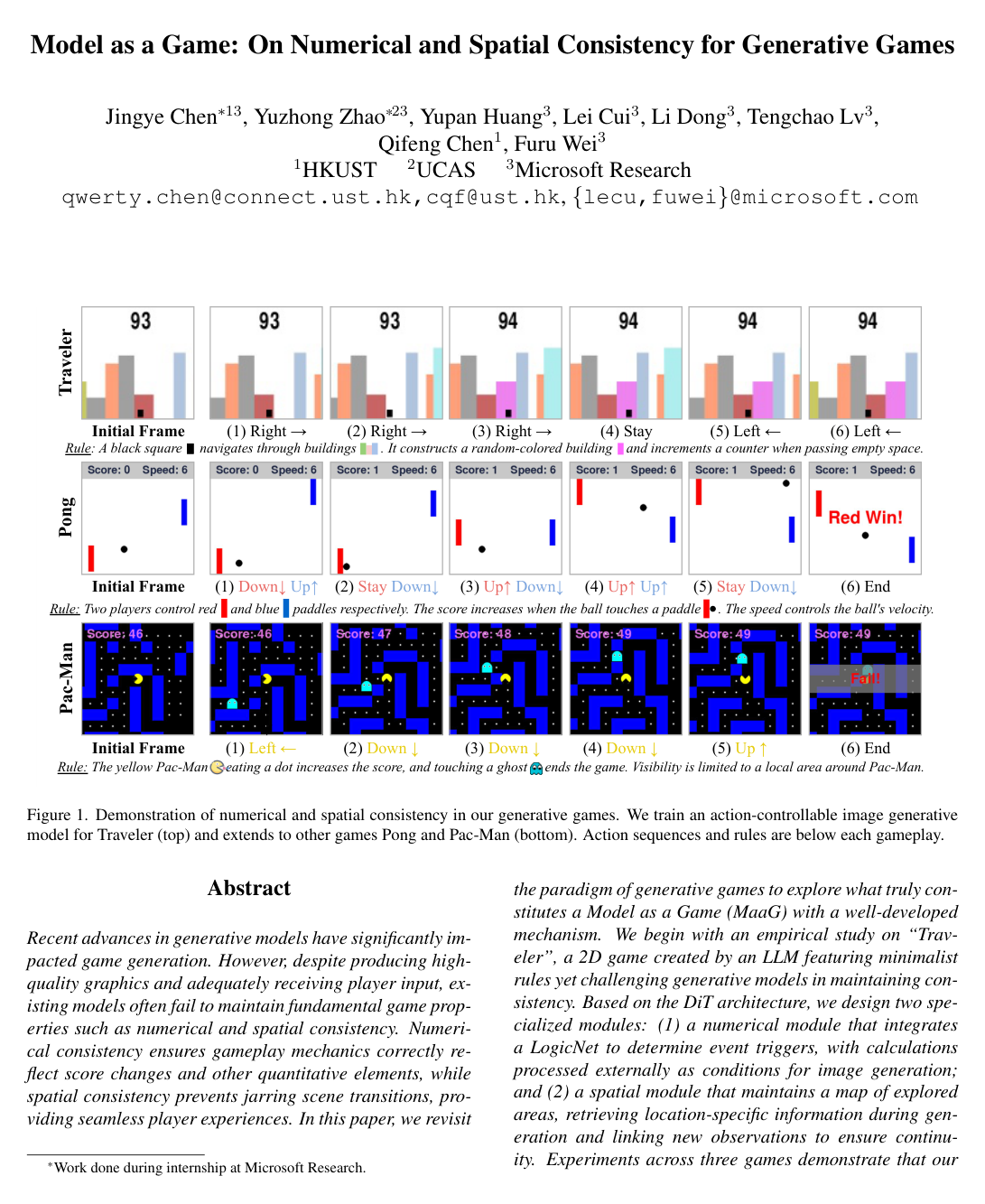
Model as a Game: On Numerical and Spatial Consistency for Generative Games
Jingye Chen, Yuzhong Zhao, Yupan Huang, Lei Cui, Li Dong, Tengchao Lv, Qifeng Chen, Furu Wei
Why you should read this
Develops specialized numerical and spatial consistency modules for Diffusion Transformers, solving persistent score-tracking and environment-continuity failures in generative game systems with minimal latency overhead.
Recent advances in generative models have significantly impacted game generation. However, despite producing high-quality graphics and adequately receiving player input, existing models often fail to maintain fundamental game properties such as numerical and spatial consistency. Numerical consistency ensures gameplay mechanics correctly reflect score changes and other quantitative elements, while spatial consistency prevents jarring scene transitions, providing seamless player experiences. In this paper, we revisit the paradigm of generative games to explore what truly constitutes a Model as a Game (MaaG) with a well-developed mechanism. We begin with an empirical study on ``Traveler'', a 2D game created by an LLM featuring minimalist rules yet challenging generative models in maintaining consistency. Based on the DiT architecture, we design two specialized modules: (1) a numerical module that integrates a LogicNet to determine event triggers, with calculations processed externally as conditions for image generation; and (2) a spatial module that maintains a map of explored areas, retrieving location-specific information during generation and linking new observations to ensure continuity. Experiments across three games demonstrate that our integrated modules significantly enhance performance on consistency metrics compared to baselines, while incurring minimal time overhead during inference.
Added
2026-09-30
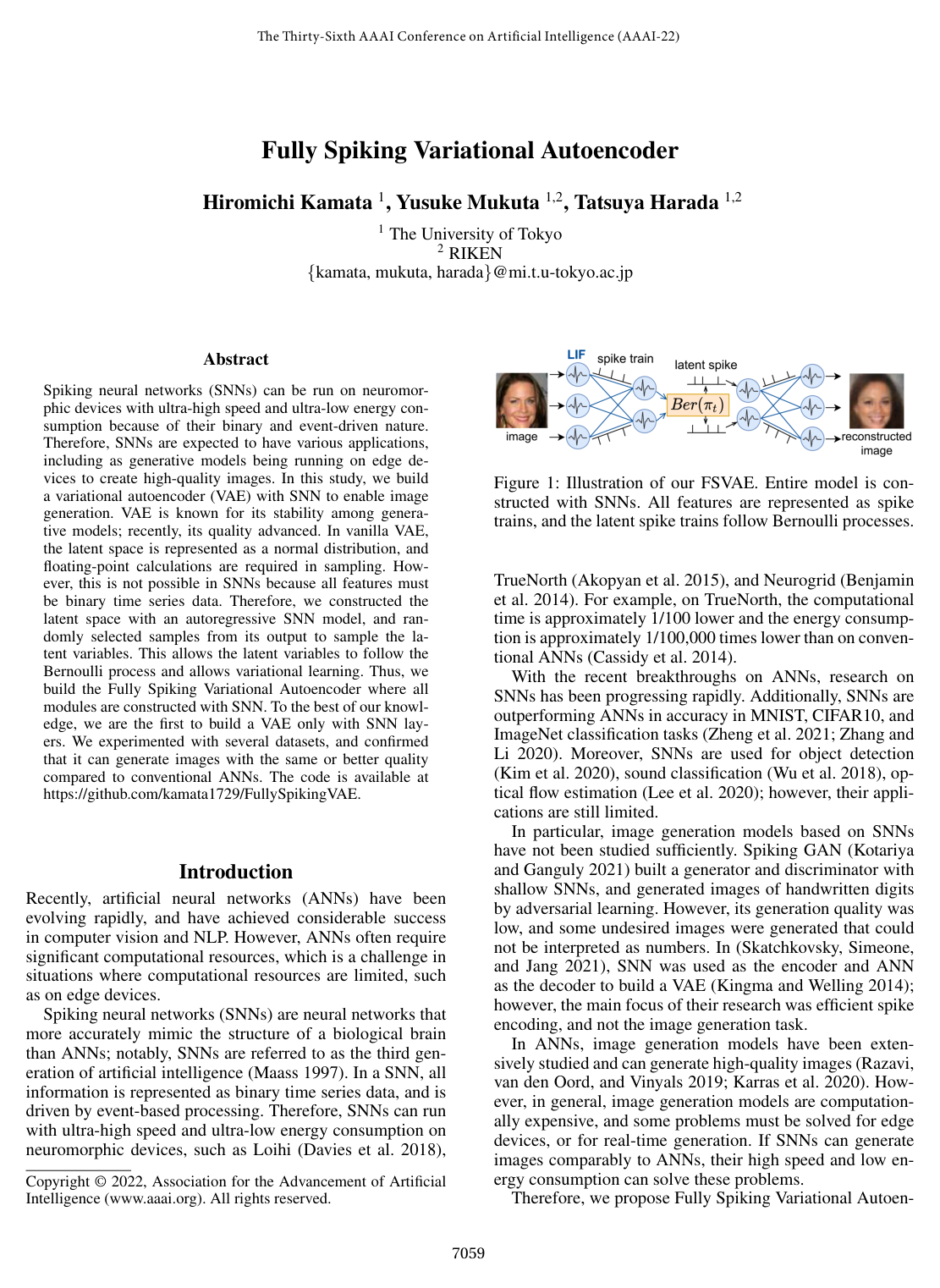
Fully Spiking Variational Autoencoder
Hiromichi Kamata, Yusuke Mukuta, Tatsuya Harada
Why you should read this
Proposes the first fully spiking variational autoencoder by modeling the latent space with autoregressive Bernoulli processes, enabling energy-efficient neuromorphic image generation that matches or exceeds the quality of conventional artificial neural networks.
Spiking neural networks (SNNs) can be run on neuromorphic devices with ultra-high speed and ultra-low energy consumption because of their binary and event-driven nature. Therefore, SNNs are expected to have various applications, including as generative models being running on edge devices to create high-quality images. In this study, we build a variational autoencoder (VAE) with SNN to enable image generation. VAE is known for its stability among generative models; recently, its quality advanced. In vanilla VAE, the latent space is represented as a normal distribution, and floating-point calculations are required in sampling. However, this is not possible in SNNs because all features must be binary time series data. Therefore, we constructed the latent space with an autoregressive SNN model, and randomly selected samples from its output to sample the latent variables. This allows the latent variables to follow the Bernoulli process and allows variational learning. Thus, we build the Fully Spiking Variational Autoencoder where all modules are constructed with SNN. To the best of our knowledge, we are the first to build a VAE only with SNN layers. We experimented with several datasets, and confirmed that it can generate images with the same or better quality compared to conventional ANNs. The code is available at https://github.com/kamata1729/FullySpikingVAE.
Added
2026-09-26
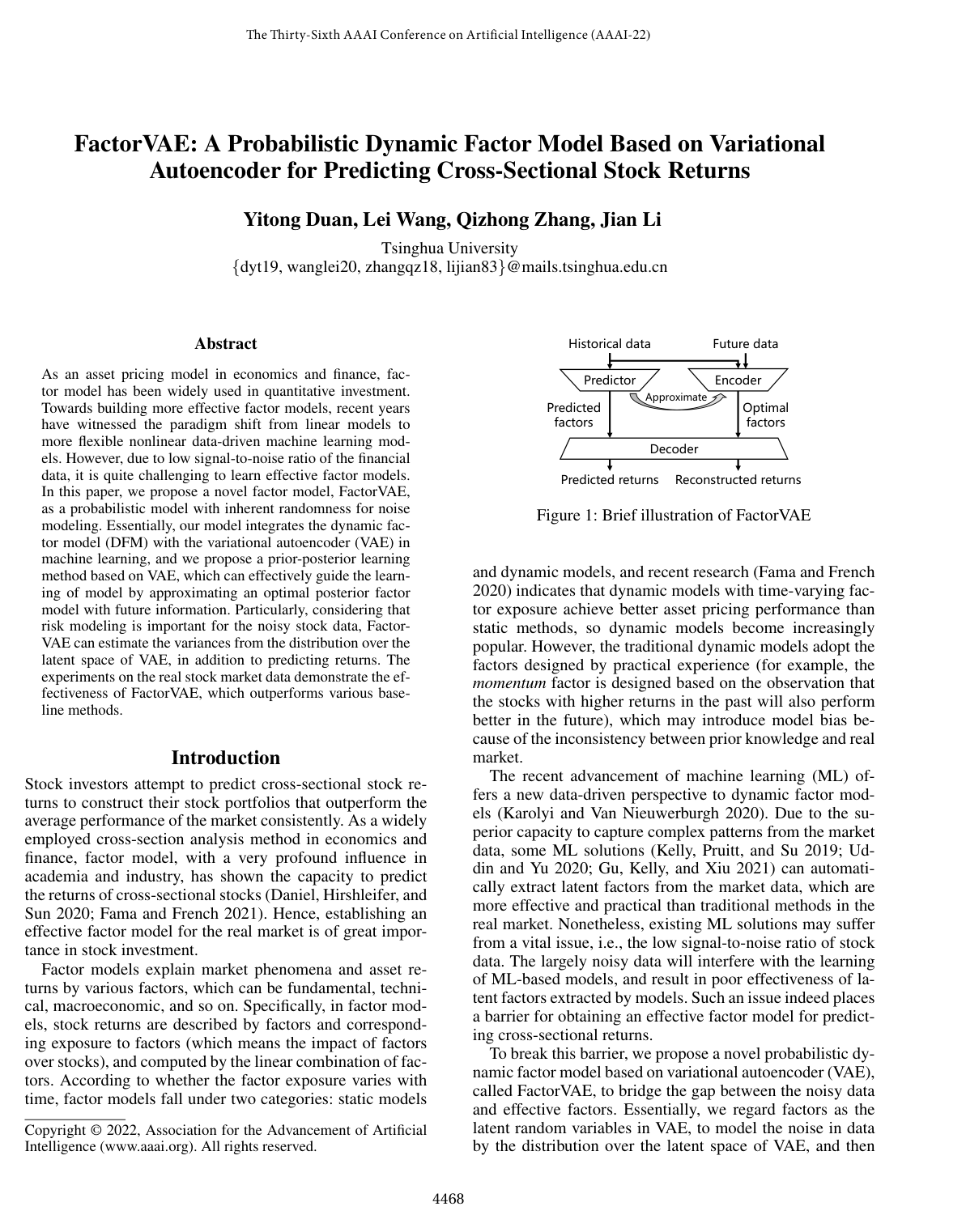
FactorVAE: A Probabilistic Dynamic Factor Model Based on Variational Autoencoder for Predicting Cross-Sectional Stock Returns
Yitong Duan, Lei Wang, Qizhong Zhang, Jian Li
Why you should read this
Proposes FactorVAE, a dynamic factor model that integrates variational autoencoders with a prior-posterior learning strategy to extract predictive latent factors and estimate risk from noisy stock market data.
As an asset pricing model in economics and finance, factor model has been widely used in quantitative investment. Towards building more effective factor models, recent years have witnessed the paradigm shift from linear models to more flexible nonlinear data-driven machine learning models. However, due to low signal-to-noise ratio of the financial data, it is quite challenging to learn effective factor models. In this paper, we propose a novel factor model, FactorVAE, as a probabilistic model with inherent randomness for noise modeling. Essentially, our model integrates the dynamic factor model (DFM) with the variational autoencoder (VAE) in machine learning, and we propose a prior-posterior learning method based on VAE, which can effectively guide the learning of model by approximating an optimal posterior factor model with future information. Particularly, considering that risk modeling is important for the noisy stock data, FactorVAE can estimate the variances from the distribution over the latent space of VAE, in addition to predicting returns. The experiments on the real stock market data demonstrate the effectiveness of FactorVAE, which outperforms various baseline methods.
Added
2026-09-26
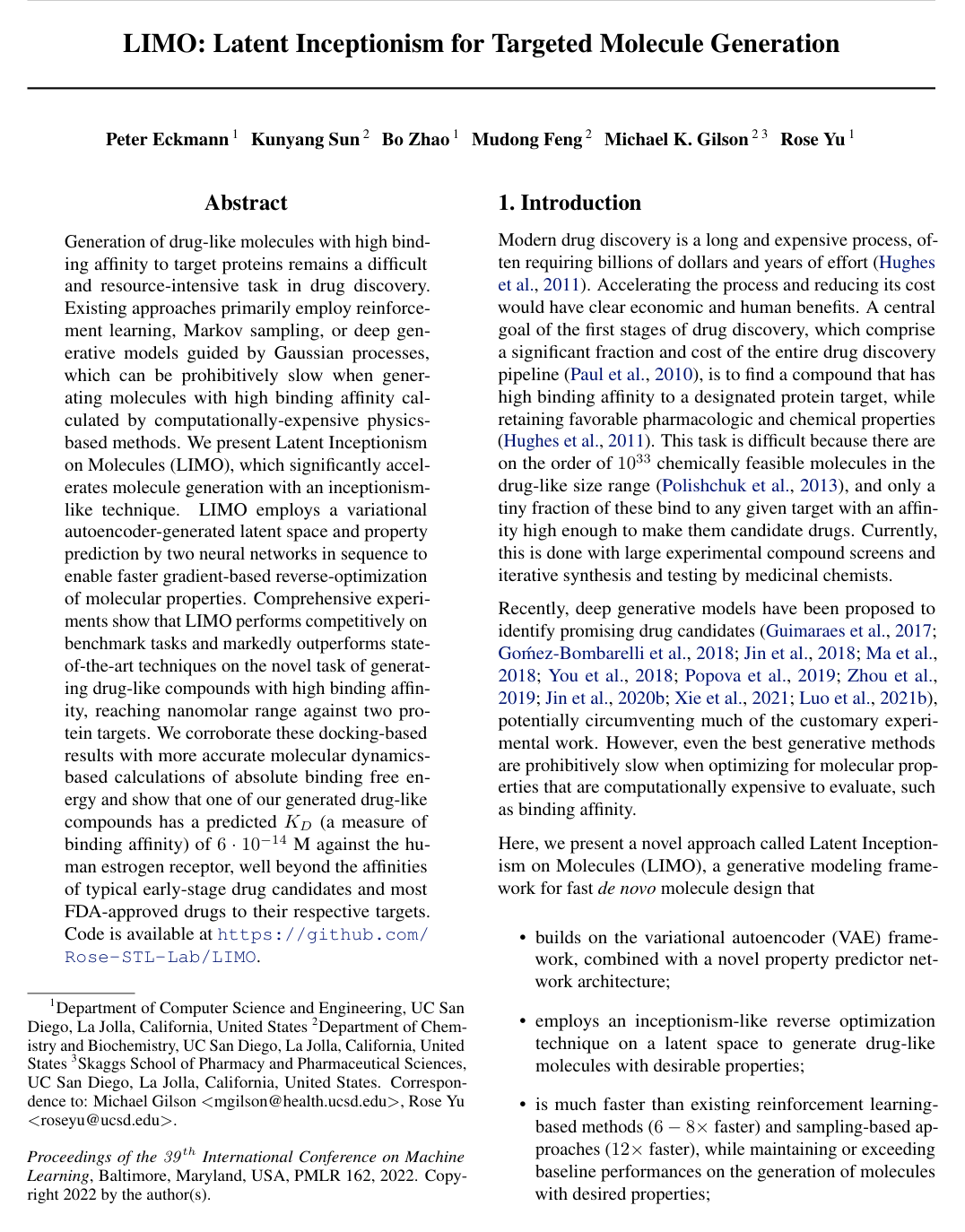
LIMO: Latent Inceptionism for Targeted Molecule Generation
Peter Eckmann, Kunyang Sun, Bo Zhao, Mudong Feng, Michael K. Gilson, Rose Yu
Why you should read this
Presents a gradient-based reverse-optimization framework that pairs a variational autoencoder with sequential property predictors to rapidly generate drug-like molecules with high target binding affinities at a fraction of the computational cost of reinforcement learning methods.
Generation of drug-like molecules with high binding affinity to target proteins remains a difficult and resource-intensive task in drug discovery. Existing approaches primarily employ reinforcement learning, Markov sampling, or deep generative models guided by Gaussian processes, which can be prohibitively slow when generating molecules with high binding affinity calculated by computationally-expensive physics-based methods. We present Latent Inceptionism on Molecules (LIMO), which significantly accelerates molecule generation with an inceptionism-like technique. LIMO employs a variational autoencoder-generated latent space and property prediction by two neural networks in sequence to enable faster gradient-based reverse-optimization of molecular properties. Comprehensive experiments show that LIMO performs competitively on benchmark tasks and markedly outperforms state-of-the-art techniques on the novel task of generating drug-like compounds with high binding affinity, reaching nanomolar range against two protein targets. We corroborate these docking-based results with more accurate molecular dynamics-based calculations of absolute binding free energy and show that one of our generated drug-like compounds has a predicted KD (a measure of binding affinity) of 6 · 10−14 M against the human estrogen receptor, well beyond the affinities of typical early-stage drug candidates and most FDA-approved drugs to their respective targets. Code is available at https://github.com/Rose-STL-Lab/LIMO.
Added
2026-09-26
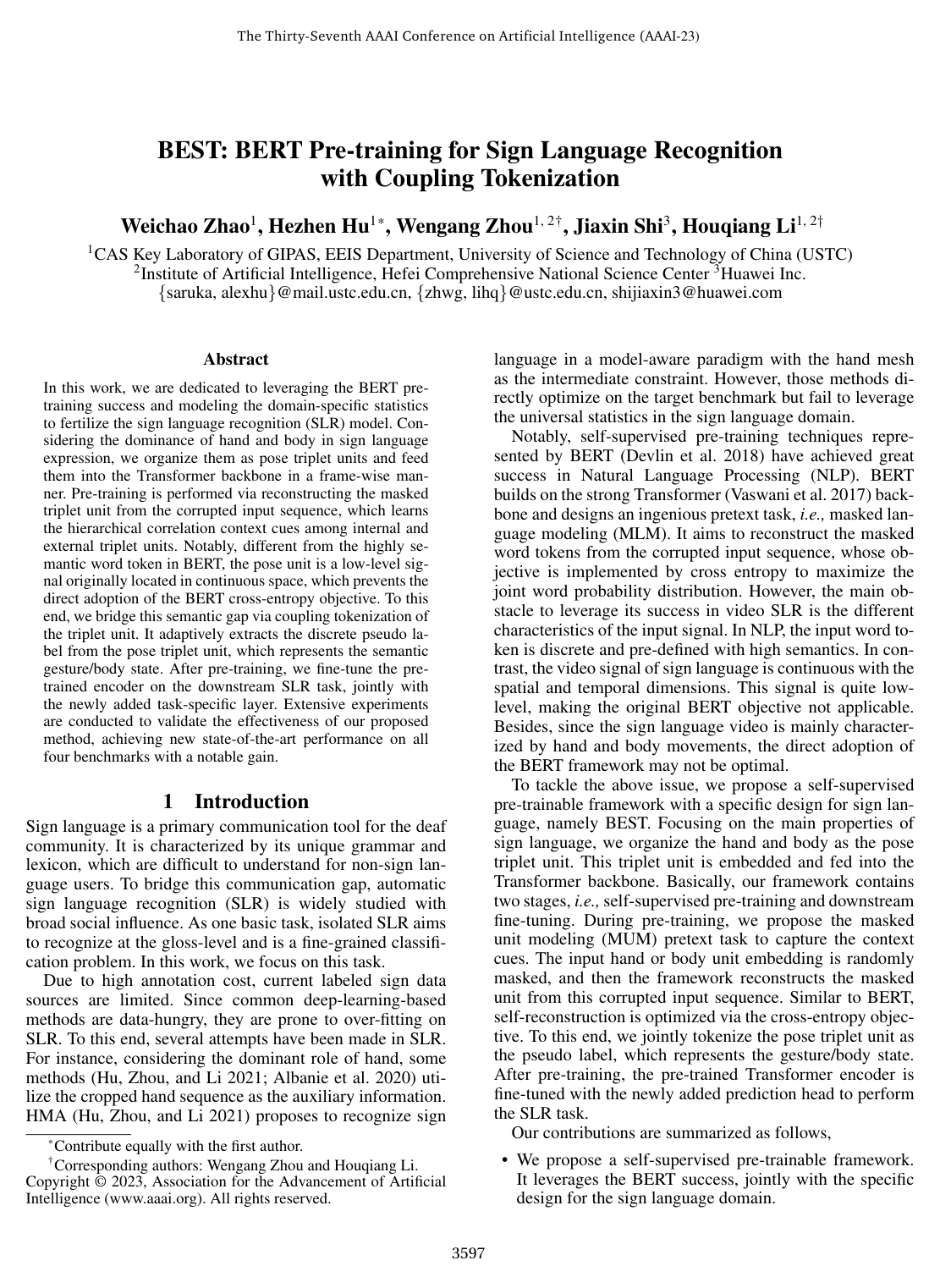
BEST: BERT Pre-training for Sign Language Recognition with Coupling Tokenization
Weichao Zhao, Hezhen Hu, Wengang Zhou, Jiaxin Shi, Houqiang Li
Why you should read this
Proposes a self-supervised BERT pre-training framework for sign language recognition that discretizes continuous hand and body pose triplets via coupling tokenization to enable masked unit modeling, achieving state-of-the-art results across four benchmarks.
In this work, we are dedicated to leveraging the BERT pre-training success and modeling the domain-specific statistics to fertilize the sign language recognition (SLR) model. Considering the dominance of hand and body in sign language expression, we organize them as pose triplet units and feed them into the Transformer backbone in a frame-wise manner. Pre-training is performed via reconstructing the masked triplet unit from the corrupted input sequence, which learns the hierarchical correlation context cues among internal and external triplet units. Notably, different from the highly semantic word token in BERT, the pose unit is a low-level signal originally located in continuous space, which prevents the direct adoption of the BERT cross-entropy objective. To this end, we bridge this semantic gap via coupling tokenization of the triplet unit. It adaptively extracts the discrete pseudo label from the pose triplet unit, which represents the semantic gesture/body state. After pre-training, we fine-tune the pre-trained encoder on the downstream SLR task, jointly with the newly added task-specific layer. Extensive experiments are conducted to validate the effectiveness of our proposed method, achieving new state-of-the-art performance on all four benchmarks with a notable gain.
Added
2026-09-26
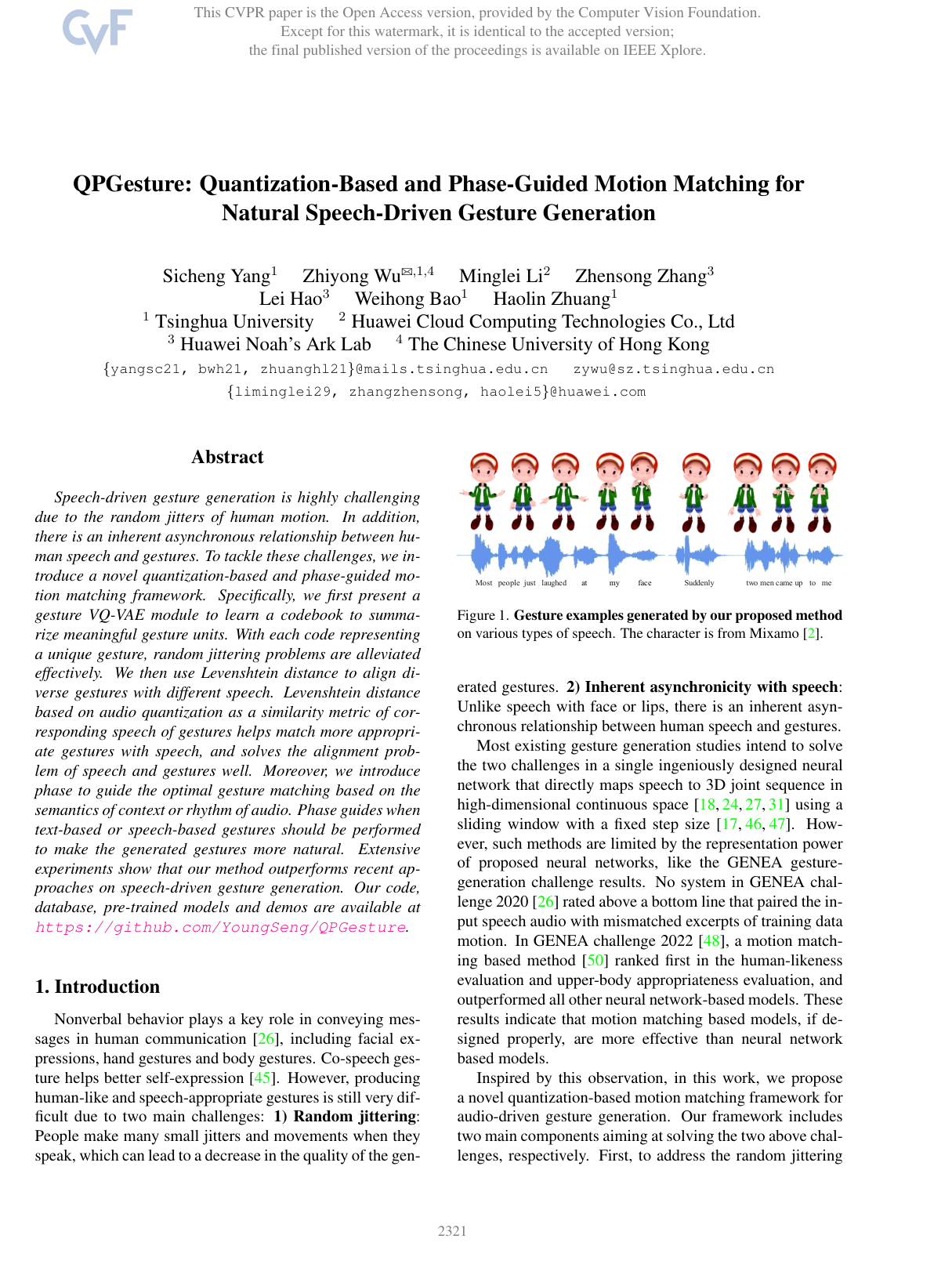
QPGesture: Quantization-Based and Phase-Guided Motion Matching for Natural Speech-Driven Gesture Generation
Sicheng Yang, Zhiyong Wu, Minglei Li, Zhensong Zhang, Lei Hao, Weihong Bao, Haolin Zhuang
Why you should read this
Proposes a speech-driven gesture generation framework that combines a pose VQ-VAE, Levenshtein distance audio alignment, and motion phase guidance to eliminate random jitters and solve speech-gesture asynchrony.
Speech-driven gesture generation is highly challenging due to the random jitters of human motion. In addition, there is an inherent asynchronous relationship between human speech and gestures. To tackle these challenges, we introduce a novel quantization-based and phase-guided motion matching framework. Specifically, we first present a gesture VQ-VAE module to learn a codebook to summarize meaningful gesture units. With each code representing a unique gesture, random jittering problems are alleviated effectively. We then use Levenshtein distance to align diverse gestures with different speech. Levenshtein distance based on audio quantization as a similarity metric of corresponding speech of gestures helps match more appropriate gestures with speech, and solves the alignment problem of speech and gestures well. Moreover, we introduce phase to guide the optimal gesture matching based on the semantics of context or rhythm of audio. Phase guides when text-based or speech-based gestures should be performed to make the generated gestures more natural. Extensive experiments show that our method outperforms recent approaches on speech-driven gesture generation. Our code, database, pre-trained models and demos are available at https://github.com/YoungSeng/QPGesture.
Added
2026-09-26
Pyro: Deep Universal Probabilistic Programming
Eli Bingham, Jonathan P. Chen, Martin Jankowiak, Fritz Obermeyer, Neeraj Pradhan, Theofanis Karaletsos, Rohit Singh, Paul Szerlip, Paul Horsfall, Noah D. Goodman
Why you should read this
Presents Pyro, a universal probabilistic programming language built on PyTorch that couples deep neural networks with stochastic variational inference to scale expressive Bayesian models to high-dimensional datasets.
Pyro is a probabilistic programming language built on Python as a platform for developing advanced probabilistic models in AI research. To scale to large datasets and high-dimensional models, Pyro uses stochastic variational inference algorithms and probability distributions built on top of PyTorch, a modern GPU-accelerated deep learning framework. To accommodate complex or model-specific algorithmic behavior, Pyro leverages Poutine, a library of composable building blocks for modifying the behavior of probabilistic programs.
Added
2026-09-25
GANomaly: Semi-Supervised Anomaly Detection via Adversarial Training
Samet Akcay, Amir Atapour-Abarghouei, Toby P. Breckon
Why you should read this
Presents an encoder-decoder-encoder conditional generative adversarial network that identifies unseen visual anomalies by measuring reconstruction discrepancies across both image and latent feature spaces.
Anomaly detection is a classical problem in computer vision, namely the determination of the normal from the abnormal when datasets are highly biased towards one class (normal) due to the insufficient sample size of the other class (abnormal). While this can be addressed as a supervised learning problem, a significantly more challenging problem is that of detecting the unknown/unseen anomaly case that takes us instead into the space of a one-class, semi-supervised learning paradigm. We introduce such a novel anomaly detection model, by using a conditional generative adversarial network that jointly learns the generation of high-dimensional image space and the inference of latent space. Employing encoder-decoder-encoder sub-networks in the generator network enables the model to map the input image to a lower dimension vector, which is then used to reconstruct the generated output image. The use of the additional encoder network maps this generated image to its latent representation. Minimizing the distance between these images and the latent vectors during training aids in learning the data distribution for the normal samples. As a result, a larger distance metric from this learned data distribution at inference time is indicative of an outlier from that distribution - an anomaly. Experimentation over several benchmark datasets, from varying domains, shows the model efficacy and superiority over previous state-of-the-art approaches.
Added
2026-09-24
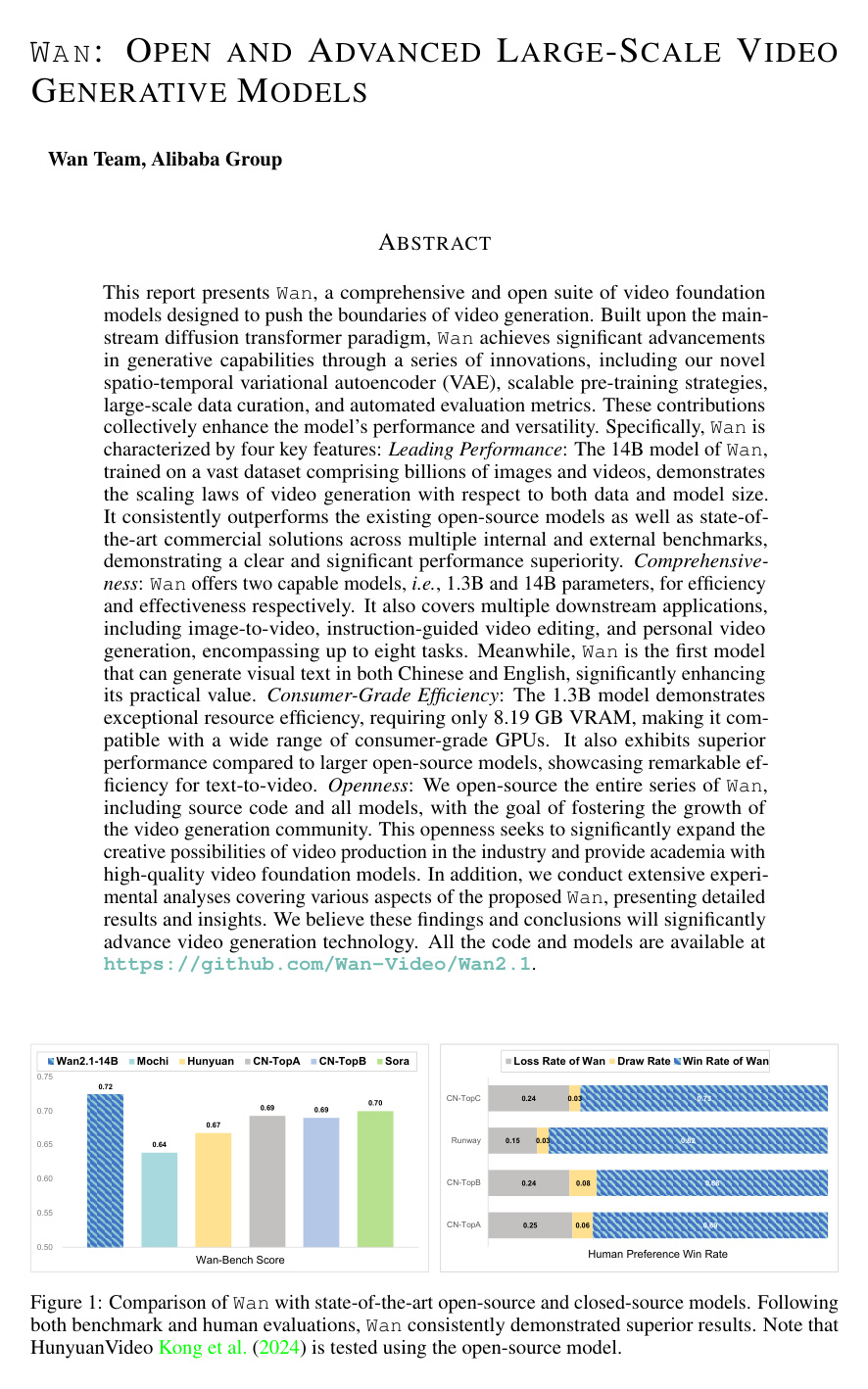
Wan: Open and Advanced Large-Scale Video Generative Models
Ang Wang, Baole Ai, Bin Wen, Chaojie Mao, Chen-Wei Xie, Di Chen, Feiwu Yu, Haiming Zhao, Jianxiao Yang, Jianyuan Zeng, Jiayu Wang, Jingfeng Zhang, Jingren Zhou, Jinkai Wang, Jixuan Chen, Kai Zhu, Kang Zhao, Keyu Yan, Lianghua Huang, Xiaofeng Meng, Ningying Zhang, Pandeng Li, Ping Wu, Ruihang Chu, Rui Feng, Shiwei Zhang, Siyang Sun, Tao Fang, Tianxing Wang, T. Gui, Tingyu Weng, Tong Shen, Wei Lin, Wei Wang, Wen-Chao Zhou, Wente Wang, Wen Shen, Wenyuan Yu, Xianzhong Shi, Xiaomin Huang, Xin Xu, Yan Kou, Yan-Mei Lv, Yifei Li, Yi-Jing Liu, Yiming Wang, Yingya Zhang, Yitong Huang, Yong Li, You Wu, Yu Liu, Yulin Pan, Yun Zheng, Yuntao Hong, Yupeng Shi, Yutong Feng, Zeyinzi Jiang, Zhen Han, Zhi-Fan Wu, Ziyu Liu
Why you should read this
Presents an open-source suite of diffusion transformer video foundation models scaling up to 14 billion parameters that outperforms leading commercial systems while providing a lightweight variant that runs on consumer GPUs with under 8.2 GB of VRAM.
This report presents Wan, a comprehensive and open suite of video foundation models designed to push the boundaries of video generation. Built upon the mainstream diffusion transformer paradigm, Wan achieves significant advancements in generative capabilities through a series of innovations, including our novel VAE, scalable pre-training strategies, large-scale data curation, and automated evaluation metrics. These contributions collectively enhance the model's performance and versatility. Specifically, Wan is characterized by four key features: Leading Performance: The 14B model of Wan, trained on a vast dataset comprising billions of images and videos, demonstrates the scaling laws of video generation with respect to both data and model size. It consistently outperforms the existing open-source models as well as state-of-the-art commercial solutions across multiple internal and external benchmarks, demonstrating a clear and significant performance superiority. Comprehensiveness: Wan offers two capable models, i.e., 1.3B and 14B parameters, for efficiency and effectiveness respectively. It also covers multiple downstream applications, including image-to-video, instruction-guided video editing, and personal video generation, encompassing up to eight tasks. Consumer-Grade Efficiency: The 1.3B model demonstrates exceptional resource efficiency, requiring only 8.19 GB VRAM, making it compatible with a wide range of consumer-grade GPUs. Openness: We open-source the entire series of Wan, including source code and all models, with the goal of fostering the growth of the video generation community. This openness seeks to significantly expand the creative possibilities of video production in the industry and provide academia with high-quality video foundation models. All the code and models are available at this https URL.
Added
2026-09-24
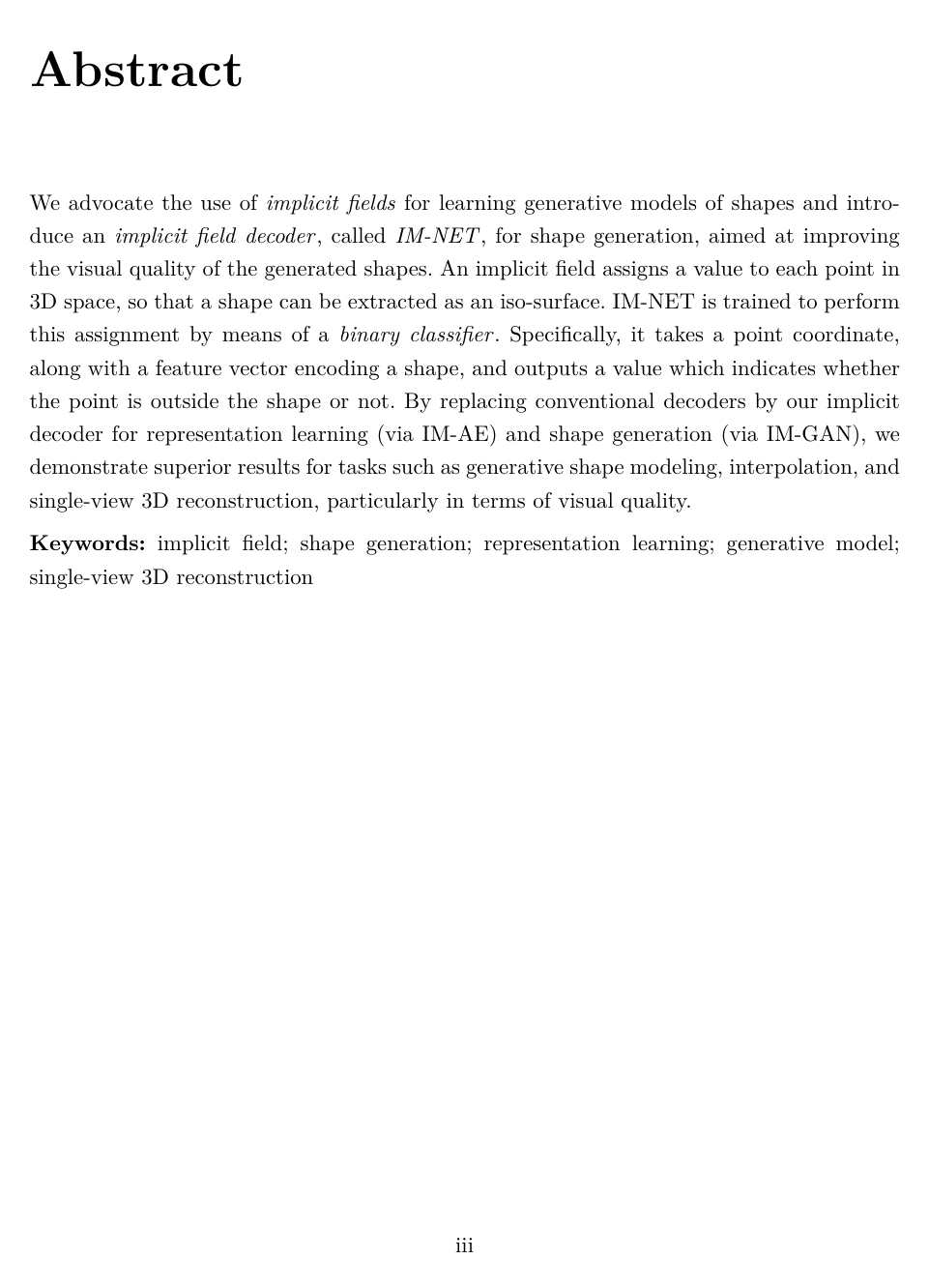
Learning Implicit Fields for Generative Shape Modeling
Zhiqin Chen, Hao Zhang
Why you should read this
Introduces IM-NET, an implicit field decoder that learns continuous 3D shape representations through point classification, enabling high-resolution shape generation, interpolation, and single-view reconstruction without the resolution constraints of conventional decoders.
We advocate the use of implicit fields for learning generative models of shapes and introduce an implicit field decoder, called IM-NET, for shape generation, aimed at improving the visual quality of the generated shapes. An implicit field assigns a value to each point in 3D space, so that a shape can be extracted as an iso-surface. IM-NET is trained to perform this assignment by means of a binary classifier. Specifically, it takes a point coordinate, along with a feature vector encoding a shape, and outputs a value which indicates whether the point is outside the shape or not. By replacing conventional decoders by our implicit decoder for representation learning (via IM-AE) and shape generation (via IM-GAN), we demonstrate superior results for tasks such as generative shape modeling, interpolation, and single-view 3D reconstruction, particularly in terms of visual quality. Code and supplementary material are available at this https URL.
Added
2026-09-18
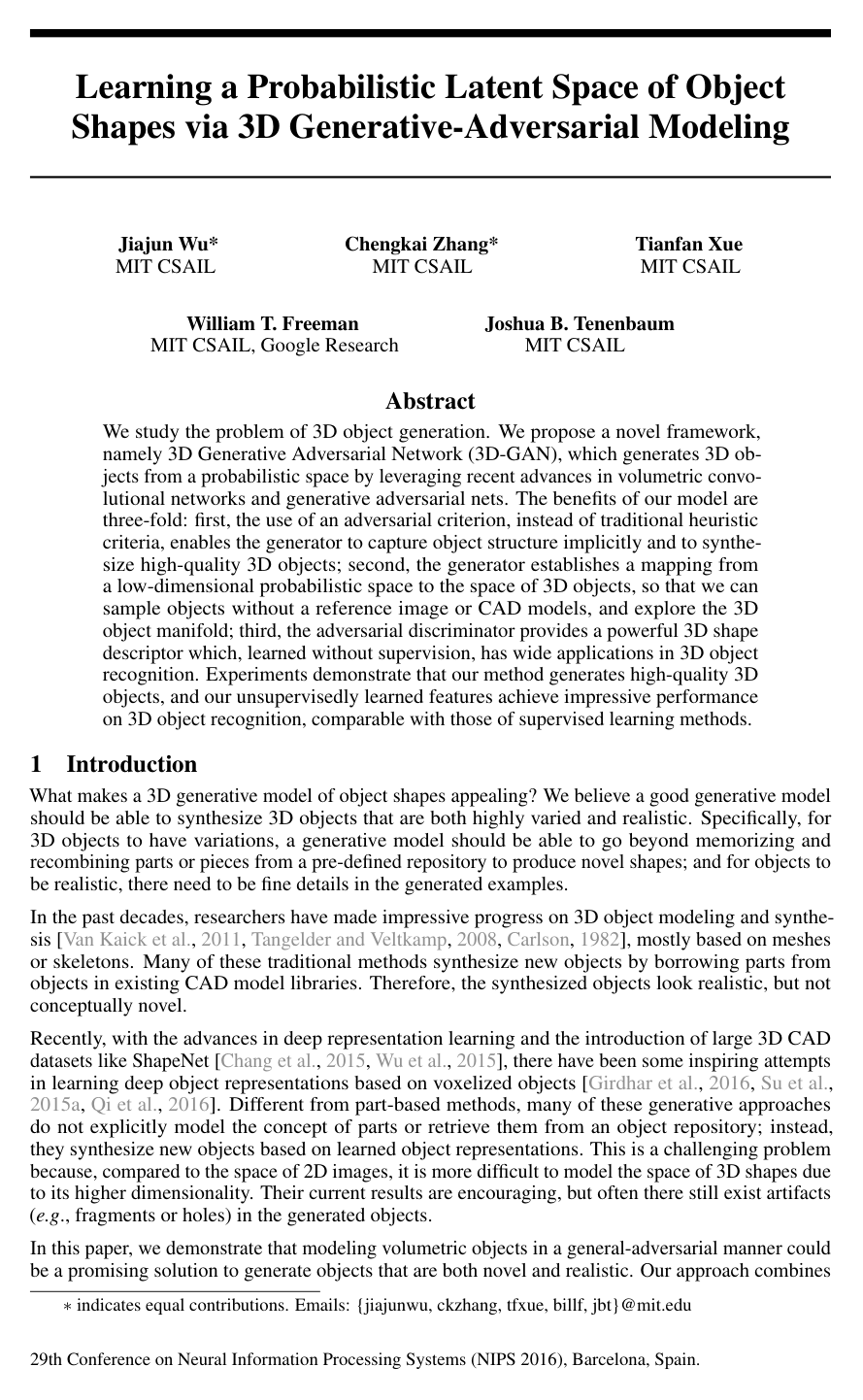
Learning a Probabilistic Latent Space of Object Shapes via 3D Generative-Adversarial Modeling
Jiajun Wu, Chengkai Zhang, Tianfan Xue, Bill Freeman, J. Tenenbaum
Why you should read this
Introduces 3D-GAN, a framework that generates realistic 3D volumetric shapes from a probabilistic latent space and produces unsupervised shape descriptors that rival supervised methods in 3D object recognition.
We study the problem of 3D object generation. We propose a novel framework, namely 3D Generative Adversarial Network (3D-GAN), which generates 3D objects from a probabilistic space by leveraging recent advances in volumetric convolutional networks and generative adversarial nets. The benefits of our model are three-fold: first, the use of an adversarial criterion, instead of traditional heuristic criteria, enables the generator to capture object structure implicitly and to synthesize high-quality 3D objects; second, the generator establishes a mapping from a low-dimensional probabilistic space to the space of 3D objects, so that we can sample objects without a reference image or CAD models, and explore the 3D object manifold; third, the adversarial discriminator provides a powerful 3D shape descriptor which, learned without supervision, has wide applications in 3D object recognition. Experiments demonstrate that our method generates high-quality 3D objects, and our unsupervisedly learned features achieve impressive performance on 3D object recognition, comparable with those of supervised learning methods.
Added
2026-09-18
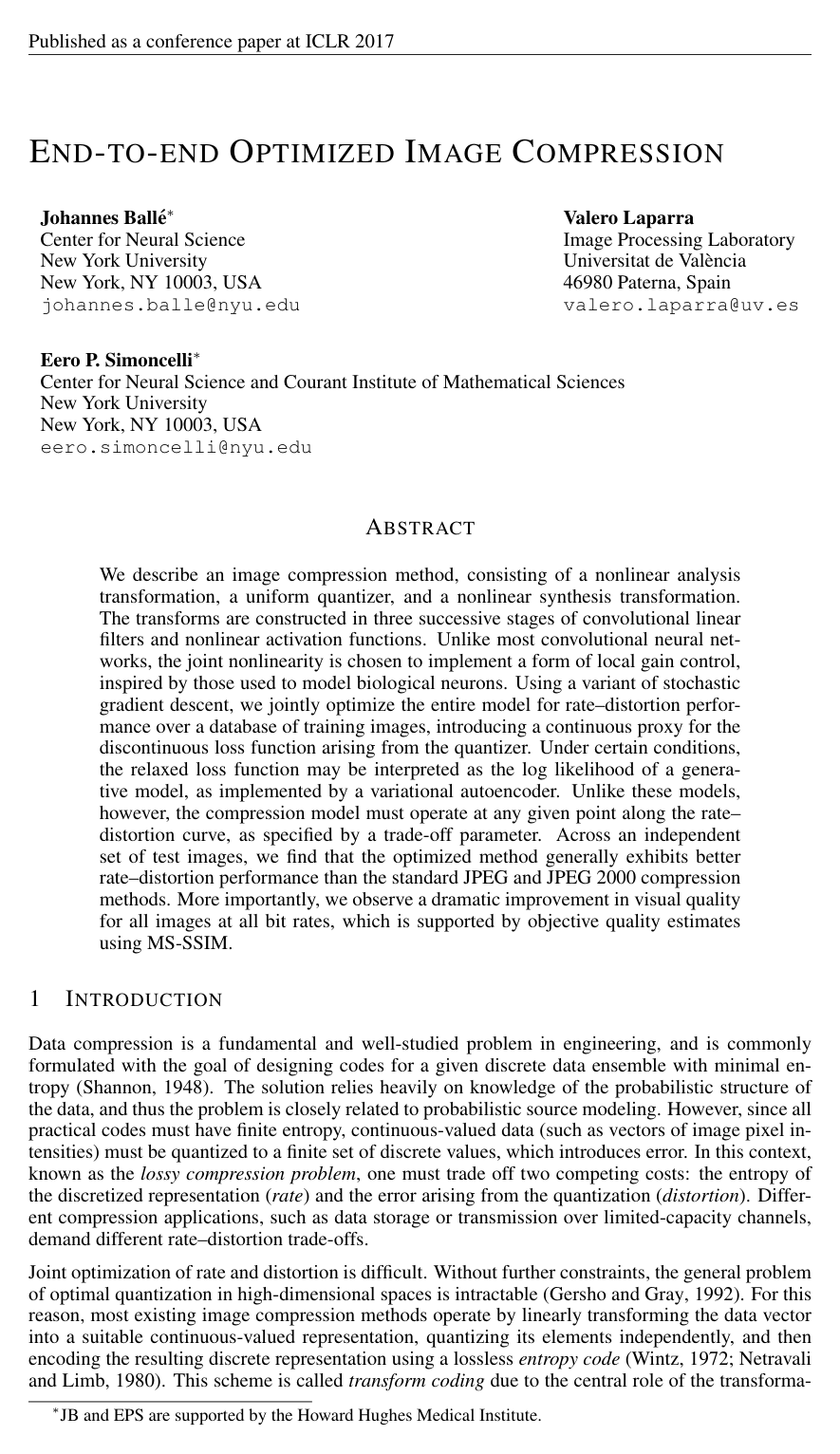
End-to-end Optimized Image Compression
Johannes Ballé, Valero Laparra, Eero P. Simoncelli
Why you should read this
Establishes an end-to-end framework for learned image compression by jointly optimizing nonlinear transforms and a continuous quantization proxy for rate-distortion performance, outperforming traditional codecs like JPEG and JPEG 2000.
We describe an image compression method, consisting of a nonlinear analysis transformation, a uniform quantizer, and a nonlinear synthesis transformation. The transforms are constructed in three successive stages of convolutional linear filters and nonlinear activation functions. Unlike most convolutional neural networks, the joint nonlinearity is chosen to implement a form of local gain control, inspired by those used to model biological neurons. Using a variant of stochastic gradient descent, we jointly optimize the entire model for rate-distortion performance over a database of training images, introducing a continuous proxy for the discontinuous loss function arising from the quantizer. Under certain conditions, the relaxed loss function may be interpreted as the log likelihood of a generative model, as implemented by a variational autoencoder. Unlike these models, however, the compression model must operate at any given point along the rate-distortion curve, as specified by a trade-off parameter. Across an independent set of test images, we find that the optimized method generally exhibits better rate-distortion performance than the standard JPEG and JPEG 2000 compression methods. More importantly, we observe a dramatic improvement in visual quality for all images at all bit rates, which is supported by objective quality estimates using MS-SSIM.
Added
2026-09-16
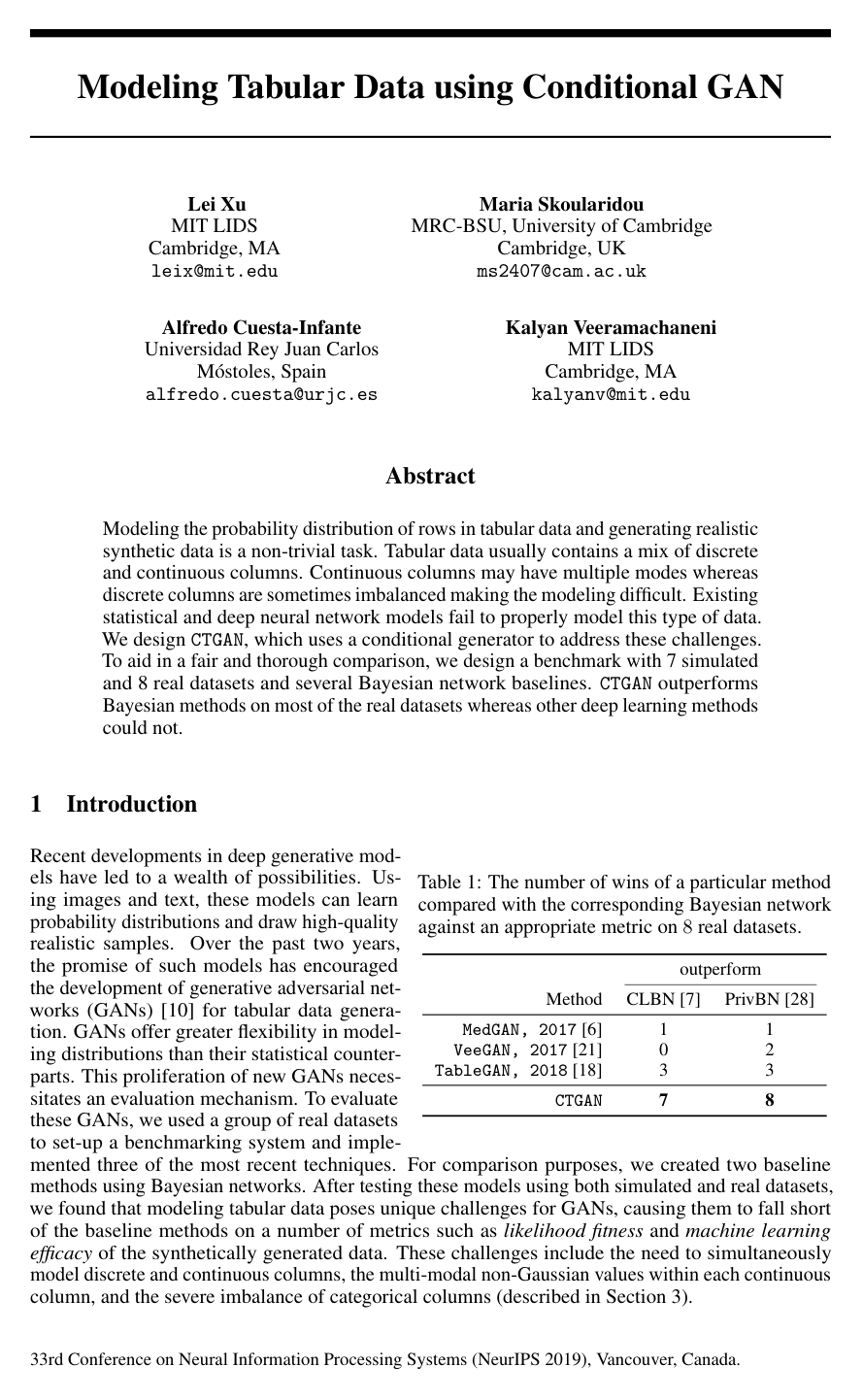
Modeling Tabular data using Conditional GAN
Lei Xu, Maria Skoularidou, Alfredo Cuesta-Infante, Kalyan Veeramachaneni
Why you should read this
Introduces TGAN, a conditional generative adversarial network designed to generate realistic synthetic tabular data by effectively modeling mixed data types, multimodal continuous distributions, and imbalanced categorical attributes.
Modeling the probability distribution of rows in tabular data and generating realistic synthetic data is a non-trivial task. Tabular data usually contains a mix of discrete and continuous columns. Continuous columns may have multiple modes whereas discrete columns are sometimes imbalanced making the modeling difficult. Existing statistical and deep neural network models fail to properly model this type of data. We design TGAN, which uses a conditional generative adversarial network to address these challenges. To aid in a fair and thorough comparison, we design a benchmark with 7 simulated and 8 real datasets and several Bayesian network baselines. TGAN outperforms Bayesian methods on most of the real datasets whereas other deep learning methods could not.
Added
2026-09-16
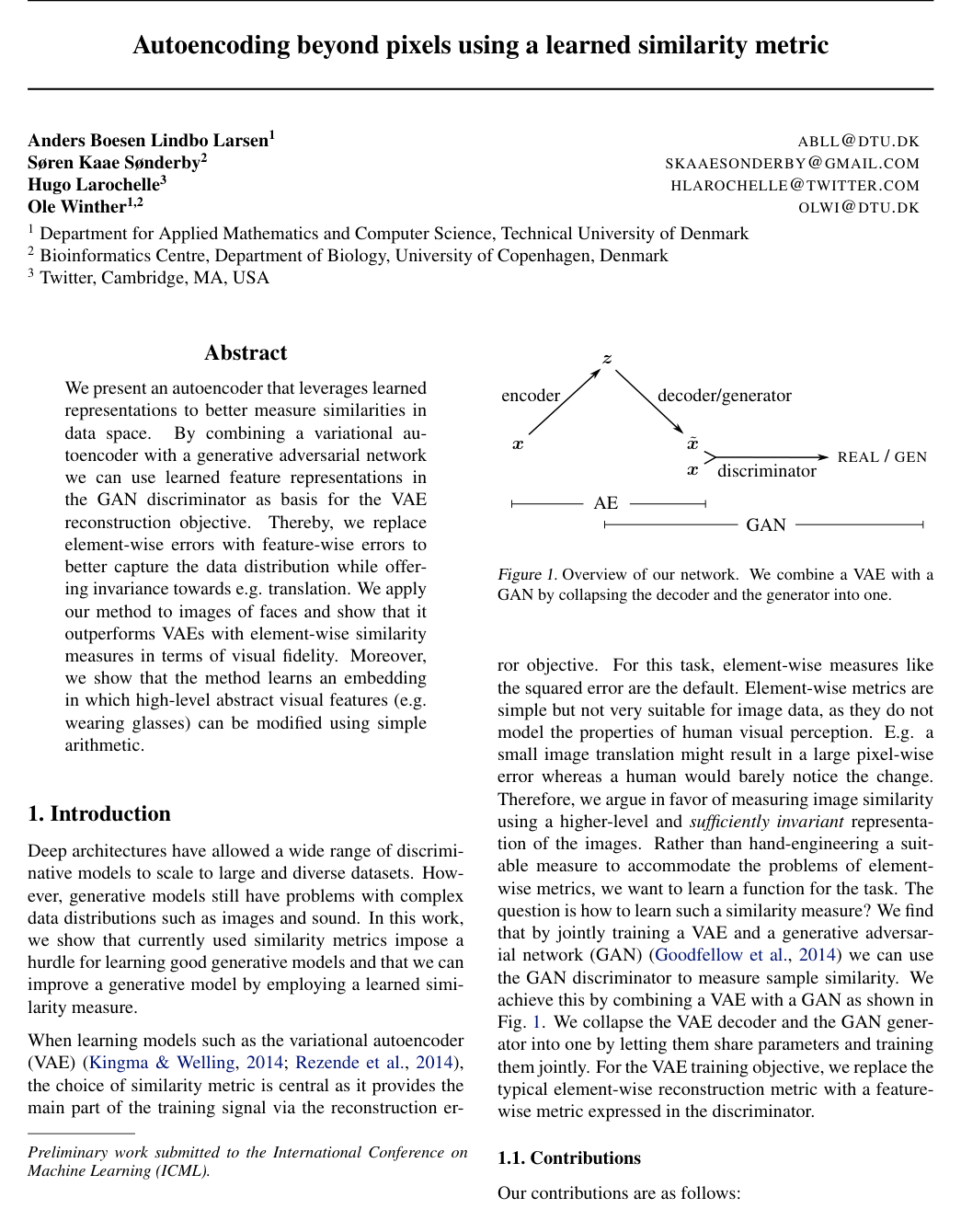
Autoencoding beyond pixels using a learned similarity metric
Anders Boesen Lindbo Larsen, Søren Kaae Sønderby, Hugo Larochelle, Ole Winther
Why you should read this
Proposes combining variational autoencoders and generative adversarial networks to measure reconstruction loss using learned discriminator features rather than pixel-wise comparisons, producing sharper images and enabling semantic latent vector arithmetic.
We present an autoencoder that leverages learned representations to better measure similarities in data space. By combining a variational autoencoder with a generative adversarial network we can use learned feature representations in the GAN discriminator as basis for the VAE reconstruction objective. Thereby, we replace element-wise errors with feature-wise errors to better capture the data distribution while offering invariance towards e.g. translation. We apply our method to images of faces and show that it outperforms VAEs with element-wise similarity measures in terms of visual fidelity. Moreover, we show that the method learns an embedding in which high-level abstract visual features (e.g. wearing glasses) can be modified using simple arithmetic.
Added
2026-09-16
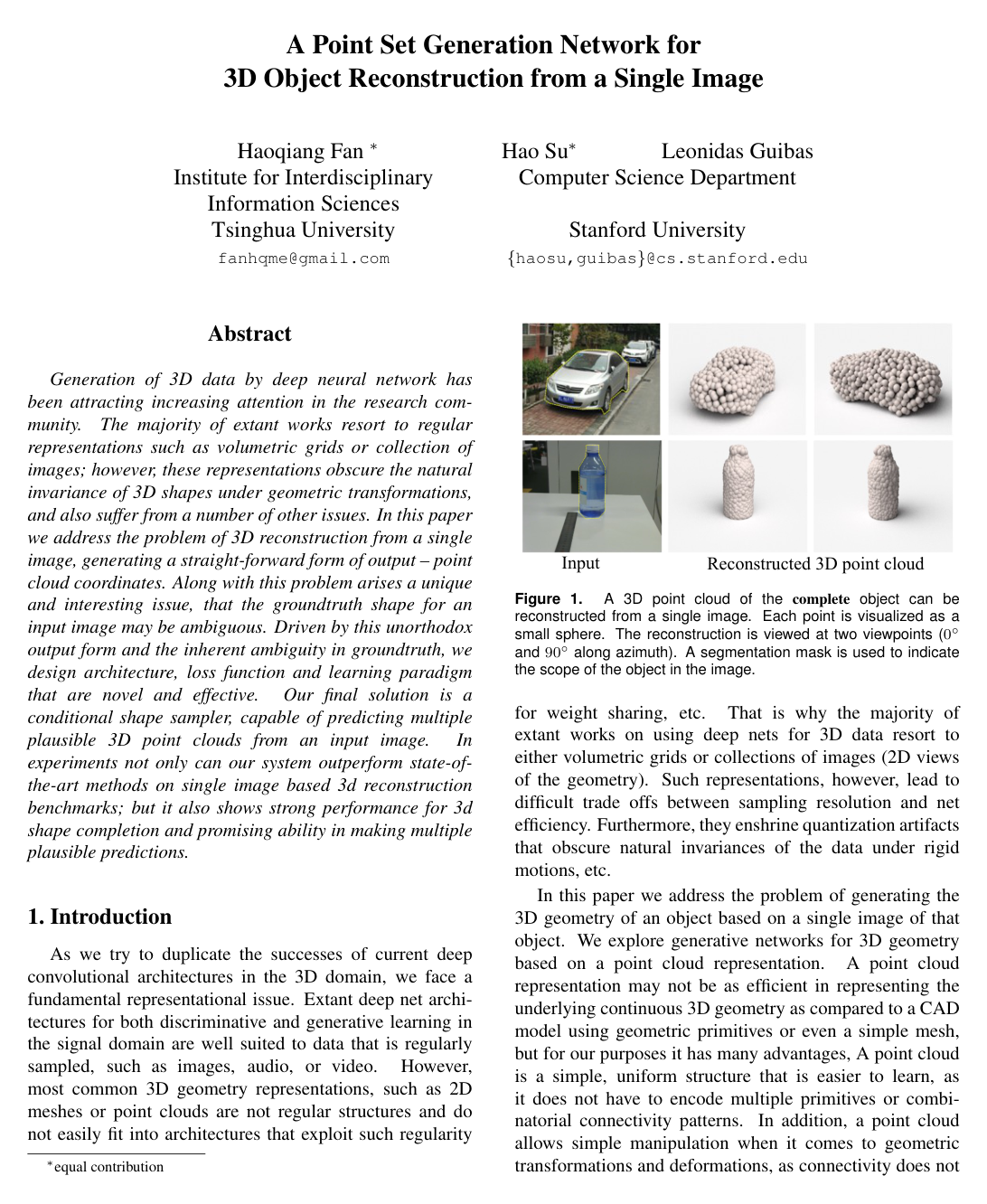
A Point Set Generation Network for 3D Object Reconstruction from a Single Image
Haoqiang Fan, Hao Su, Leonidas Guibas
Why you should read this
Introduces the Point Set Generation Network, a deep learning framework that reconstructs 3D object geometries directly as unordered point clouds from single 2D images while handling shape ambiguity by predicting multiple plausible outputs.
Generation of 3D data by deep neural network has been attracting increasing attention in the research community. The majority of extant works resort to regular representations such as volumetric grids or collection of images; however, these representations obscure the natural invariance of 3D shapes under geometric transformations and also suffer from a number of other issues. In this paper we address the problem of 3D reconstruction from a single image, generating a straight-forward form of output -- point cloud coordinates. Along with this problem arises a unique and interesting issue, that the groundtruth shape for an input image may be ambiguous. Driven by this unorthodox output form and the inherent ambiguity in groundtruth, we design architecture, loss function and learning paradigm that are novel and effective. Our final solution is a conditional shape sampler, capable of predicting multiple plausible 3D point clouds from an input image. In experiments not only can our system outperform state-of-the-art methods on single image based 3d reconstruction benchmarks; but it also shows a strong performance for 3d shape completion and promising ability in making multiple plausible predictions.
Added
2026-09-14
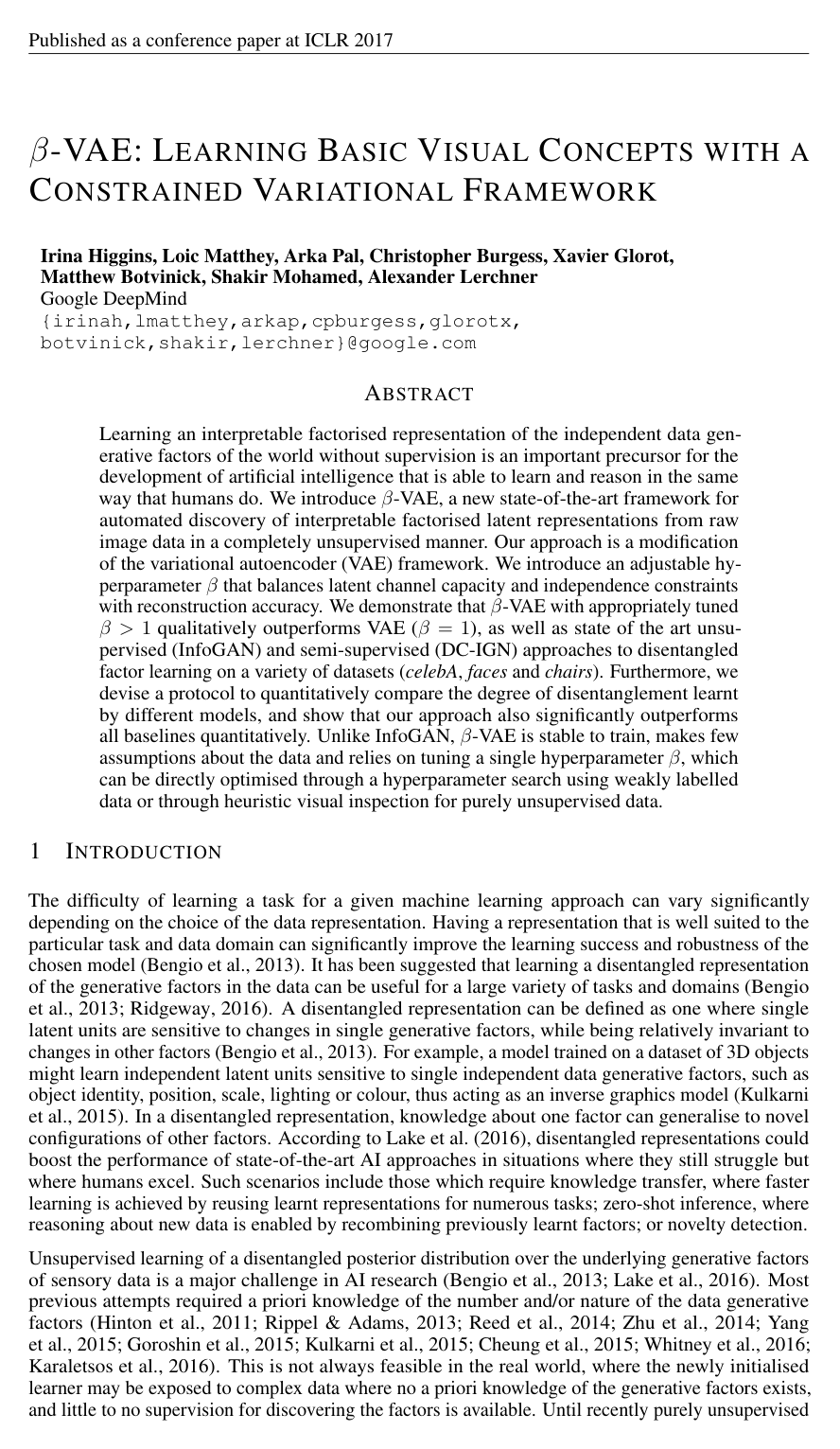
beta-VAE: Learning Basic Visual Concepts with a Constrained Variational Framework
Irina Higgins, Loic Matthey, Arka Pal, Christopher Burgess, Xavier Glorot, Matthew Botvinick, Shakir Mohamed, Alexander Lerchner
Why you should read this
Proposes beta-VAE, a modification to variational autoencoders that balances latent channel capacity to learn disentangled, interpretable visual representations without supervision, establishing both a stable training framework and a quantitative metric for measuring factor separation.
Learning an interpretable factorised representation of the independent data generative factors of the world without supervision is an important precursor for the development of artificial intelligence that is able to learn and reason in the same way that humans do. We introduce β-VAE, a new state-of-the-art framework for automated discovery of interpretable factorised latent representations from raw image data in a completely unsupervised manner. Our approach is a modification of the variational autoencoder (VAE) framework. We introduce an adjustable hyperparameter β that balances latent channel capacity and independence constraints with reconstruction accuracy. We demonstrate that β-VAE with appropriately tuned β > 1 qualitatively outperforms VAE (β = 1), as well as state of the art unsupervised (InfoGAN) and semi-supervised (DC-IGN) approaches to disentangled factor learning on a variety of datasets (celeba, faces and chairs). Furthermore, we devise a protocol to quantitatively compare the degree of disentanglement learnt by different models, and show that our approach also significantly outperforms all baselines quantitatively. Unlike InfoGAN, β-VAE is stable to train, makes few assumptions about the data and relies on tuning a single hyperparameter β, which can be directly optimised through a hyperparameter search using weakly labelled data or through heuristic visual inspection for purely unsupervised data.
Added
2026-09-09
License
Published with permission