
keyword
explainable artificial intelligence
Explainable artificial intelligence refers to a branch of artificial intelligence and machine learning focused on methods and techniques that make the inner workings, reasoning, and outputs of algorithmic systems understandable to humans. It addresses the opaque, black-box nature of complex models, such as deep neural networks, by clarifying how specific inputs and internal representations drive particular predictions or decisions. The field encompasses both the design of inherently transparent models and the development of post-hoc explanation techniques, including feature attribution, concept extraction, and sensitivity analysis. By enabling users to audit, validate, and debug automated systems, explainable artificial intelligence supports accountability, fairness, and safety, which is essential for deploying algorithms in high-stakes areas such as healthcare, finance, and law.
9 items
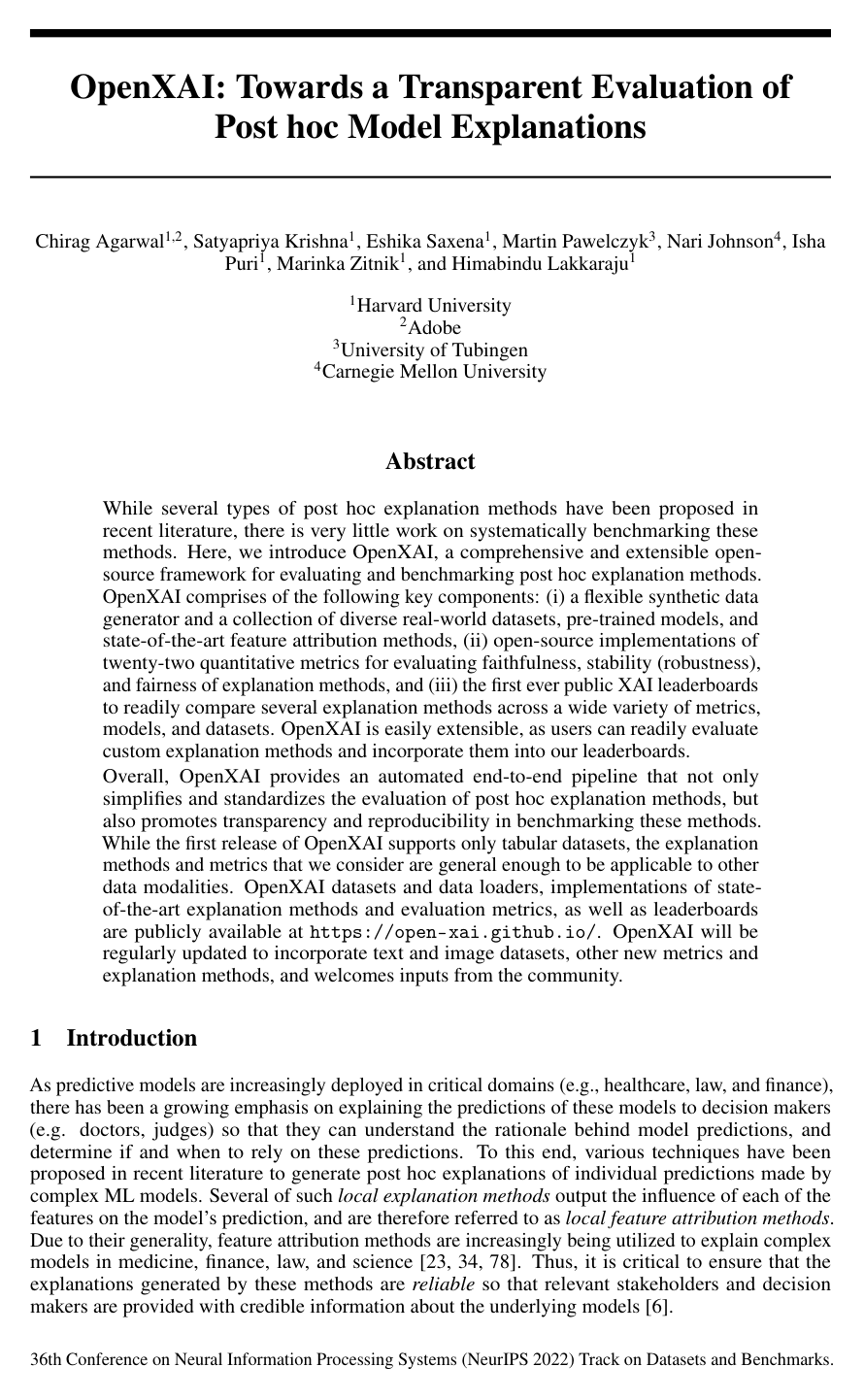
OpenXAI: Towards a Transparent Evaluation of Model Explanations
Chirag Agarwal, Satyapriya Krishna, Eshika Saxena, Martin Pawelczyk, Nari Johnson, Isha Puri, Marinka Zitnik, Himabindu Lakkaraju
Why you should read this
Presents OpenXAI, an open-source framework and public leaderboard system that unifies twenty-two evaluation metrics across faithfulness, stability, and fairness to systematically benchmark post hoc feature attribution methods.
While several types of post hoc explanation methods have been proposed in recent literature, there is very little work on systematically benchmarking these methods. Here, we introduce OpenXAI, a comprehensive and extensible open-source framework for evaluating and benchmarking post hoc explanation methods. OpenXAI comprises of the following key components: (i) a flexible synthetic data generator and a collection of diverse real-world datasets, pre-trained models, and state-of-the-art feature attribution methods, (ii) open-source implementations of twenty-two quantitative metrics for evaluating faithfulness, stability (robustness), and fairness of explanation methods, and (iii) the first ever public XAI leaderboards to readily compare several explanation methods across a wide variety of metrics, models, and datasets. OpenXAI is easily extensible, as users can readily evaluate custom explanation methods and incorporate them into our leaderboards. Overall, OpenXAI provides an automated end-to-end pipeline that not only simplifies and standardizes the evaluation of post hoc explanation methods, but also promotes transparency and reproducibility in benchmarking these methods. While the first release of OpenXAI supports only tabular datasets, the explanation methods and metrics that we consider are general enough to be applicable to other data modalities. OpenXAI datasets and data loaders, implementations of state-of-the-art explanation methods and evaluation metrics, as well as leaderboards are publicly available at https://open-xai.github.io/. OpenXAI will be regularly updated to incorporate text and image datasets, other new metrics and explanation methods, and welcomes inputs from the community.
Added
2026-09-26
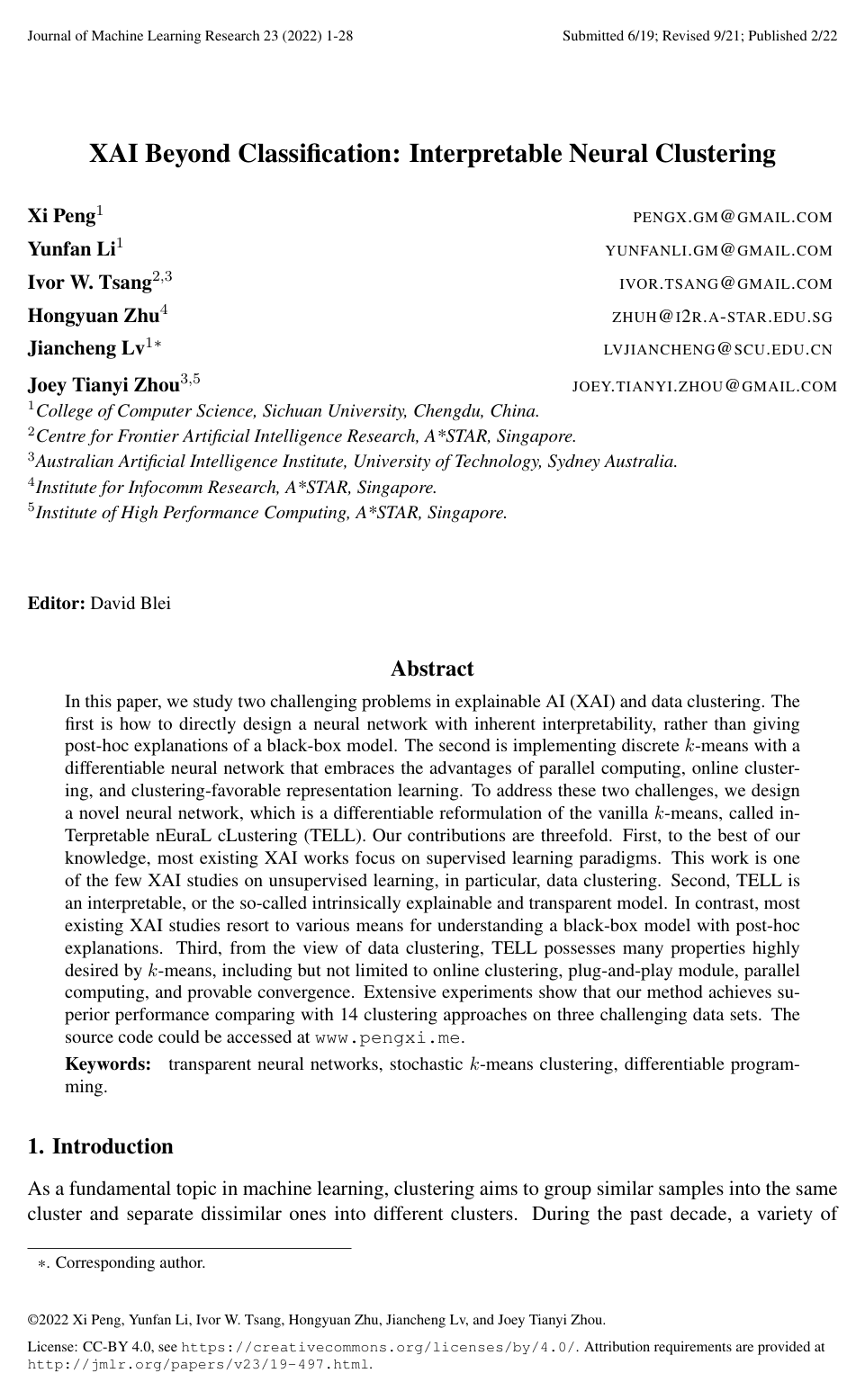
XAI Beyond Classification: Interpretable Neural Clustering
Xi Peng, Yunfan Li, Ivor W. Tsang, Hongyuan Zhu, Jiancheng Lv, Joey Tianyi Zhou
Why you should read this
Proposes an intrinsically explainable neural network that reformulates discrete k-means into a differentiable layer, enabling end-to-end parallel optimization, online clustering on data streams, and provable convergence without relying on post-hoc interpretations.
In this paper, we study two challenging problems in explainable AI (XAI) and data clustering. The first is how to directly design a neural network with inherent interpretability, rather than giving post-hoc explanations of a black-box model. The second is implementing discrete k-means with a differentiable neural network that embraces the advantages of parallel computing, online clustering, and clustering-favorable representation learning. To address these two challenges, we design a novel neural network, which is a differentiable reformulation of the vanilla k-means, called inTerpretable nEuraL cLustering (TELL). Our contributions are threefold. First, to the best of our knowledge, most existing XAI works focus on supervised learning paradigms. This work is one of the few XAI studies on unsupervised learning, in particular, data clustering. Second, TELL is an interpretable, or the so-called intrinsically explainable and transparent model. In contrast, most existing XAI studies resort to various means for understanding a black-box model with post-hoc explanations. Third, from the view of data clustering, TELL possesses many properties highly desired by k-means, including but not limited to online clustering, plug-and-play module, parallel computing, and provable convergence. Extensive experiments show that our method achieves superior performance comparing with 14 clustering approaches on three challenging data sets. The source code could be accessed at www.pengxi.me.
Added
2026-09-26
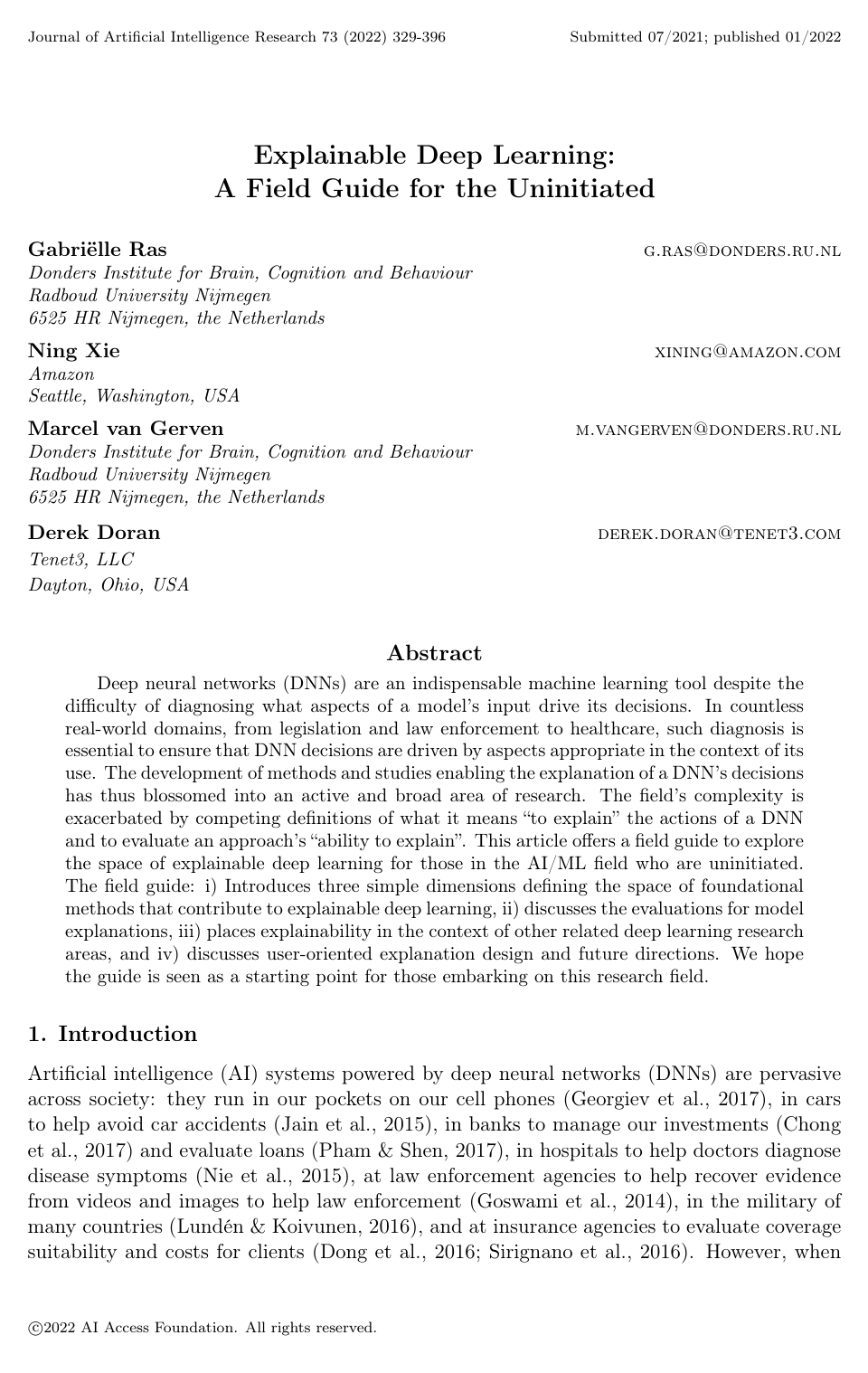
Explainable Deep Learning: A Field Guide for the Uninitiated
Gabrielle Ras, Ning Xie, Marcel van Gerven, Derek Doran
Why you should read this
Presents a structured taxonomy of foundational explainability techniques, evaluation methods, and user-centered design principles to help researchers and practitioners build and assess interpretable deep learning systems.
Deep neural networks (DNNs) are an indispensable machine learning tool despite the difficulty of diagnosing what aspects of a model’s input drive its decisions. In countless real-world domains, from legislation and law enforcement to healthcare, such diagnosis is essential to ensure that DNN decisions are driven by aspects appropriate in the context of its use. The development of methods and studies enabling the explanation of a DNN’s decisions has thus blossomed into an active and broad area of research. The field’s complexity is exacerbated by competing definitions of what it means “to explain” the actions of a DNN and to evaluate an approach’s “ability to explain”. This article offers a field guide to explore the space of explainable deep learning for those in the AI/ML field who are uninitiated. The field guide: i) Introduces three simple dimensions defining the space of foundational methods that contribute to explainable deep learning, ii) discusses the evaluations for model explanations, iii) places explainability in the context of other related deep learning research areas, and iv) discusses user-oriented explanation design and future directions. We hope the guide is seen as a starting point for those embarking on this research field.
Added
2026-09-26
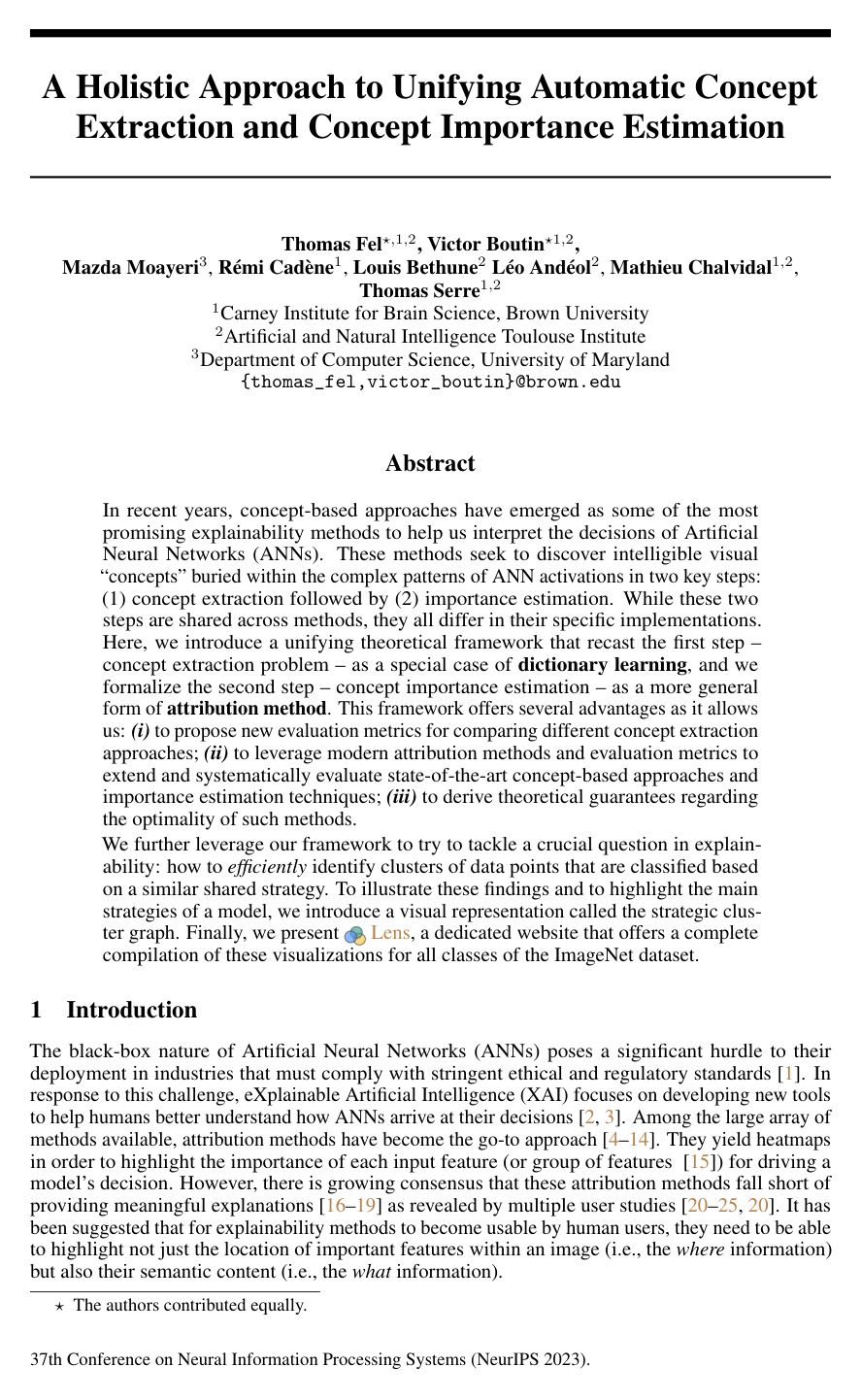
A Holistic Approach to Unifying Automatic Concept Extraction and Concept Importance Estimation
Thomas Fel, Victor Boutin, Louis Béthune, Rémi Cadène, Mazda Moayeri, Léo Andéol, Mathieu Chalvidal, Thomas Serre
Why you should read this
Presents a unifying theoretical framework that formalizes concept extraction as dictionary learning and importance estimation as concept-space attribution, establishing optimality guarantees and providing strategic cluster graphs to visualize shared classification strategies across neural networks.
In recent years, concept-based approaches have emerged as some of the most promising explainability methods to help us interpret the decisions of Artificial Neural Networks (ANNs). These methods seek to discover intelligible visual “concepts” buried within the complex patterns of ANN activations in two key steps: (1) concept extraction followed by (2) importance estimation. While these two steps are shared across methods, they all differ in their specific implementations. Here, we introduce a unifying theoretical framework that recast the first step – concept extraction problem – as a special case of dictionary learning, and we formalize the second step – concept importance estimation – as a more general form of attribution method. This framework offers several advantages as it allows us: (i) to propose new evaluation metrics for comparing different concept extraction approaches; (ii) to leverage modern attribution methods and evaluation metrics to extend and systematically evaluate state-of-the-art concept-based approaches and importance estimation techniques; (iii) to derive theoretical guarantees regarding the optimality of such methods. We further leverage our framework to try to tackle a crucial question in explainability: how to efficiently identify clusters of data points that are classified based on a similar shared strategy. To illustrate these findings and to highlight the main strategies of a model, we introduce a visual representation called the strategic cluster graph. Finally, we present Lens, a dedicated website that offers a complete compilation of these visualizations for all classes of the ImageNet dataset.
Added
2026-09-26
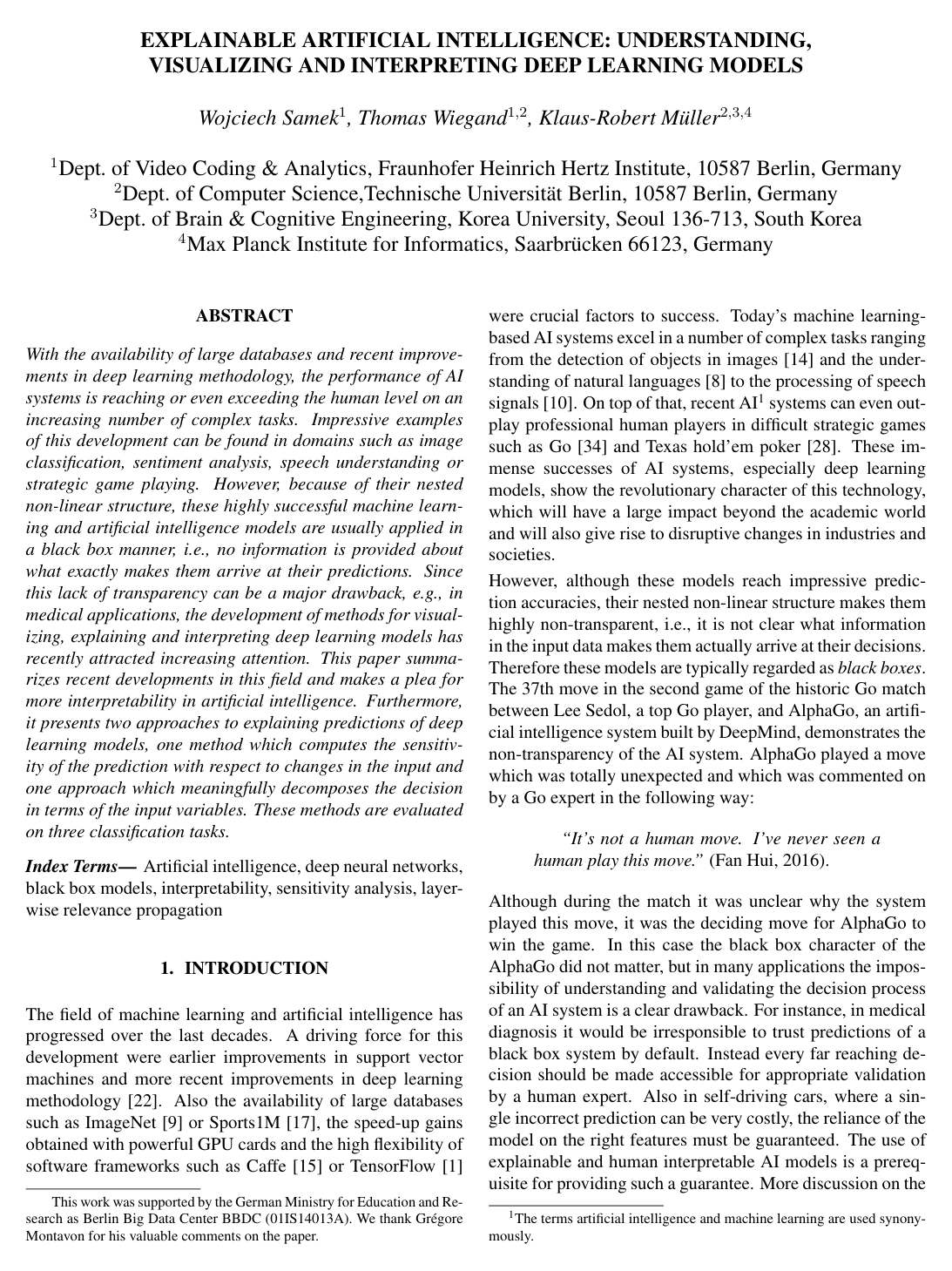
Explainable Artificial Intelligence: Understanding, Visualizing and Interpreting Deep Learning Models
Wojciech Samek, Thomas Wiegand, Klaus-Robert Müller
Why you should read this
Presents and evaluates two practical interpretability methods—input sensitivity analysis and decision decomposition—to explain how complex deep learning models arrive at their predictions across diverse classification tasks.
With the availability of large databases and recent improvements in deep learning methodology, the performance of AI systems is reaching or even exceeding the human level on an increasing number of complex tasks. Impressive examples of this development can be found in domains such as image classification, sentiment analysis, speech understanding or strategic game playing. However, because of their nested non-linear structure, these highly successful machine learning and artificial intelligence models are usually applied in a black box manner, i.e., no information is provided about what exactly makes them arrive at their predictions. Since this lack of transparency can be a major drawback, e.g., in medical applications, the development of methods for visualizing, explaining and interpreting deep learning models has recently attracted increasing attention. This paper summarizes recent developments in this field and makes a plea for more interpretability in artificial intelligence. Furthermore, it presents two approaches to explaining predictions of deep learning models, one method which computes the sensitivity of the prediction with respect to changes in the input and one approach which meaningfully decomposes the decision in terms of the input variables. These methods are evaluated on three classification tasks.
Added
2026-09-25
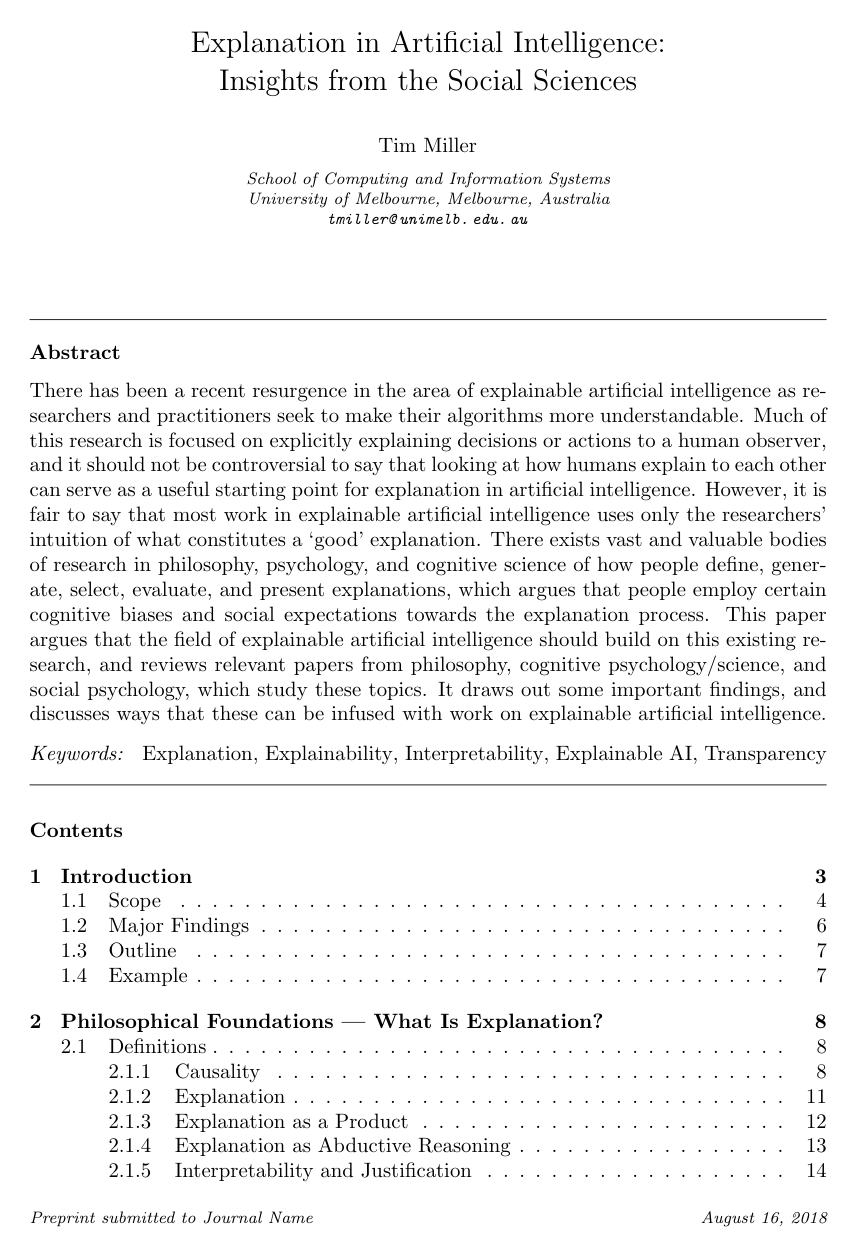
Explanation in Artificial Intelligence: Insights from the Social Sciences
Tim Miller
Why you should read this
Synthesizes decades of findings from philosophy, cognitive science, and social psychology to define how explainable artificial intelligence should align with human cognitive biases and social expectations rather than developer intuition.
There has been a recent resurgence in the area of explainable artificial intelligence as researchers and practitioners seek to make their algorithms more understandable. Much of this research is focused on explicitly explaining decisions or actions to a human observer, and it should not be controversial to say that looking at how humans explain to each other can serve as a useful starting point for explanation in artificial intelligence. However, it is fair to say that most work in explainable artificial intelligence uses only the researchers' intuition of what constitutes a `good' explanation. There exists vast and valuable bodies of research in philosophy, psychology, and cognitive science of how people define, generate, select, evaluate, and present explanations, which argues that people employ certain cognitive biases and social expectations towards the explanation process. This paper argues that the field of explainable artificial intelligence should build on this existing research, and reviews relevant papers from philosophy, cognitive psychology/science, and social psychology, which study these topics. It draws out some important findings, and discusses ways that these can be infused with work on explainable artificial intelligence.
Added
2026-09-12
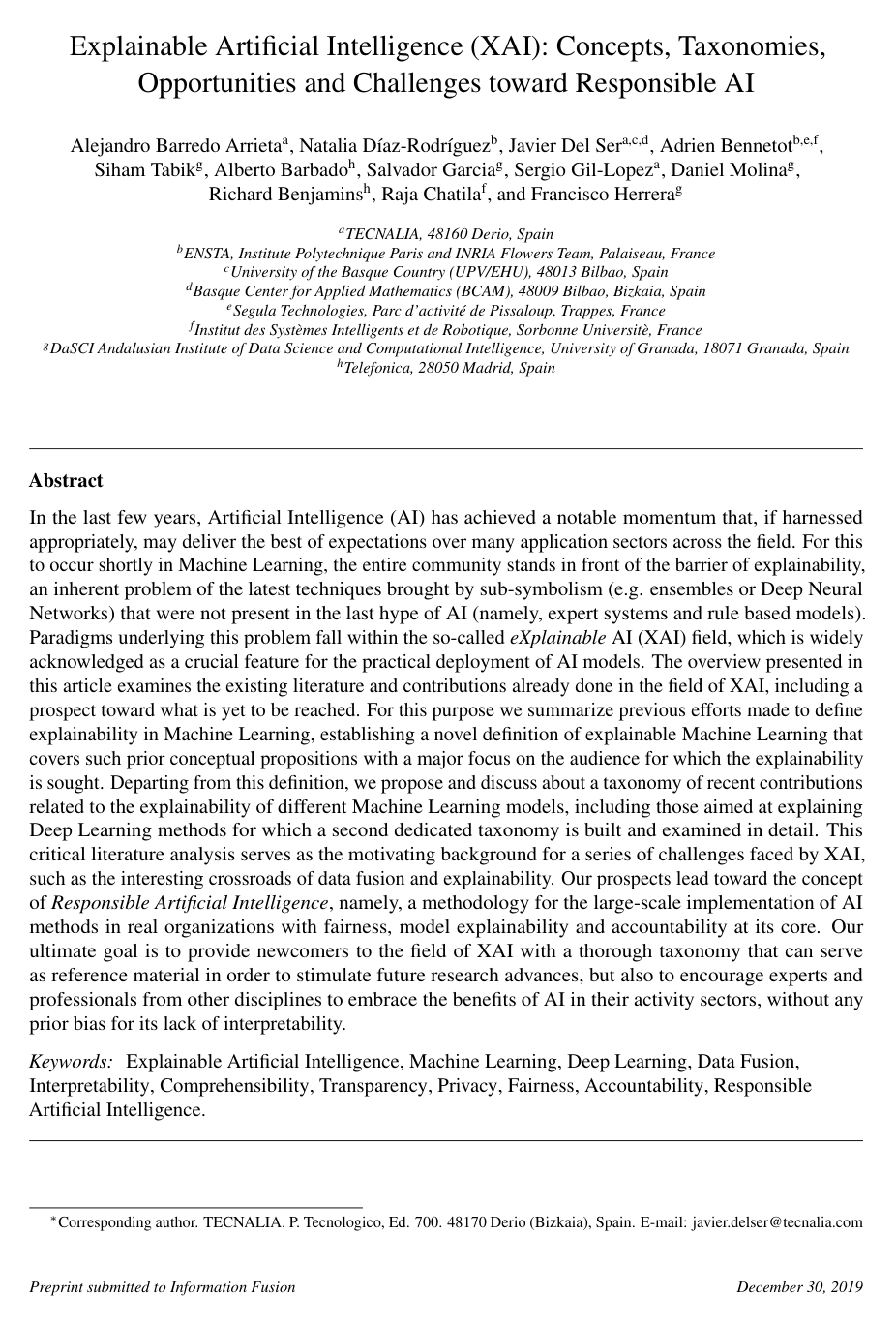
Explainable Artificial Intelligence (XAI): Concepts, Taxonomies, Opportunities and Challenges toward Responsible AI
Alejandro Barredo Arrieta, Natalia Díaz-Rodríguez, Javier Del Ser, Adrien Bennetot, Siham Tabik, Alberto Barbado, Salvador García, Sergio Gil-López, Daniel Molina, Richard Benjamins, Raja Chatila, Francisco Herrera
Why you should read this
Establishes audience-centered taxonomies for classical machine learning and deep learning interpretability while defining how explainable methods enable fair, accountable, and responsible artificial intelligence deployment.
In the last years, Artificial Intelligence (AI) has achieved a notable momentum that may deliver the best of expectations over many application sectors across the field. For this to occur, the entire community stands in front of the barrier of explainability, an inherent problem of AI techniques brought by sub-symbolism (e.g. ensembles or Deep Neural Networks) that were not present in the last hype of AI. Paradigms underlying this problem fall within the so-called eXplainable AI (XAI) field, which is acknowledged as a crucial feature for the practical deployment of AI models. This overview examines the existing literature in the field of XAI, including a prospect toward what is yet to be reached. We summarize previous efforts to define explainability in Machine Learning, establishing a novel definition that covers prior conceptual propositions with a major focus on the audience for which explainability is sought. We then propose and discuss about a taxonomy of recent contributions related to the explainability of different Machine Learning models, including those aimed at Deep Learning methods for which a second taxonomy is built. This literature analysis serves as the background for a series of challenges faced by XAI, such as the crossroads between data fusion and explainability. Our prospects lead toward the concept of Responsible Artificial Intelligence, namely, a methodology for the large-scale implementation of AI methods in real organizations with fairness, model explainability and accountability at its core. Our ultimate goal is to provide newcomers to XAI with a reference material in order to stimulate future research advances, but also to encourage experts and professionals from other disciplines to embrace the benefits of AI in their activity sectors, without any prior bias for its lack of interpretability.
Added
2026-09-09
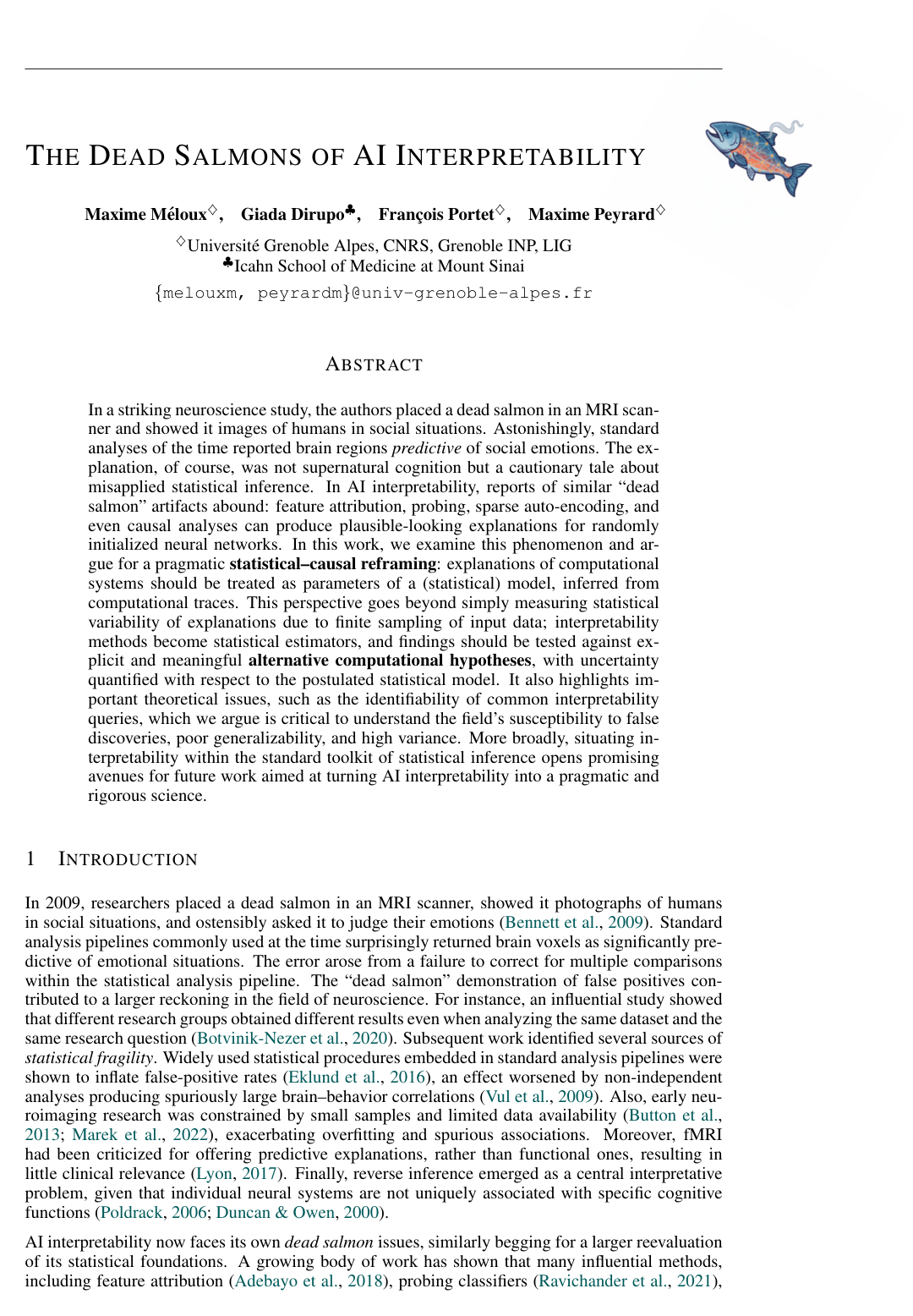
The Dead Salmons of AI Interpretability
Maxime Méloux, Giada Dirupo, François Portet, Maxime Peyrard
Why you should read this
Establishes a statistical-causal foundation for AI interpretability by treating explanations as estimated model parameters, providing formal tools for uncertainty quantification and identifiability to prevent false discoveries in neural networks.
In a striking neuroscience study, the authors placed a dead salmon in an MRI scanner and showed it images of humans in social situations. Astonishingly, standard analyses of the time reported brain regions predictive of social emotions. The explanation, of course, was not supernatural cognition but a cautionary tale about misapplied statistical inference. In AI interpretability, reports of similar ''dead salmon'' artifacts abound: feature attribution, probing, sparse auto-encoding, and even causal analyses can produce plausible-looking explanations for randomly initialized neural networks. In this work, we examine this phenomenon and argue for a pragmatic statistical-causal reframing: explanations of computational systems should be treated as parameters of a (statistical) model, inferred from computational traces. This perspective goes beyond simply measuring statistical variability of explanations due to finite sampling of input data; interpretability methods become statistical estimators, and findings should be tested against explicit and meaningful alternative computational hypotheses, with uncertainty quantified with respect to the postulated statistical model. It also highlights important theoretical issues, such as the identifiability of common interpretability queries, which we argue is critical to understand the field's susceptibility to false discoveries, poor generalizability, and high variance. More broadly, situating interpretability within the standard toolkit of statistical inference opens promising avenues for future work aimed at turning AI interpretability into a pragmatic and rigorous science.
Added
2026-09-03

Stop Explaining Black Box Machine Learning Models for High Stakes Decisions and Use Interpretable Models Instead
Cynthia Rudin
Why you should read this
Argues that relying on "explainable AI" for black box models in high-stakes decisions is fundamentally flawed and proposes a paradigm shift towards inherently interpretable models to prevent catastrophic societal harm.
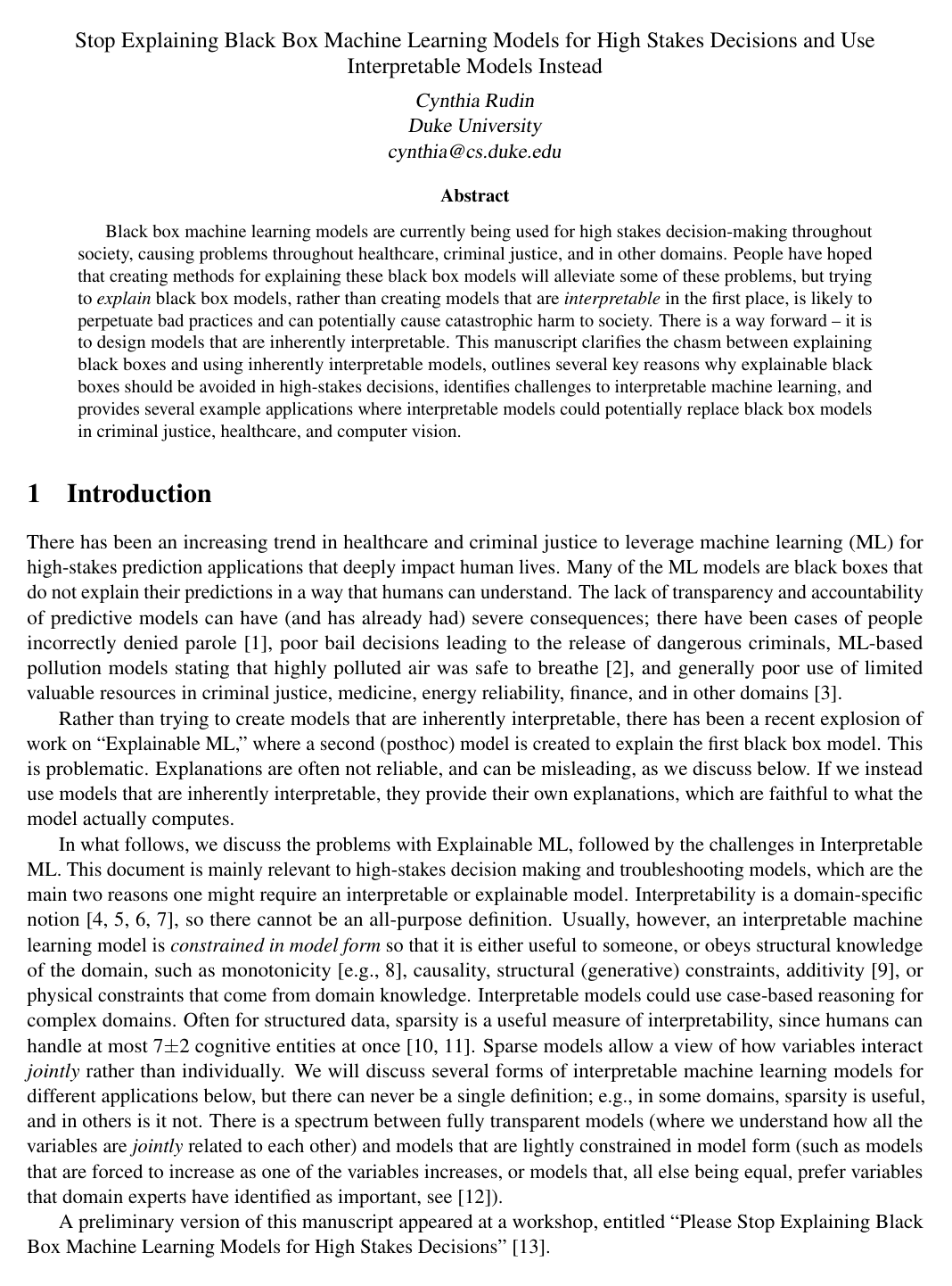
Black box machine learning models are currently being used for high stakes decision-making throughout society, causing problems throughout healthcare, criminal justice, and in other domains. People have hoped that creating methods for explaining these black box models will alleviate some of these problems, but trying to \textit{explain} black box models, rather than creating models that are \textit{interpretable} in the first place, is likely to perpetuate bad practices and can potentially cause catastrophic harm to society. There is a way forward -- it is to design models that are inherently interpretable. This manuscript clarifies the chasm between explaining black boxes and using inherently interpretable models, outlines several key reasons why explainable black boxes should be avoided in high-stakes decisions, identifies challenges to interpretable machine learning, and provides several example applications where interpretable models could potentially replace black box models in criminal justice, healthcare, and computer vision.
Added
2026-06-06
