
keyword
contrast enhancement
Contrast enhancement is an image processing technique that adjusts the distribution of luminance or color intensities across an image to expand the visual distinction between different objects, textures, and the background. By widening the dynamic range of pixel values or modifying brightness locally and globally, it improves scene visibility and recovers structural details obscured in poorly illuminated, hazy, underwater, or otherwise degraded environments. Implemented through traditional operations such as histogram equalization and local statistical filtering, as well as modern deep learning architectures and physics-based restoration models, contrast enhancement aims to produce natural-looking imagery and optimize visual data for both human perception and downstream automated vision tasks.
7 items
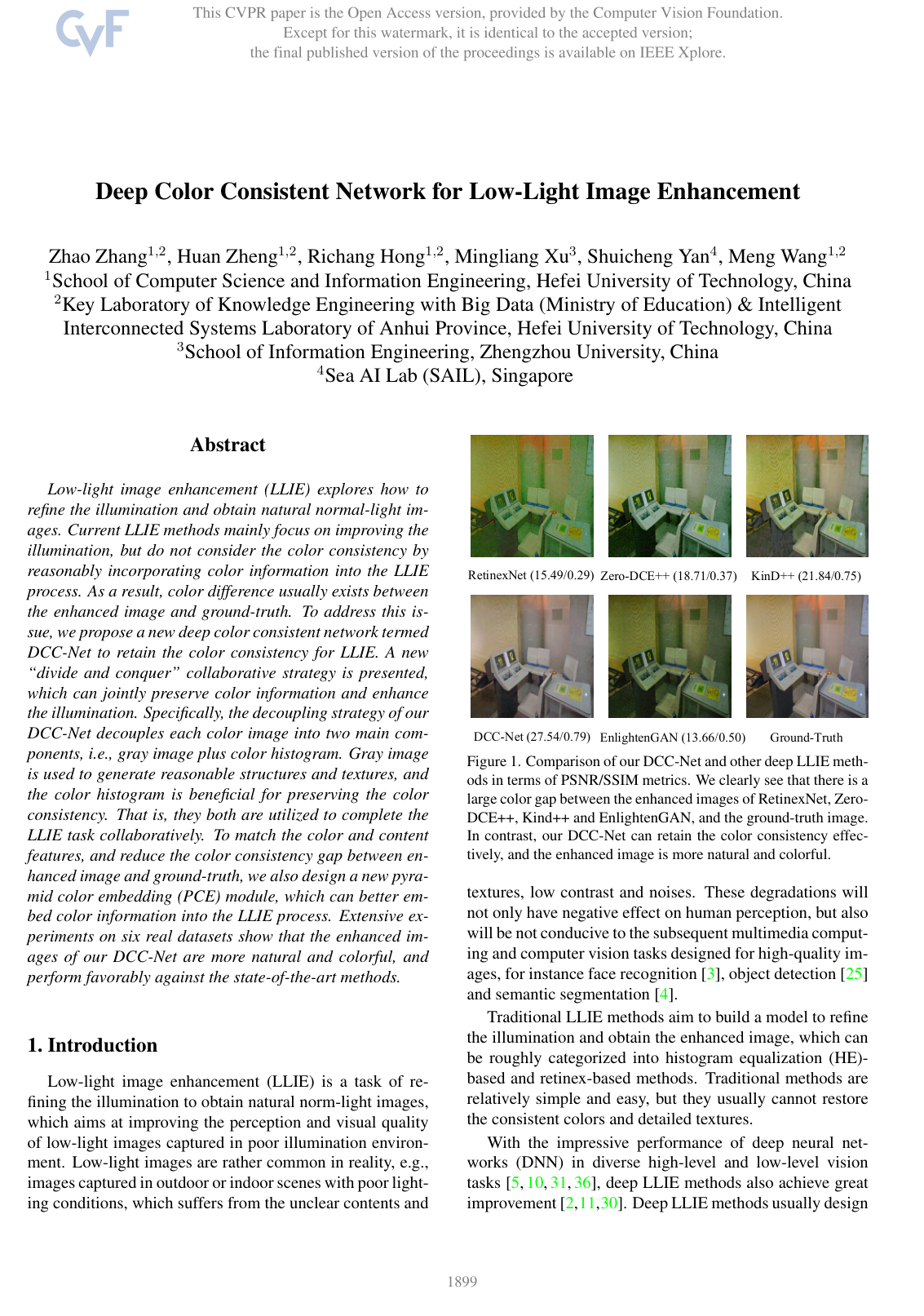
Deep Color Consistent Network for Low-Light Image Enhancement
Zhao Zhang, Huan Zheng, Richang Hong, Mingliang Xu, Shuicheng Yan, Meng Wang
Why you should read this
Proposes DCC-Net, a low-light image restoration framework that decouples images into structural gray components and color histograms to eliminate color distortion through pyramid feature embedding.
Low-light image enhancement (LLIE) explores how to refine the illumination and obtain natural normal-light images. Current LLIE methods mainly focus on improving the illumination, but do not consider the color consistency by reasonably incorporating color information into the LLIE process. As a result, color difference usually exists between the enhanced image and ground-truth. To address this issue, we propose a new deep color consistent network termed DCC-Net to retain the color consistency for LLIE. A new “divide and conquer” collaborative strategy is presented, which can jointly preserve color information and enhance the illumination. Specifically, the decoupling strategy of our DCC-Net decouples each color image into two main components, i.e., gray image plus color histogram. Gray image is used to generate reasonable structures and textures, and the color histogram is beneficial for preserving the color consistency. That is, they both are utilized to complete the LLIE task collaboratively. To match the color and content features, and reduce the color consistency gap between enhanced image and ground-truth, we also design a new pyramid color embedding (PCE) module, which can better embed color information into the LLIE process. Extensive experiments on six real datasets show that the enhanced images of our DCC-Net are more natural and colorful, and perform favorably against the state-of-the-art methods.
Added
2026-10-05
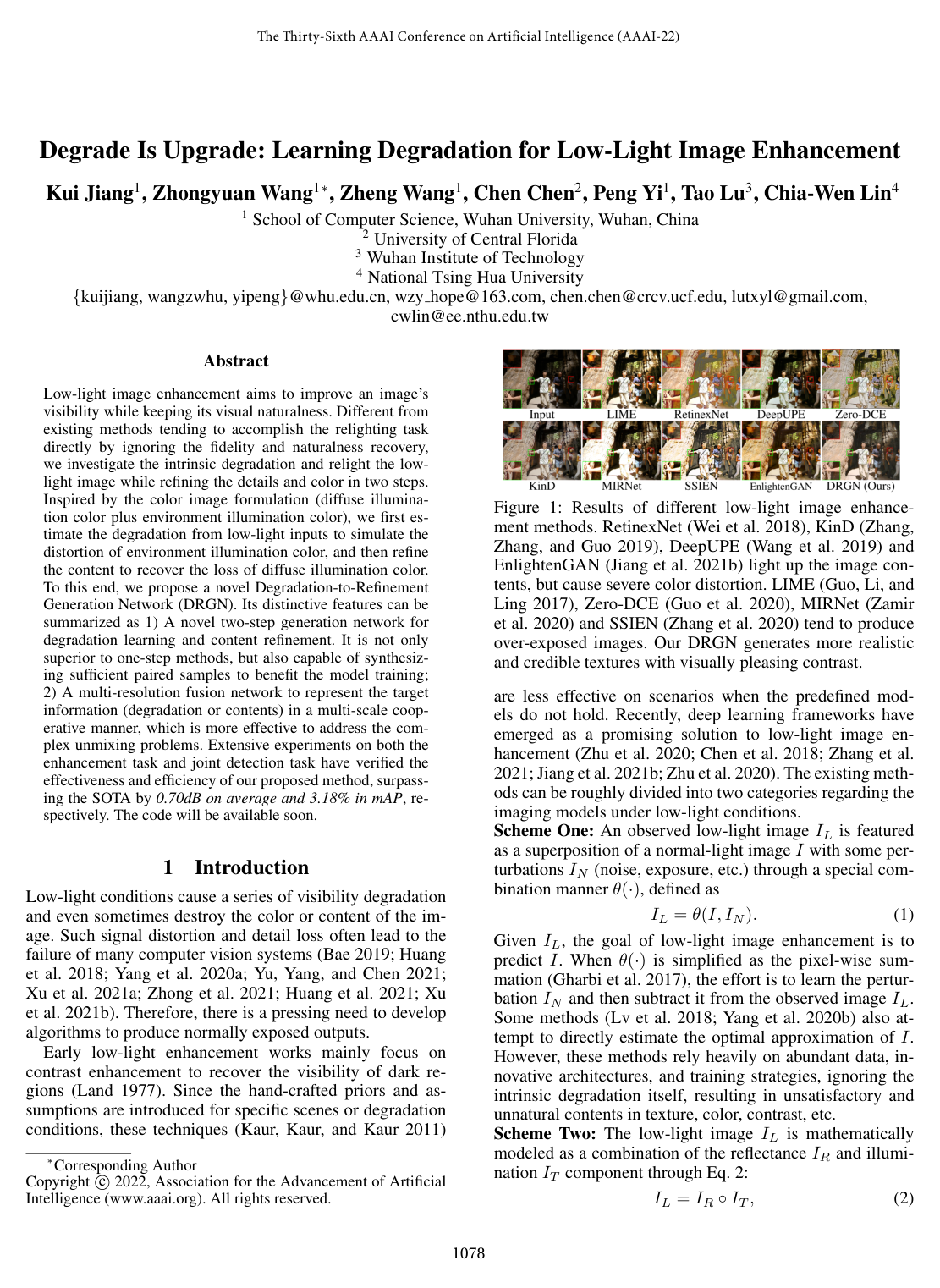
Degrade Is Upgrade: Learning Degradation for Low-Light Image Enhancement
Kui Jiang, Zhongyuan Wang, Zheng Wang, Chen Chen, Peng Yi, Tao Lu, Chia-Wen Lin
Why you should read this
Proposes a two-stage Degradation-to-Refinement Generation Network that models intrinsic degradation to synthesize paired training data and restore color and textural details, significantly improving low-light image quality and downstream object detection accuracy.
Low-light image enhancement aims to improve an image’s visibility while keeping its visual naturalness. Different from existing methods tending to accomplish the relighting task directly by ignoring the fidelity and naturalness recovery, we investigate the intrinsic degradation and relight the low-light image while refining the details and color in two steps. Inspired by the color image formulation (diffuse illumination color plus environment illumination color), we first estimate the degradation from low-light inputs to simulate the distortion of environment illumination color, and then refine the content to recover the loss of diffuse illumination color. To this end, we propose a novel Degradation-to-Refinement Generation Network (DRGN). Its distinctive features can be summarized as 1) A novel two-step generation network for degradation learning and content refinement. It is not only superior to one-step methods, but also capable of synthesizing sufficient paired samples to benefit the model training; 2) A multi-resolution fusion network to represent the target information (degradation or contents) in a multi-scale cooperative manner, which is more effective to address the complex unmixing problems. Extensive experiments on both the enhancement task and joint detection task have verified the effectiveness and efficiency of our proposed method, surpassing the SOTA by 0.70dB on average and 3.18% in mAP, respectively. The code will be available soon.
Added
2026-09-26
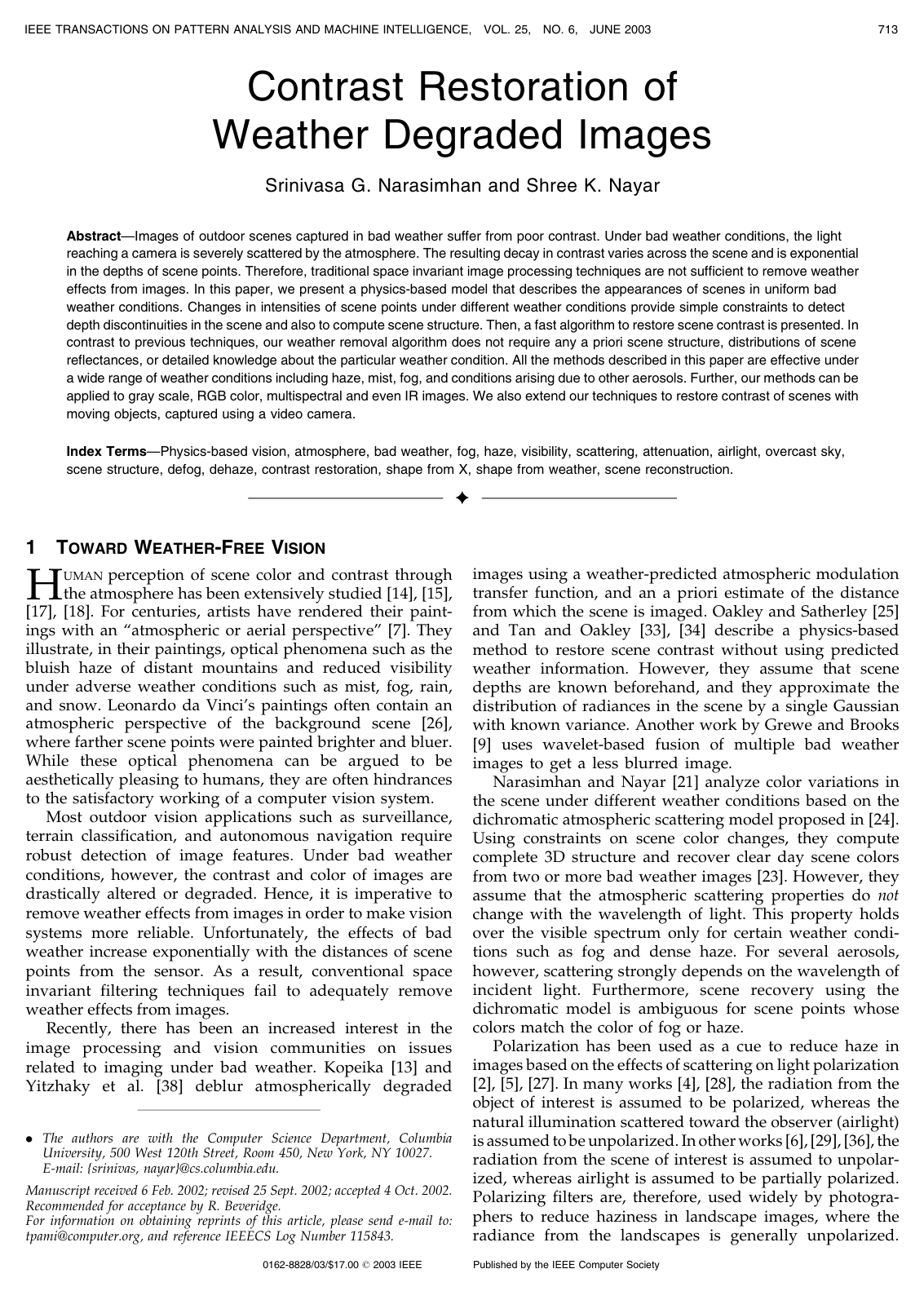
Contrast Restoration of Weather Degraded Images
S. Narasimhan, S. Nayar
Why you should read this
Presents a physics-based atmospheric scattering model and efficient algorithm to recover 3D scene structure and restore clear-day contrast from degraded outdoor images across diverse weather conditions without requiring prior depth or weather information.
Images of outdoor scenes captured in bad weather suffer from poor contrast. Under bad weather conditions, the light reaching a camera is severely scattered by the atmosphere. The resulting decay in contrast varies across the scene and is exponential in the depths of scene points. Therefore, traditional space invariant image processing techniques are not sufficient to remove weather effects from images. In this paper, we present a physics-based model that describes the appearances of scenes in uniform bad weather conditions. Changes in intensities of scene points under different weather conditions provide simple constraints to detect depth discontinuities in the scene and also to compute scene structure. Then, a fast algorithm to restore scene contrast is presented. In contrast to previous techniques, our weather removal algorithm does not require any a priori scene structure, distributions of scene reflectances, or detailed knowledge about the particular weather condition. All the methods described in this paper are effective under a wide range of weather conditions including haze, mist, fog, and conditions arising due to other aerosols. Further, our methods can be applied to gray scale, RGB color, multispectral and even IR images. We also extend our techniques to restore contrast of scenes with moving objects, captured using a video camera.
Added
2026-09-24
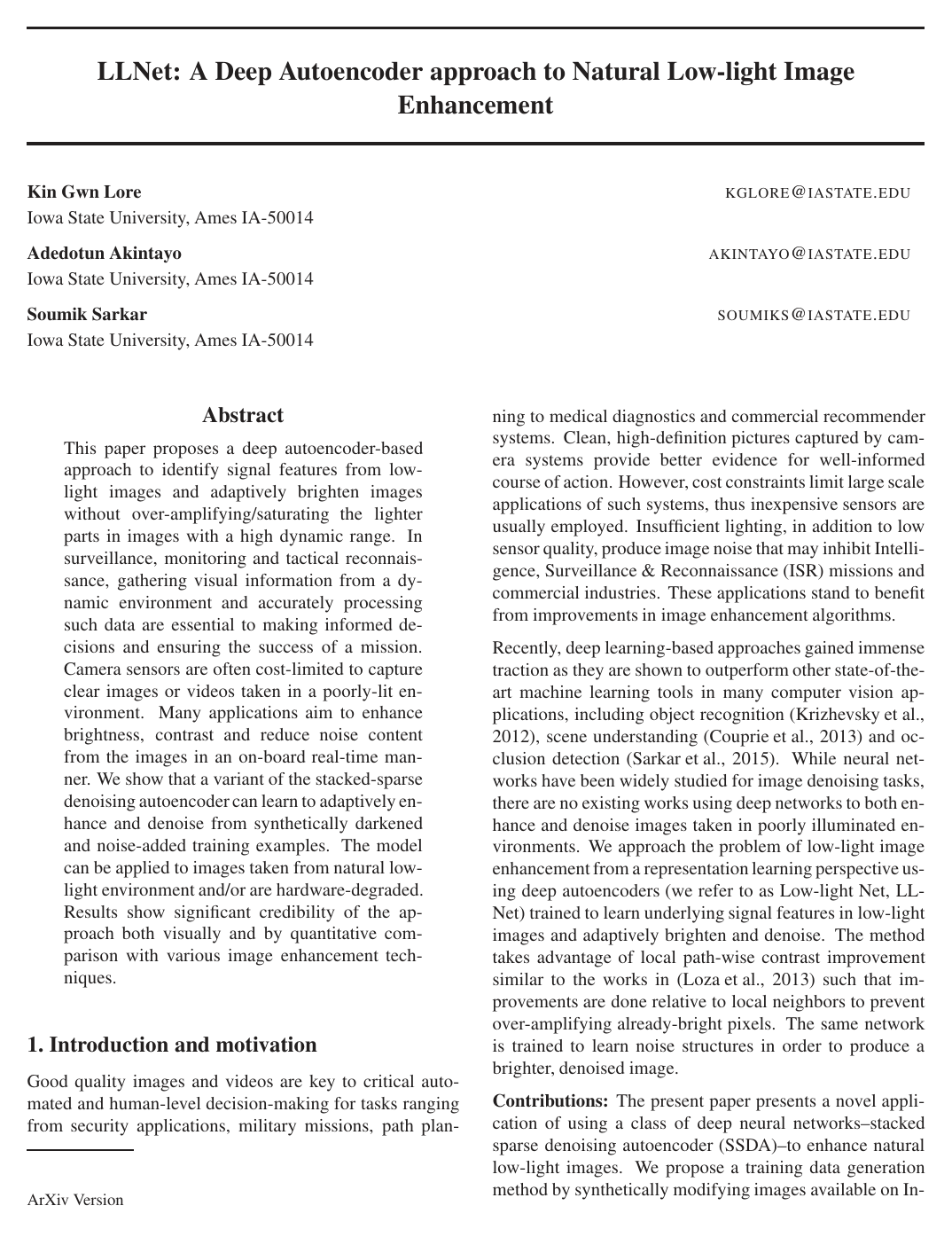
LLNet: A deep autoencoder approach to natural low-light image enhancement
Kin Gwn Lore, Adedotun Akintayo, Soumik Sarkar
Why you should read this
Introduces LLNet, a deep autoencoder architecture that simultaneously brightens low-light images and removes noise without over-saturating highlights, demonstrating that networks trained on synthetic degradations can effectively restore natural dark scenes.
In surveillance, monitoring and tactical reconnaissance, gathering the right visual information from a dynamic environment and accurately processing such data are essential ingredients to making informed decisions which determines the success of an operation. Camera sensors are often cost-limited in ability to clearly capture objects without defects from images or videos taken in a poorly-lit environment. The goal in many applications is to enhance the brightness, contrast and reduce noise content of such images in an on-board real-time manner. We propose a deep autoencoder-based approach to identify signal features from low-light images handcrafting and adaptively brighten images without over-amplifying the lighter parts in images (i.e., without saturation of image pixels) in high dynamic range. We show that a variant of the recently proposed stacked-sparse denoising autoencoder can learn to adaptively enhance and denoise from synthetically darkened and noisy training examples. The network can then be successfully applied to naturally low-light environment and/or hardware degraded images. Results show significant credibility of deep learning based approaches both visually and by quantitative comparison with various popular enhancing, state-of-the-art denoising and hybrid enhancing-denoising techniques.
Added
2026-09-18
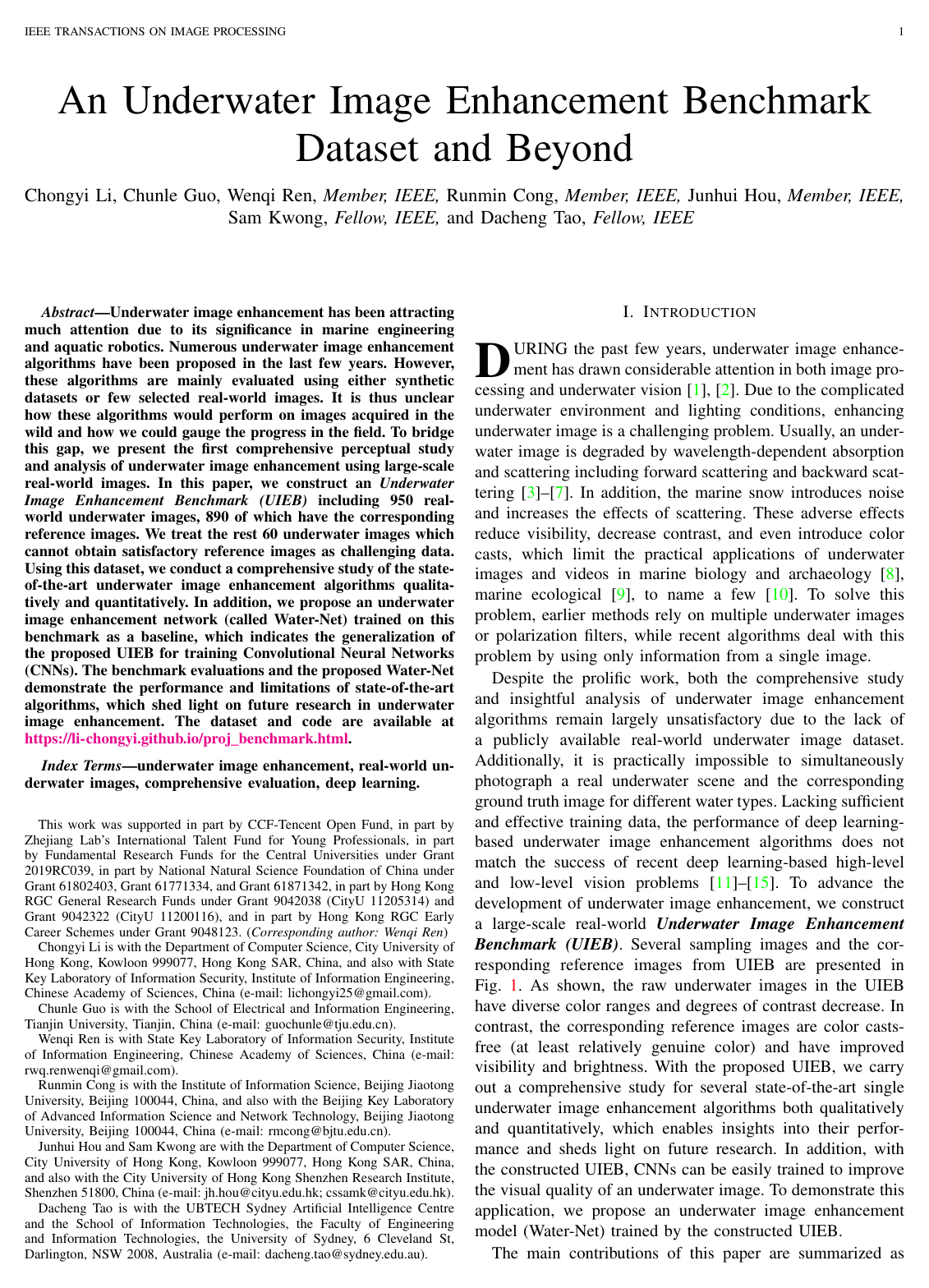
An Underwater Image Enhancement Benchmark Dataset and Beyond
Chongyi Li, Chunle Guo, Wenqi Ren, Runmin Cong, Junhui Hou, Sam Kwong, Dacheng Tao
Why you should read this
Establishes a standardized real-world benchmark dataset containing 950 underwater images alongside a convolutional baseline network, Water-Net, to rigorously evaluate and advance underwater image restoration.
Underwater image enhancement has been attracting much attention due to its significance in marine engineering and aquatic robotics. Numerous underwater image enhancement algorithms have been proposed in the last few years. However, these algorithms are mainly evaluated using either synthetic datasets or few selected real-world images. It is thus unclear how these algorithms would perform on images acquired in the wild and how we could gauge the progress in the field. To bridge this gap, we present the first comprehensive perceptual study and analysis of underwater image enhancement using large-scale real-world images. In this paper, we construct an Underwater Image Enhancement Benchmark (UIEB) including 950 real-world underwater images, 890 of which have the corresponding reference images. We treat the rest 60 underwater images which cannot obtain satisfactory reference images as challenging data. Using this dataset, we conduct a comprehensive study of the state-of-the-art underwater image enhancement algorithms qualitatively and quantitatively. In addition, we propose an underwater image enhancement network (called Water-Net) trained on this benchmark as a baseline, which indicates the generalization of the proposed UIEB for training Convolutional Neural Networks (CNNs). The benchmark evaluations and the proposed Water-Net demonstrate the performance and limitations of state-of-the-art algorithms, which shed light on future research in underwater image enhancement. The dataset and code are available at this https URL.
Added
2026-09-18
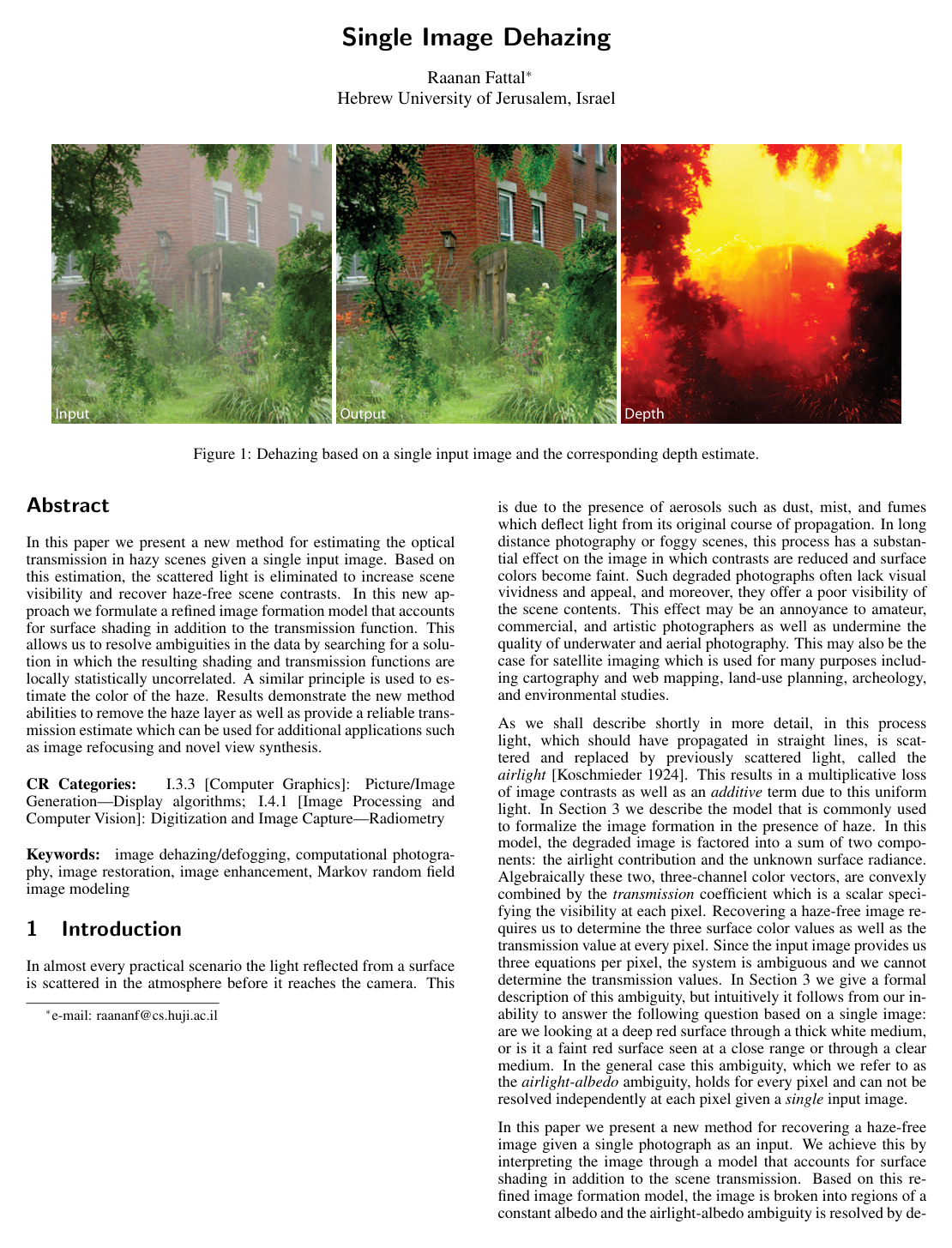
Single image dehazing
Raanan Fattal
Why you should read this
Develops a single-image dehazing method that separates transmission from surface shading to restore contrast and support depth-aware applications.
In this paper we present a new method for estimating the optical transmission in hazy scenes given a single input image. Based on this estimation, the scattered light is eliminated to increase scene visibility and recover haze-free scene contrasts. In this new approach we formulate a refined image formation model that accounts for surface shading in addition to the transmission function. This allows us to resolve ambiguities in the data by searching for a solution in which the resulting shading and transmission functions are locally statistically uncorrelated. A similar principle is used to estimate the color of the haze. Results demonstrate the new method abilities to remove the haze layer as well as provide a reliable transmission estimate which can be used for additional applications such as image refocusing and novel view synthesis.
Added
2026-09-14
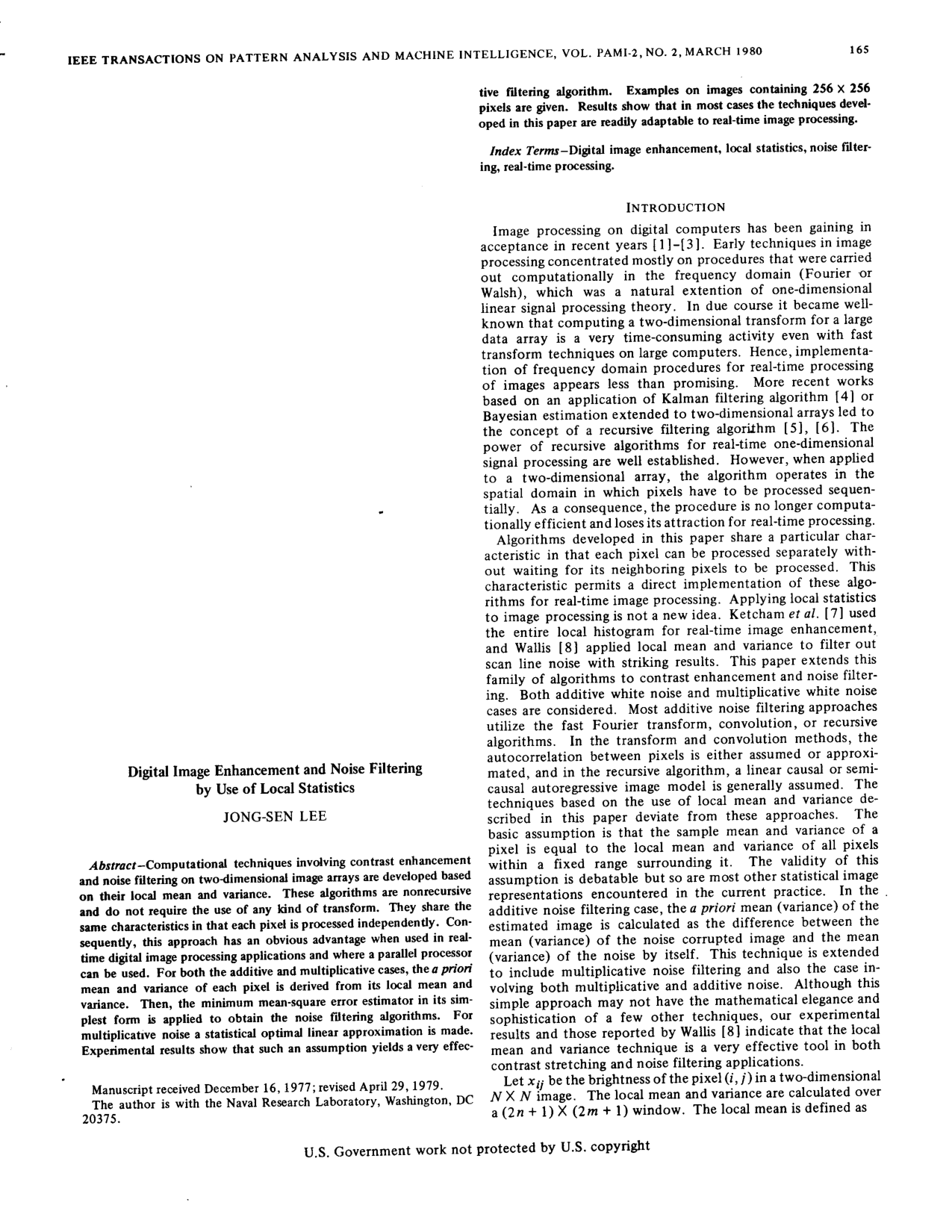
Digital Image Enhancement and Noise Filtering by Use of Local Statistics
Jong-Sen Lee
Why you should read this
Develops computationally efficient spatial-domain filtering algorithms that utilize local mean and variance to remove additive, multiplicative, and mixed noise while preserving edge details and enabling real-time parallel processing.
Abstract—Computational techniques involving contrast enhancement and noise filtering on two-dimensional image arrays are developed based on their local mean and variance. These algorithms are nonrecursive and do not require the use of any kind of transform. They share the same characteristics in that each pixel is processed independently. Consequently, this approach has an obvious advantage when used in real-time digital image processing applications and where a parallel processor can be used. For both the additive and multiplicative cases, the a priori mean and variance of each pixel is derived from its local mean and variance. Then, the minimum mean-square error estimator in its simplest form is applied to obtain the noise filtering algorithms. For multiplicative noise a statistical optimal linear approximation is made. Experimental results show that such an assumption yields a very effec-
Added
2026-09-13