
keyword
deep supervision
Deep supervision is a neural network training technique in which auxiliary objective functions are attached directly to intermediate hidden layers rather than applying supervision solely at the final output layer. By computing losses at multiple intermediate depths, this method injects direct error signals deeper into the architecture during backpropagation, effectively mitigating the vanishing gradient problem and accelerating convergence. It encourages hidden layers to learn more discriminative, feature-rich representations throughout the network hierarchy, improving overall generalization and representation learning. In addition to improving training stability and task accuracy across applications like image segmentation, object detection, and sequence modeling, intermediate supervision branches can also enable practical deployment benefits such as model pruning and early-exit inference.
13 items
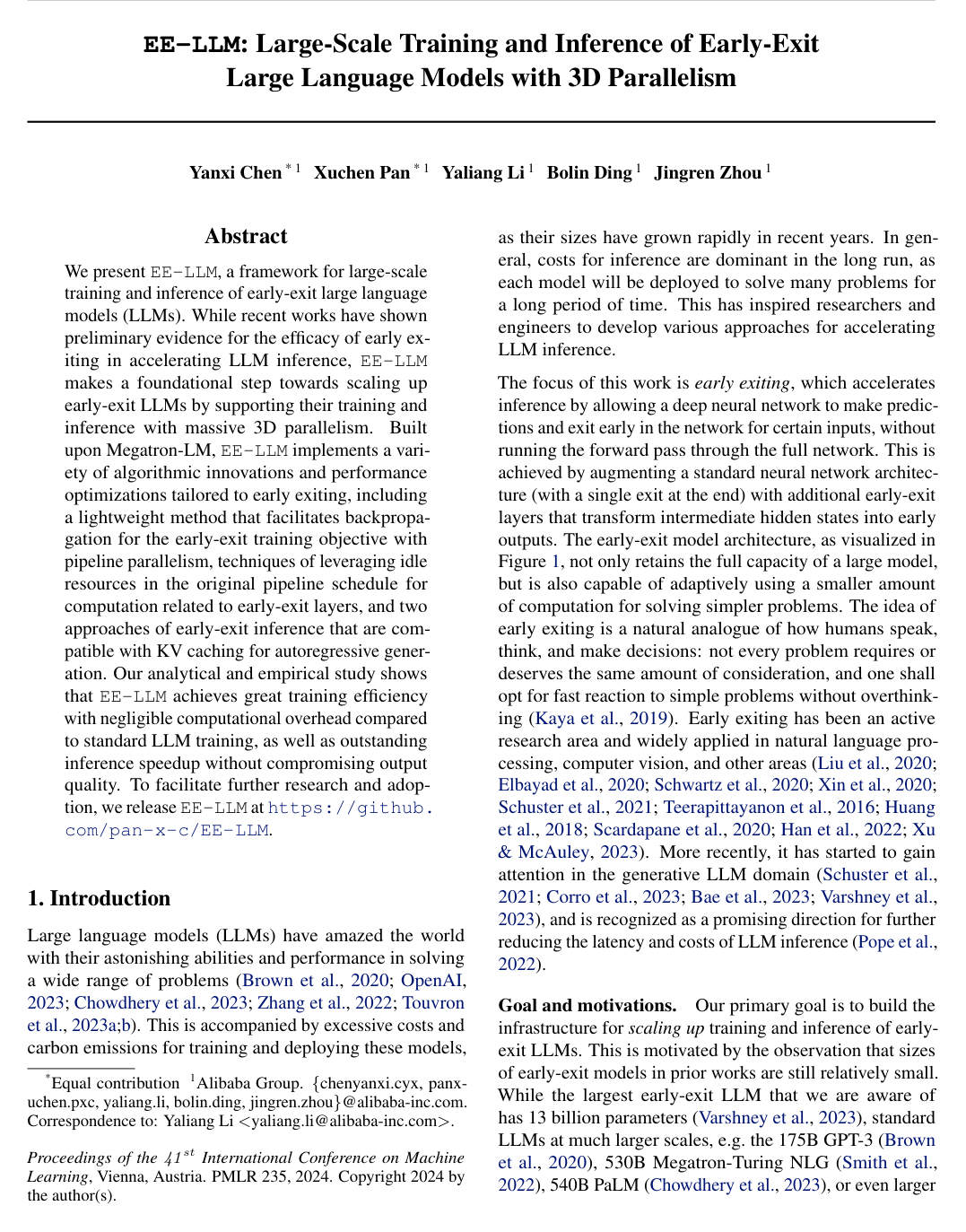
EE-LLM: Large-Scale Training and Inference of Early-Exit Large Language Models with 3D Parallelism
Yanxi Chen, Xuchen Pan, Yaliang Li, Bolin Ding, Jingren Zhou
Why you should read this
Presents EE-LLM, a scalable framework built on Megatron-LM that enables efficient 3D parallel training of early-exit language models across pipeline stages and resolves the incompatibility between early exiting and KV caching during autoregressive inference.
We present EE-LLM, a framework for large-scale training and inference of early-exit large language models (LLMs). While recent works have shown preliminary evidence for the efficacy of early exiting in accelerating LLM inference, EE-LLM makes a foundational step towards scaling up early-exit LLMs by supporting their training and inference with massive 3D parallelism. Built upon Megatron-LM, EE-LLM implements a variety of algorithmic innovations and performance optimizations tailored to early exiting, including a lightweight method that facilitates backpropagation for the early-exit training objective with pipeline parallelism, techniques of leveraging idle resources in the original pipeline schedule for computation related to early-exit layers, and two approaches of early-exit inference that are compatible with KV caching for autoregressive generation. Our analytical and empirical study shows that EE-LLM achieves great training efficiency with negligible computational overhead compared to standard LLM training, as well as outstanding inference speedup without compromising output quality. To facilitate further research and adoption, we release EE-LLM at https://github.com/pan-x-c/EE-LLM.
Added
2026-10-02
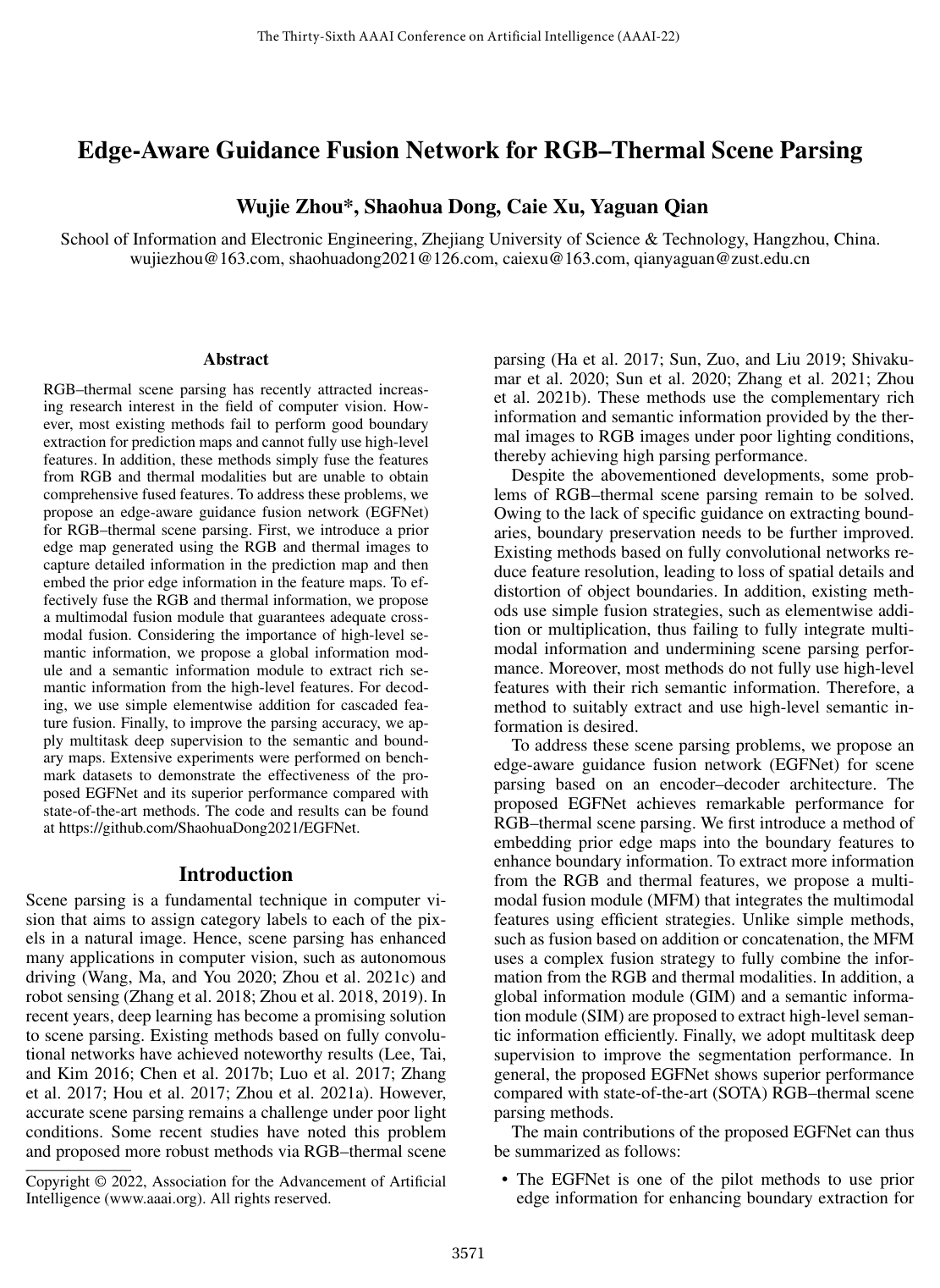
Edge-Aware Guidance Fusion Network for RGB-Thermal Scene Parsing
Wujie Zhou, Shaohua Dong, Caie Xu, Yaguan Qian
Why you should read this
Proposes an edge-aware guidance fusion network that incorporates prior edge maps, specialized cross-modal fusion modules, and multitask deep supervision to significantly improve object boundary localization in RGB-thermal scene parsing.
RGB–thermal scene parsing has recently attracted increasing research interest in the field of computer vision. However, most existing methods fail to perform good boundary extraction for prediction maps and cannot fully use high-level features. In addition, these methods simply fuse the features from RGB and thermal modalities but are unable to obtain comprehensive fused features. To address these problems, we propose an edge-aware guidance fusion network (EGFNet) for RGB–thermal scene parsing. First, we introduce a prior edge map generated using the RGB and thermal images to capture detailed information in the prediction map and then embed the prior edge information in the feature maps. To effectively fuse the RGB and thermal information, we propose a multimodal fusion module that guarantees adequate cross-modal fusion. Considering the importance of high-level semantic information, we propose a global information module and a semantic information module to extract rich semantic information from the high-level features. For decoding, we use simple elementwise addition for cascaded feature fusion. Finally, to improve the parsing accuracy, we apply multitask deep supervision to the semantic and boundary maps. Extensive experiments were performed on benchmark datasets to demonstrate the effectiveness of the proposed EGFNet and its superior performance compared with state-of-the-art methods. The code and results can be found at https://github.com/ShaohuaDong2021/EGFNet.
Added
2026-09-26
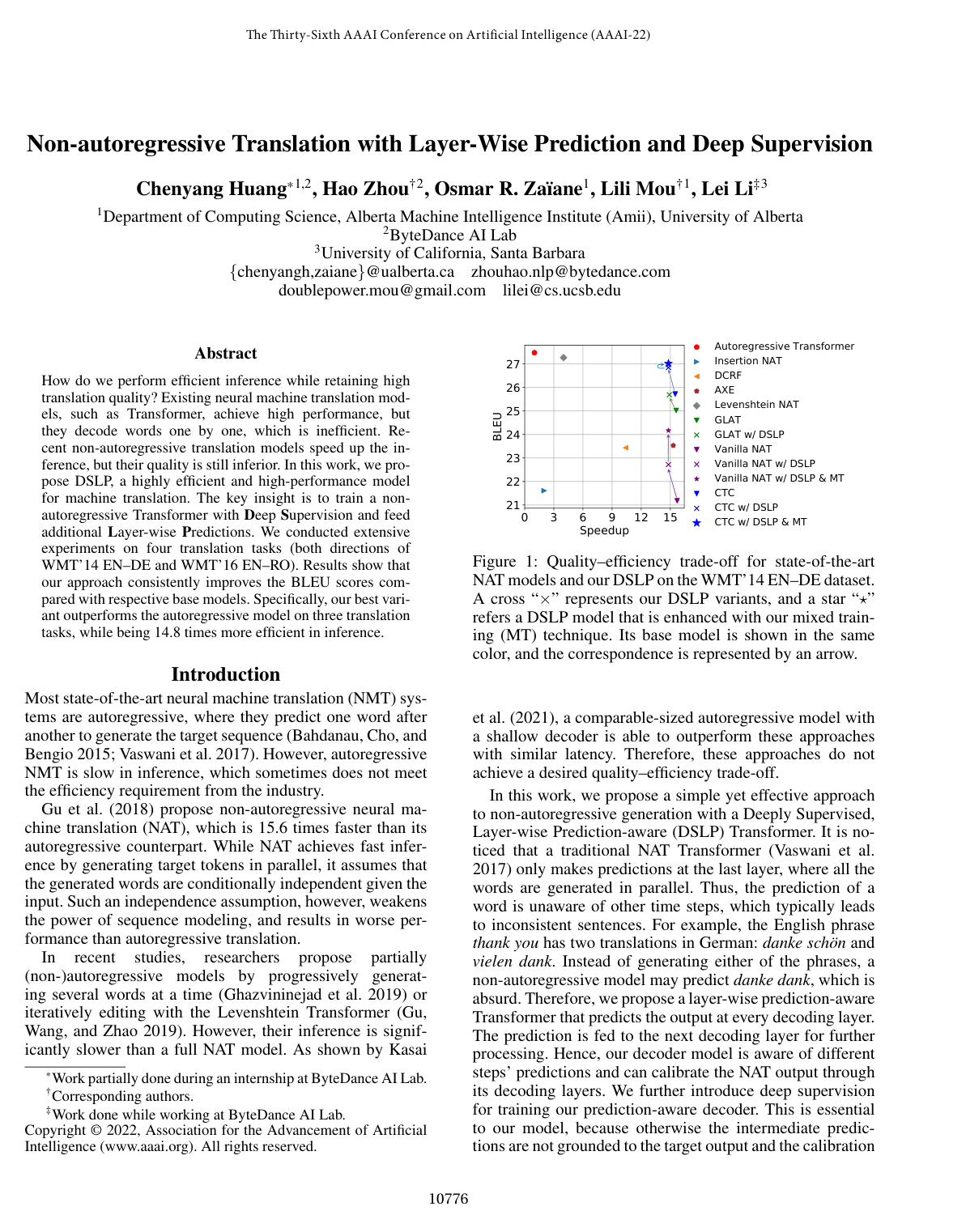
Non-autoregressive Translation with Layer-Wise Prediction and Deep Supervision
Chenyang Huang, Hao Zhou, Osmar R. Zaïane, Lili Mou, Lei Li
Why you should read this
Proposes a deeply supervised, layer-wise prediction-aware non-autoregressive Transformer that allows intermediate decoder layers to iteratively calibrate parallel token predictions, achieving translation quality that matches or exceeds autoregressive models with a nearly fifteen-fold inference speedup.
How do we perform efficient inference while retaining high translation quality? Existing neural machine translation models, such as Transformer, achieve high performance, but they decode words one by one, which is inefficient. Recent non-autoregressive translation models speed up the inference, but their quality is still inferior. In this work, we propose DSLP, a highly efficient and high-performance model for machine translation. The key insight is to train a non-autoregressive Transformer with Deep Supervision and feed additional Layer-wise Predictions. We conducted extensive experiments on four translation tasks (both directions of WMT'14 EN-DE and WMT'16 EN-RO). Results show that our approach consistently improves the BLEU scores compared with respective base models. Specifically, our best variant outperforms the autoregressive model on three translation tasks, while being 14.8 times more efficient in inference.
Added
2026-09-26
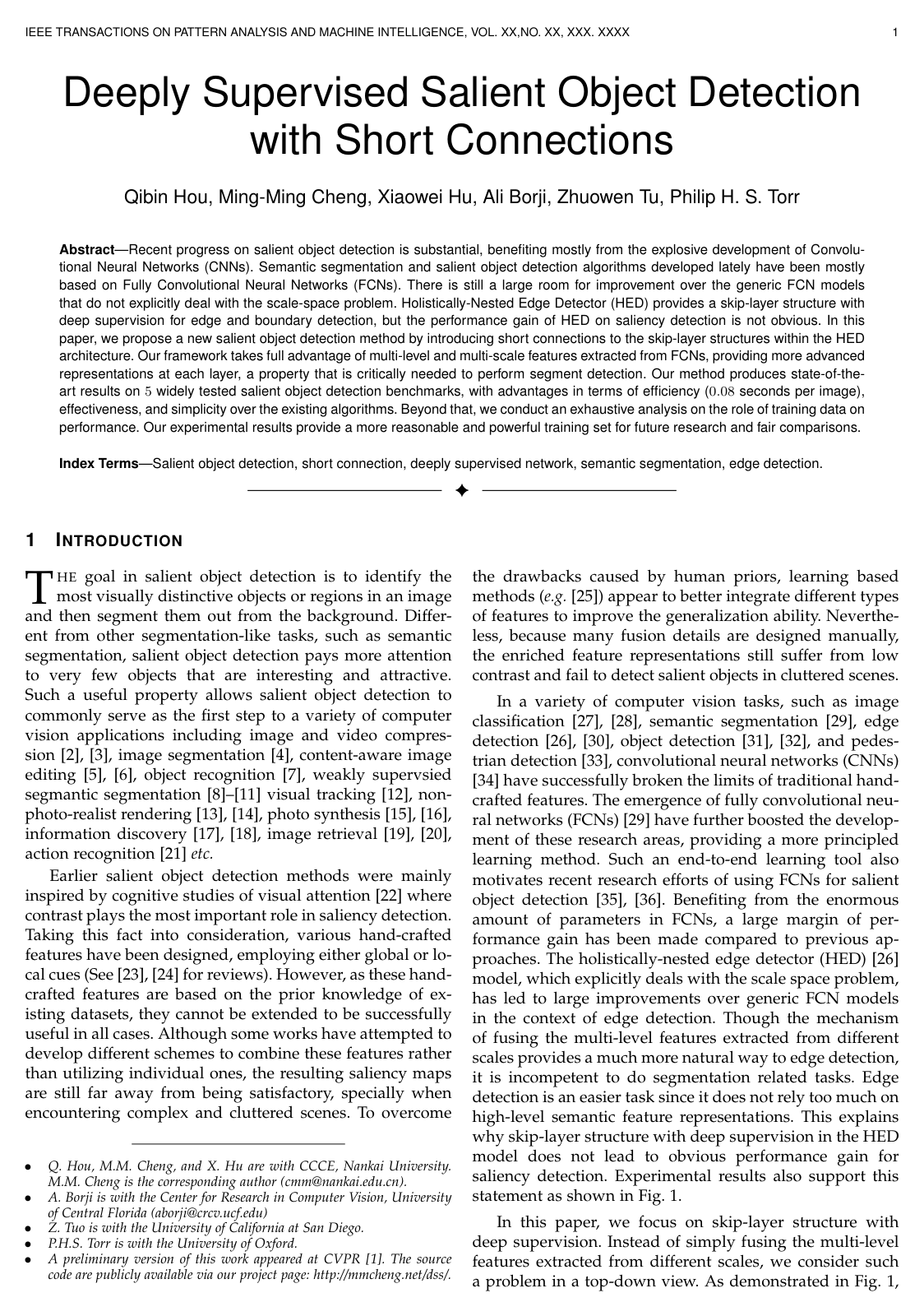
Deeply Supervised Salient Object Detection with Short Connections
Qibin Hou, Ming-Ming Cheng, Xiao-Wei Hu, Ali Borji, Zhuowen Tu, Philip Torr
Why you should read this
Introduces short connections to deeply supervised skip-layer architectures to capture multi-scale features, achieving state-of-the-art salient object detection accuracy and fast inference across five standard benchmarks.
Recent progress on saliency detection is substantial, benefiting mostly from the explosive development of Convolutional Neural Networks (CNNs). Semantic segmentation and saliency detection algorithms developed lately have been mostly based on Fully Convolutional Neural Networks (FCNs). There is still a large room for improvement over the generic FCN models that do not explicitly deal with the scale-space problem. Holistically-Nested Edge Detector (HED) provides a skip-layer structure with deep supervision for edge and boundary detection, but the performance gain of HED on salience detection is not obvious. In this paper, we propose a new method for saliency detection by introducing short connections to the skip-layer structures within the HED architecture. Our framework provides rich multi-scale feature maps at each layer, a property that is critically needed to perform segment detection. Our method produces state-of-the-art results on 5 widely tested salient object detection benchmarks, with advantages in terms of efficiency (0.15 seconds per image), effectiveness, and simplicity over the existing algorithms.
Added
2026-09-25
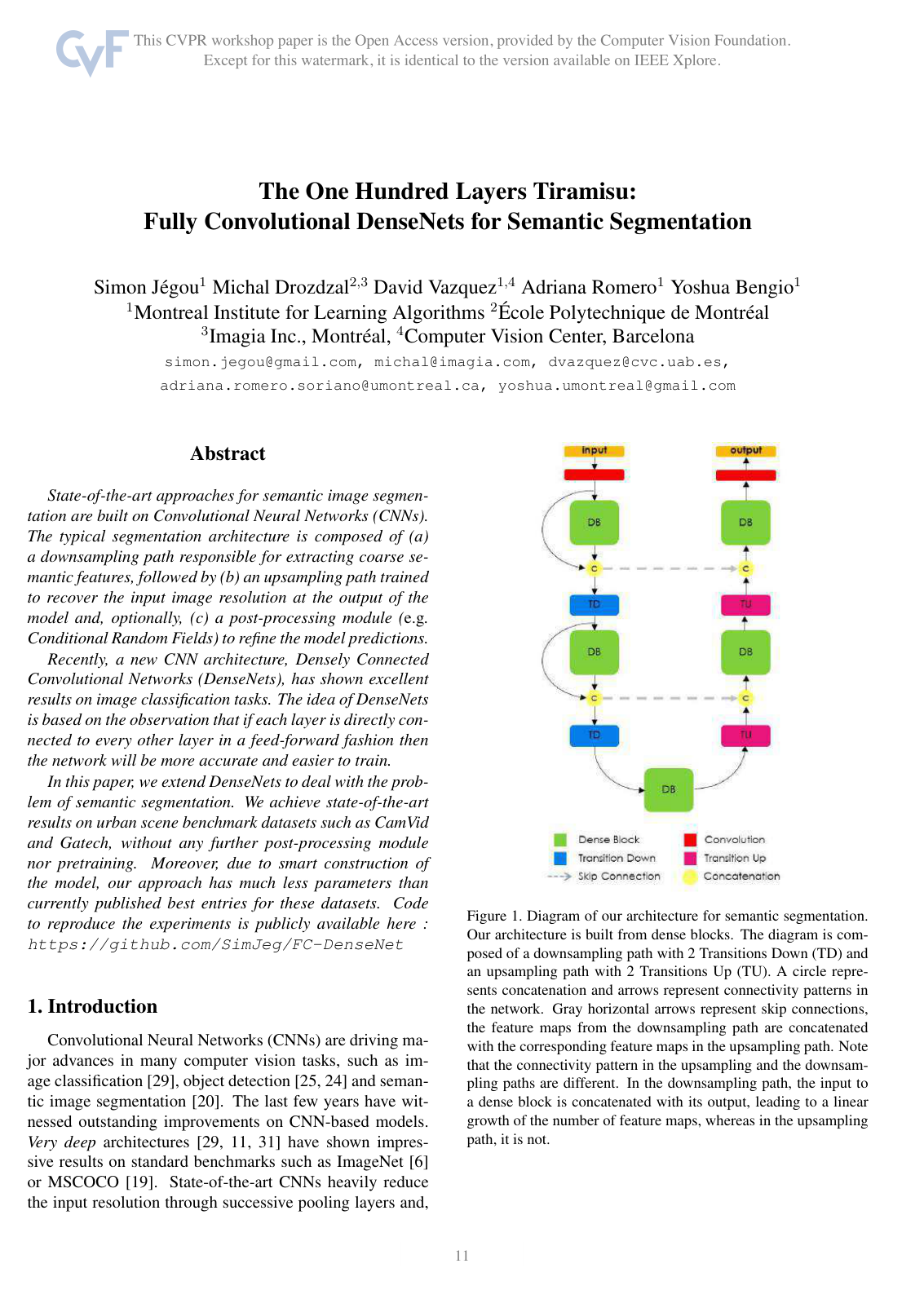
The One Hundred Layers Tiramisu: Fully Convolutional DenseNets for Semantic Segmentation
Simon Jégou, Michal Drozdzal, David Vazquez, Adriana Romero, Yoshua Bengio
Why you should read this
Extends DenseNets to semantic segmentation by introducing a fully convolutional architecture that achieves state-of-the-art accuracy on urban scene benchmarks while using substantially fewer parameters and eliminating the need for pretraining or post-processing.
State-of-the-art approaches for semantic image segmentation are built on Convolutional Neural Networks (CNNs). The typical segmentation architecture is composed of (a) a downsampling path responsible for extracting coarse semantic features, followed by (b) an upsampling path trained to recover the input image resolution at the output of the model and, optionally, (c) a post-processing module (e.g. Conditional Random Fields) to refine the model predictions. Recently, a new CNN architecture, Densely Connected Convolutional Networks (DenseNets), has shown excellent results on image classification tasks. The idea of DenseNets is based on the observation that if each layer is directly connected to every other layer in a feed-forward fashion then the network will be more accurate and easier to train. In this paper, we extend DenseNets to deal with the problem of semantic segmentation. We achieve state-of-the-art results on urban scene benchmark datasets such as CamVid and Gatech, without any further post-processing module nor pretraining. Moreover, due to smart construction of the model, our approach has much less parameters than currently published best entries for these datasets. Code to reproduce the experiments is available here : this https URL
Added
2026-09-24
A Smaller Transformer in Your Transformer
Dhananjay Tomar, Marius Aasan, Andreas Kleppe, Adín Ramírez Rivera
Why you should read this
Proposes Transformer-Within-Transformer, a post-hoc compression technique that fuses contiguous redundant Vision Transformer layers into single learned surrogate blocks, halving model depth and inference computation while matching or exceeding baseline accuracy across natural image and histopathology domains.
Recent findings indicate that Vision Transformers settle into locally similar computational phases, implying a level of depthwise computational redundancy. However, existing methods to exploit this redundancy either fail to reduce inference compute or severely degrade model expressivity. In this work, we formalise a unified view of block redundancy that decouples the geometry from specific surrogate interventions. We then introduce Transformer-Within-Transformer (TWT), a post-hoc method that fuses contiguous groups of redundant layers into a single learned surrogate layer. TWT reduces parameter count and inference compute while remaining competitive with original models using half the depth on natural images, and in several downstream histopathology settings, TWT matches or even improves on the original baseline.
Added
2026-09-20

PraNet: Parallel Reverse Attention Network for Polyp Segmentation
Deng-Ping Fan, Ge-Peng Ji, Tao Zhou, Geng Chen, Huazhu Fu, Jianbing Shen, Ling Shao
Why you should read this
Introduces PraNet, an efficient deep network that resolves vague lesion boundaries in colonoscopy images by coupling high-level context aggregation with reverse attention modules to achieve accurate, real-time colorectal polyp segmentation.
Colonoscopy is an effective technique for detecting colorectal polyps, which are highly related to colorectal cancer. In clinical practice, segmenting polyps from colonoscopy images is of great importance since it provides valuable information for diagnosis and surgery. However, accurate polyp segmentation is a challenging task, for two major reasons: (i) the same type of polyps has a diversity of size, color and texture; and (ii) the boundary between a polyp and its surrounding mucosa is not sharp. To address these challenges, we propose a parallel reverse attention network (PraNet) for accurate polyp segmentation in colonoscopy images. Specifically, we first aggregate the features in high-level layers using a parallel partial decoder (PPD). Based on the combined feature, we then generate a global map as the initial guidance area for the following components. In addition, we mine the boundary cues using a reverse attention (RA) module, which is able to establish the relationship between areas and boundary cues. Thanks to the recurrent cooperation mechanism between areas and boundaries, our PraNet is capable of calibrating any misaligned predictions, improving the segmentation accuracy. Quantitative and qualitative evaluations on five challenging datasets across six metrics show that our PraNet improves the segmentation accuracy significantly, and presents a number of advantages in terms of generalizability, and real-time segmentation efficiency.
Added
2026-09-18
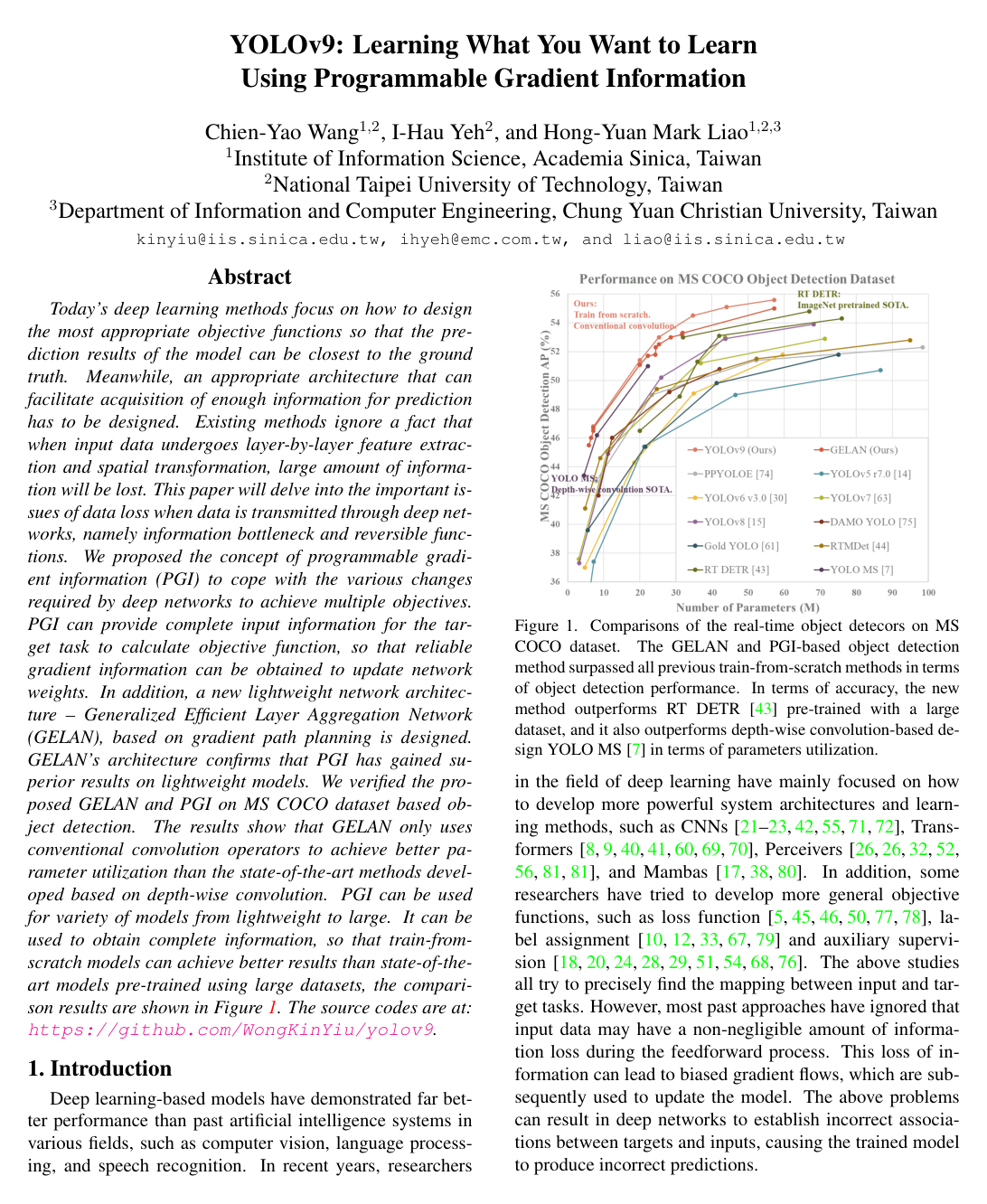
YOLOv9: Learning What You Want to Learn Using Programmable Gradient Information
Chien-Yao Wang, I-Hau Yeh, Hongpeng Liao
Why you should read this
Introduces Programmable Gradient Information and the GELAN architecture to mitigate deep feature information loss, allowing real-time object detection models trained entirely from scratch to outperform existing pre-trained state-of-the-art systems on MS COCO.
Today's deep learning methods focus on how to design the most appropriate objective functions so that the prediction results of the model can be closest to the ground truth. Meanwhile, an appropriate architecture that can facilitate acquisition of enough information for prediction has to be designed. Existing methods ignore a fact that when input data undergoes layer-by-layer feature extraction and spatial transformation, large amount of information will be lost. This paper will delve into the important issues of data loss when data is transmitted through deep networks, namely information bottleneck and reversible functions. We proposed the concept of programmable gradient information (PGI) to cope with the various changes required by deep networks to achieve multiple objectives. PGI can provide complete input information for the target task to calculate objective function, so that reliable gradient information can be obtained to update network weights. In addition, a new lightweight network architecture -- Generalized Efficient Layer Aggregation Network (GELAN), based on gradient path planning is designed. GELAN's architecture confirms that PGI has gained superior results on lightweight models. We verified the proposed GELAN and PGI on MS COCO dataset based object detection. The results show that GELAN only uses conventional convolution operators to achieve better parameter utilization than the state-of-the-art methods developed based on depth-wise convolution. PGI can be used for variety of models from lightweight to large. It can be used to obtain complete information, so that train-from-scratch models can achieve better results than state-of-the-art models pre-trained using large datasets, the comparison results are shown in Figure 1. The source codes are at: this https URL.
Added
2026-09-10
UNet++: A Nested U-Net Architecture for Medical Image Segmentation
Zongwei Zhou, Md Mahfuzur Rahman Siddiquee, Nima Tajbakhsh, Jianming Liang
Why you should read this
Proposes UNet++, a deeply-supervised encoder-decoder architecture with nested, dense skip pathways that reduces the semantic gap between feature representations to achieve superior segmentation performance across diverse medical imaging modalities.
In this paper, we present UNet++, a new, more powerful architecture for medical image segmentation. Our architecture is essentially a deeply-supervised encoder-decoder network where the encoder and decoder sub-networks are connected through a series of nested, dense skip pathways. The re-designed skip pathways aim at reducing the semantic gap between the feature maps of the encoder and decoder sub-networks. We argue that the optimizer would deal with an easier learning task when the feature maps from the decoder and encoder networks are semantically similar. We have evaluated UNet++ in comparison with U-Net and wide U-Net architectures across multiple medical image segmentation tasks: nodule segmentation in the low-dose CT scans of chest, nuclei segmentation in the microscopy images, liver segmentation in abdominal CT scans, and polyp segmentation in colonoscopy videos. Our experiments demonstrate that UNet++ with deep supervision achieves an average IoU gain of 3.9 and 3.4 points over U-Net and wide U-Net, respectively.
Added
2026-09-07
YOLOv7: Trainable Bag-of-Freebies Sets New State-of-the-Art for Real-Time Object Detectors
Chien-Yao Wang, Alexey Bochkovskiy, Hong-Yuan Mark Liao
Why you should read this
Introduces YOLOv7 as the new state-of-the-art in real-time object detection, achieving 56.8% AP on MS COCO through the integration of an Extended Efficient Layer Aggregation Network and a novel suite of trainable bag-of-freebies that enhance accuracy without increasing inference costs.
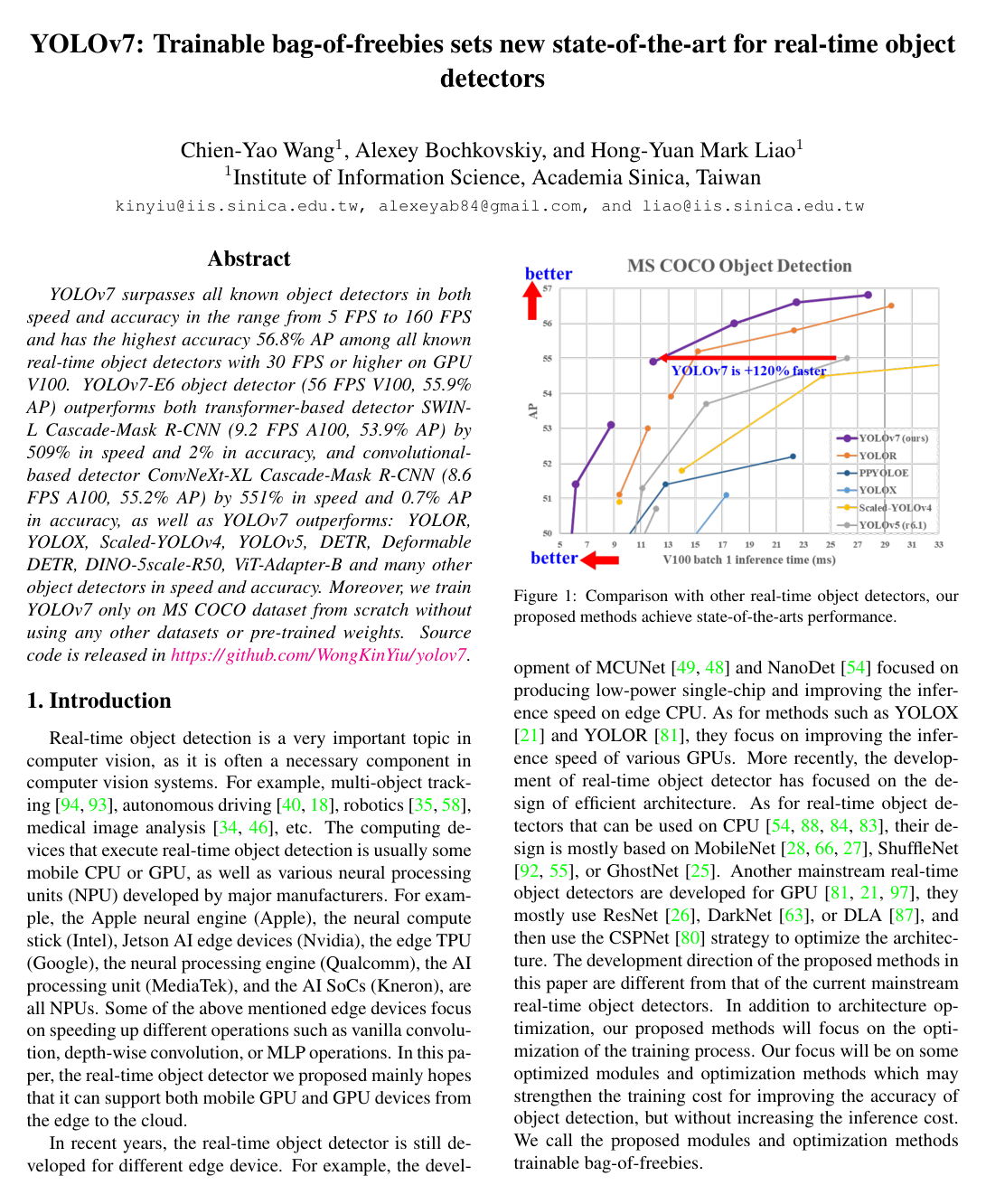
YOLOv7 surpasses all known object detectors in both speed and accuracy in the range from 5 FPS to 160 FPS and has the highest accuracy 56.8% AP among all known real-time object detectors with 30 FPS or higher on GPU V100. YOLOv7-E6 object detector (56 FPS V100, 55.9% AP) outperforms both transformer-based detector SWIN-L Cascade-Mask R-CNN (9.2 FPS A100, 53.9% AP) by 509% in speed and 2% in accuracy, and convolutional-based detector ConvNeXt-XL Cascade-Mask R-CNN (8.6 FPS A100, 55.2% AP) by 551% in speed and 0.7% AP in accuracy, as well as YOLOv7 outperforms: YOLOR, YOLOX, Scaled-YOLOv4, YOLOv5, DETR, Deformable DETR, DINO-5scale-R50, ViT-Adapter-B and many other object detectors in speed and accuracy. Moreover, we train YOLOv7 only on MS COCO dataset from scratch without using any other datasets or pre-trained weights. Source code is released in https://github.com/WongKinYiu/yolov7.
Added
2026-04-21
Densely Connected Convolutional Networks
Gao Huang, Zhuang Liu, Laurens van der Maaten, Kilian Q. Weinberger
Why you should read this
Connects every layer to every other layer in a feed-forward fashion to maximize feature reuse and gradient flow, providing an alternative to residual connections.
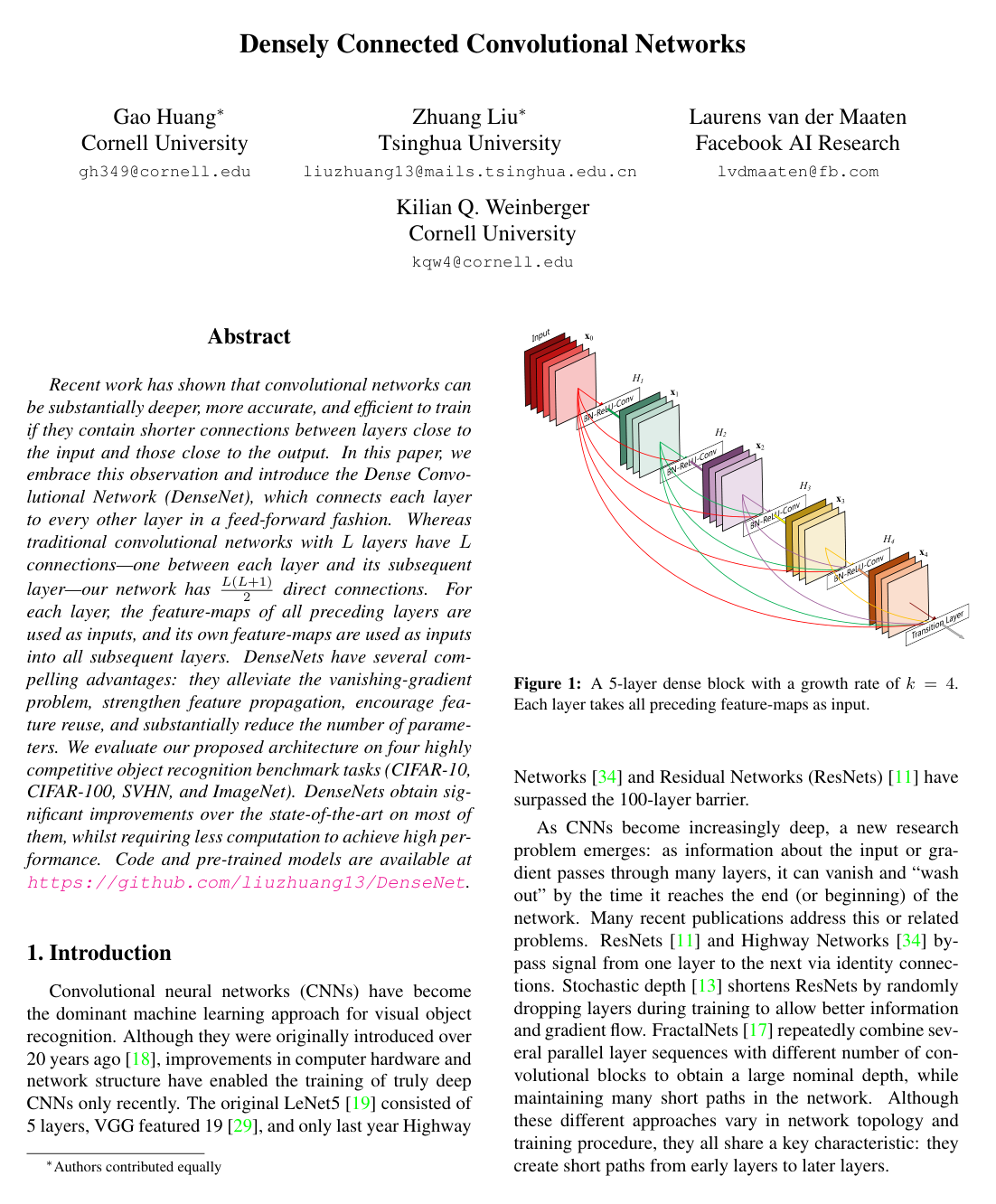
Recent work has shown that convolutional networks can be substantially deeper, more accurate, and efficient to train if they contain shorter connections between layers close to the input and those close to the output. In this paper, we embrace this observation and introduce the Dense Convolutional Network (DenseNet), which connects each layer to every other layer in a feed-forward fashion. Whereas traditional convolutional networks with L layers have L connections-one between each layer and its subsequent layer-our network has L(L+1)/2 direct connections. For each layer, the feature-maps of all preceding layers are used as inputs, and its own feature-maps are used as inputs into all subsequent layers. DenseNets have several compelling advantages: they alleviate the vanishing-gradient problem, strengthen feature propagation, encourage feature reuse, and substantially reduce the number of parameters. We evaluate our proposed architecture on four highly competitive object recognition benchmark tasks (CIFAR-10, CIFAR-100, SVHN, and ImageNet). DenseNets obtain significant improvements over the state-of-the-art on most of them, whilst requiring less memory and computation to achieve high performance. Code and pre-trained models are available at https://github.com/liuzhuang13/DenseNet.
Added
2026-02-18
Less is More: Recursive Reasoning with Tiny Networks
Alexia Jolicoeur-Martineau
Why you should read this
Presents a groundbreaking approach, Tiny Recursive Model (TRM), that achieves significantly higher generalization on complex tasks like ARC-AGI than LLMs with orders of magnitude fewer parameters, demonstrating that "less is more" in AI reasoning.
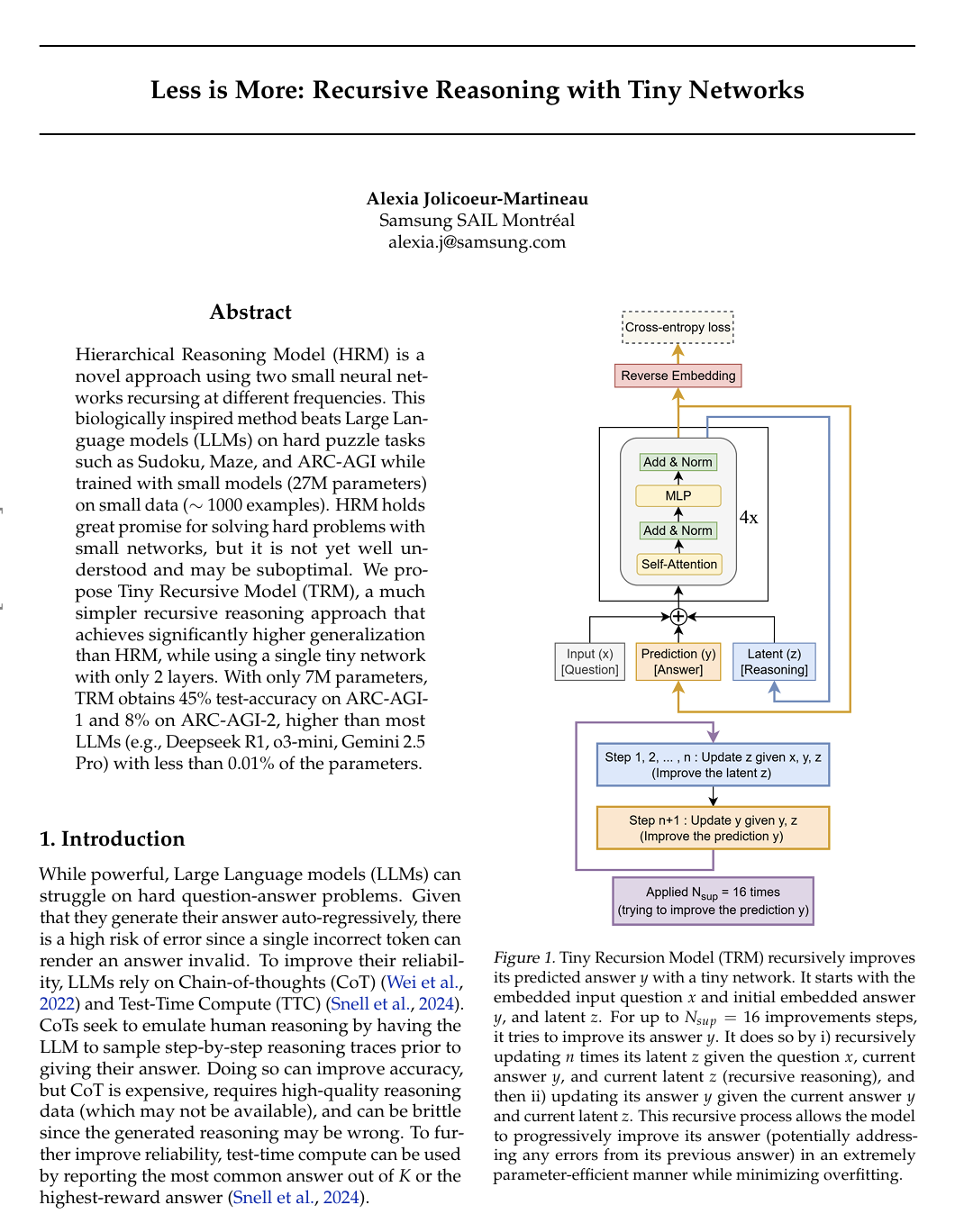
Hierarchical Reasoning Model (HRM) is a novel approach using two small neural networks recursing at different frequencies. This biologically inspired method beats Large Language models (LLMs) on hard puzzle tasks such as Sudoku, Maze, and ARC-AGI while trained with small models (27M parameters) on small data (around 1000 examples). HRM holds great promise for solving hard problems with small networks, but it is not yet well understood and may be suboptimal. We propose Tiny Recursive Model (TRM), a much simpler recursive reasoning approach that achieves significantly higher generalization than HRM, while using a single tiny network with only 2 layers. With only 7M parameters, TRM obtains 45% test-accuracy on ARC-AGI-1 and 8% on ARC-AGI-2, higher than most LLMs (e.g., Deepseek R1, o3-mini, Gemini 2.5 Pro) with less than 0.01% of the parameters.
Added
2025-11-23
License
Published with permission
Hierarchical Reasoning Model
Guan Wang, Jin Li, Yuhao Sun, Xing Chen, Changling Liu, Yue Wu, Meng Lu, Sen Song, Yasin Abbasi Yadkori
Why you should read this
Introduces the Hierarchical Reasoning Model (HRM), a novel recurrent architecture that outperforms much larger language models on complex reasoning tasks with significantly fewer parameters and training data by mimicking the brain's hierarchical processing.
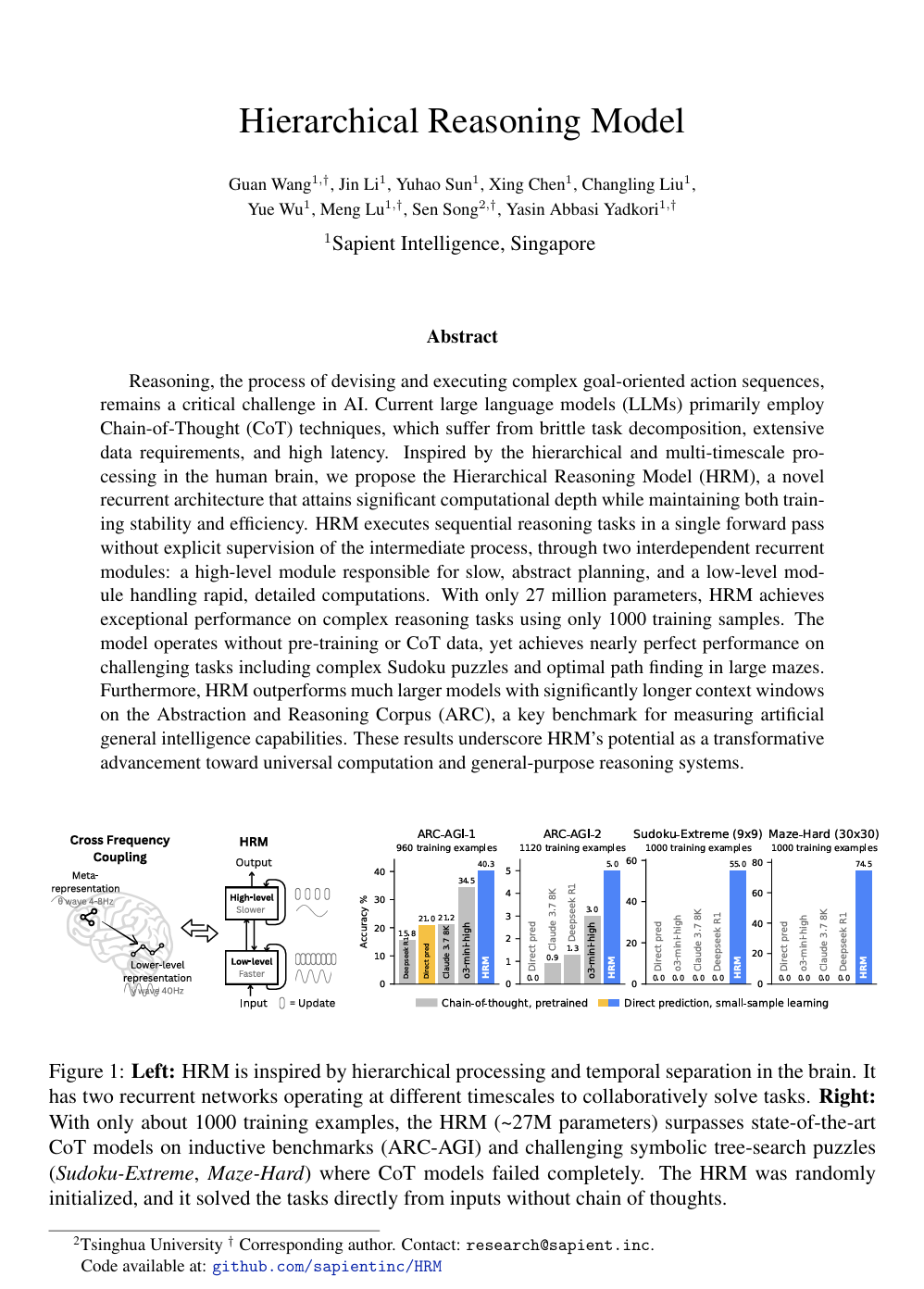
Reasoning, the process of devising and executing complex goal-oriented action sequences, remains a critical challenge in AI. Current large language models (LLMs) primarily employ Chain-of-Thought (CoT) techniques, which suffer from brittle task decomposition, extensive data requirements, and high latency. Inspired by the hierarchical and multi-timescale processing in the human brain, we propose the Hierarchical Reasoning Model (HRM), a novel recurrent architecture that attains significant computational depth while maintaining both training stability and efficiency. HRM executes sequential reasoning tasks in a single forward pass without explicit supervision of the intermediate process, through two interdependent recurrent modules: a high-level module responsible for slow, abstract planning, and a low-level module handling rapid, detailed computations. With only 27 million parameters, HRM achieves exceptional performance on complex reasoning tasks using only 1000 training samples. The model operates without pre-training or CoT data, yet achieves nearly perfect performance on challenging tasks including complex Sudoku puzzles and optimal path finding in large mazes. Furthermore, HRM outperforms much larger models with significantly longer context windows on the Abstraction and Reasoning Corpus (ARC), a key benchmark for measuring artificial general intelligence capabilities. These results underscore HRM's potential as a transformative advancement toward universal computation and general-purpose reasoning systems.
Added
2025-10-31