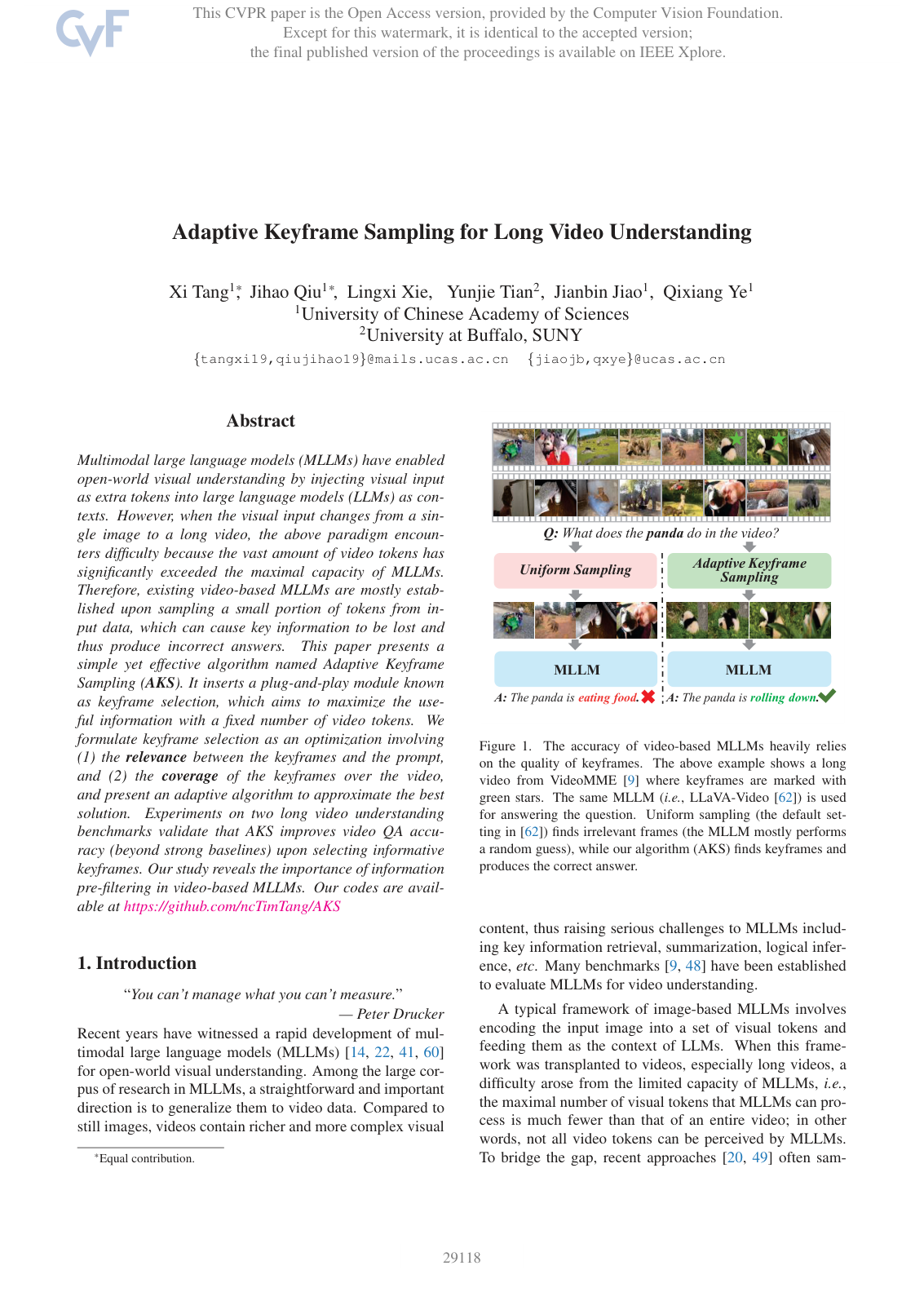
Adaptive keyframe sampling is a video processing technique that dynamically selects the most informative and representative frames from a video sequence rather than relying on uniform, fixed-interval extraction. Used primarily to mitigate computational and token capacity limits in multimodal models, the method optimizes the selection of a constrained number of frames by balancing their semantic relevance to a user prompt or task against their comprehensive coverage across the entire video timeline. By selectively filtering out redundant visual information while preserving critical events and context, adaptive keyframe sampling enhances the efficiency and accuracy of downstream applications such as long video understanding, video question answering, and video summarization.