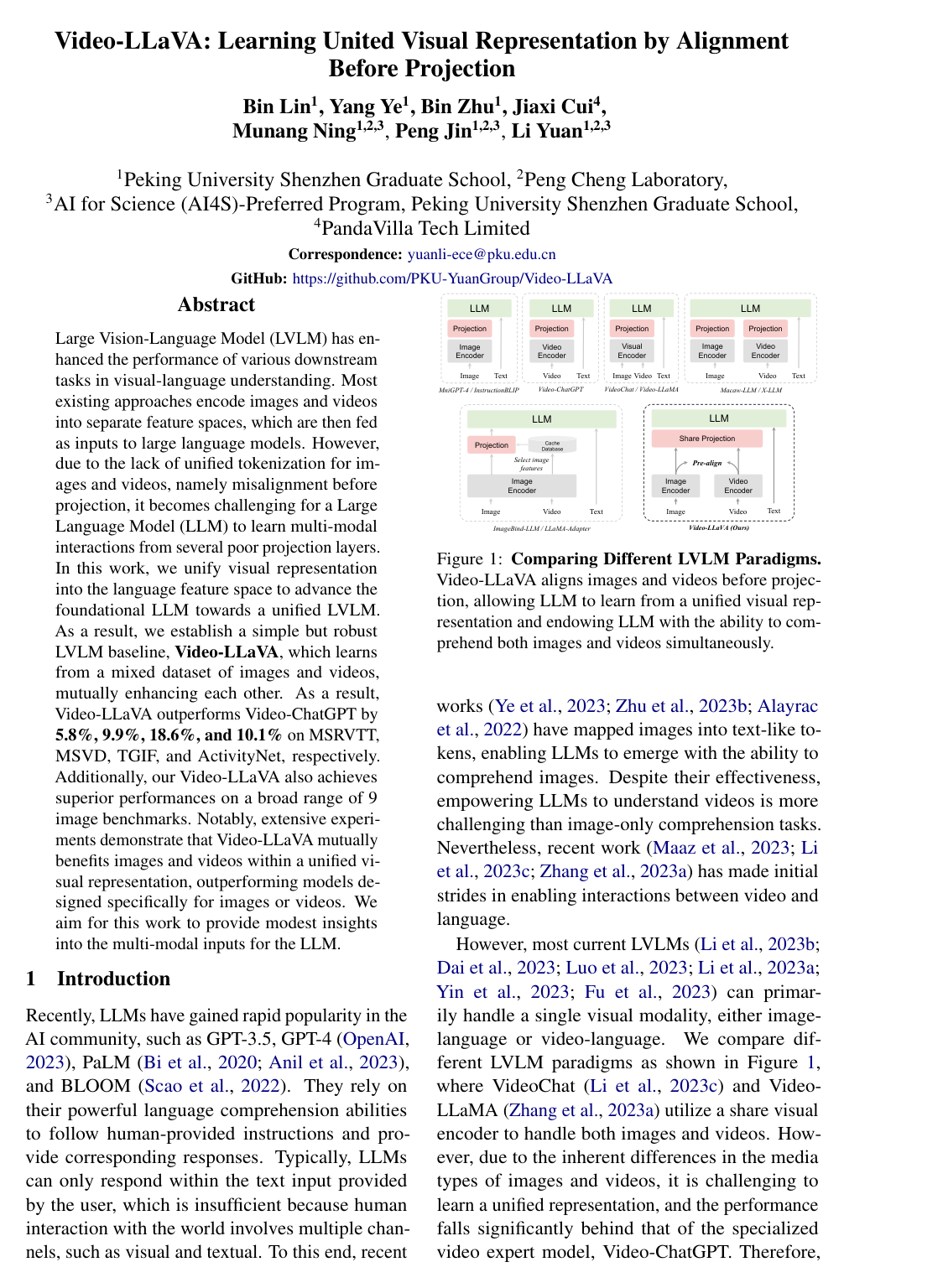
A unified visual feature space is a shared multidimensional representation domain where visual data from distinct formats or modalities, such as static images and temporal video sequences, are encoded into a consistent and compatible set of mathematical embeddings. Instead of processing different visual inputs through isolated, format-specific encoders that yield disjoint representations, a unified space standardizes visual tokenization and aligns feature distributions across modalities before downstream integration. This alignment allows machine learning architectures, such as multimodal transformers and vision-language systems, to process heterogeneous visual inputs through a common interface, fostering mutual learning across modalities and improving cross-modal reasoning.