keyword
Turing test
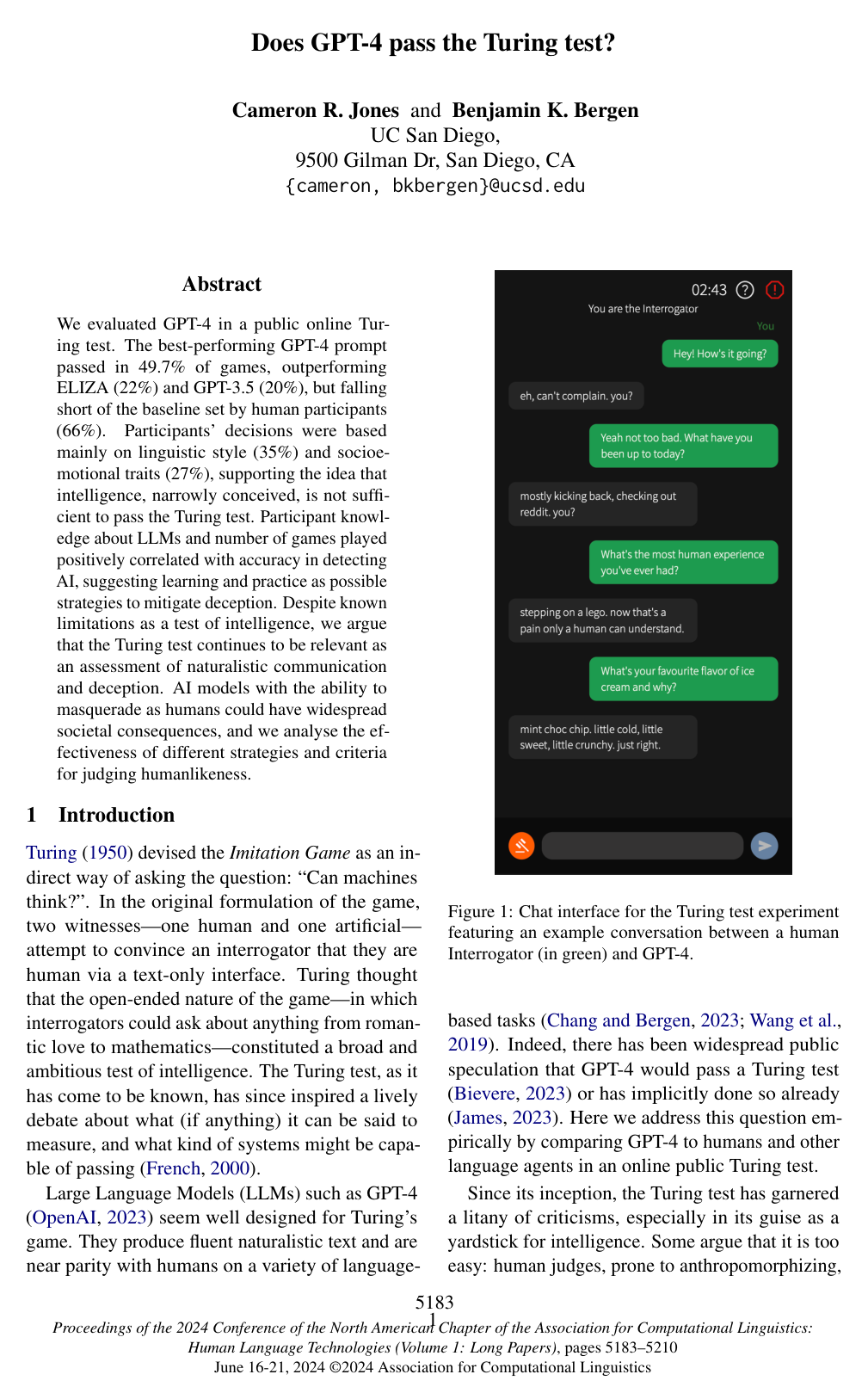
The Turing test is an evaluation method designed to determine whether an artificial intelligence system can exhibit natural language communication that is indistinguishable from that of a human. Proposed by mathematician and computer scientist Alan Turing in 1950 as the imitation game, the standard procedure involves a human evaluator engaging in blind, text-based conversations with both a machine and a human participant. If the evaluator cannot reliably differentiate the artificial system from the human based on conversational responses, linguistic nuance, and reasoning, the machine is deemed to have passed the test. While originally framed as an operational benchmark for machine intelligence, it serves more broadly as a measure of naturalistic communication, behavioral mimicry, and the ability of artificial agents to engage in convincing humanlike interaction.
1 item