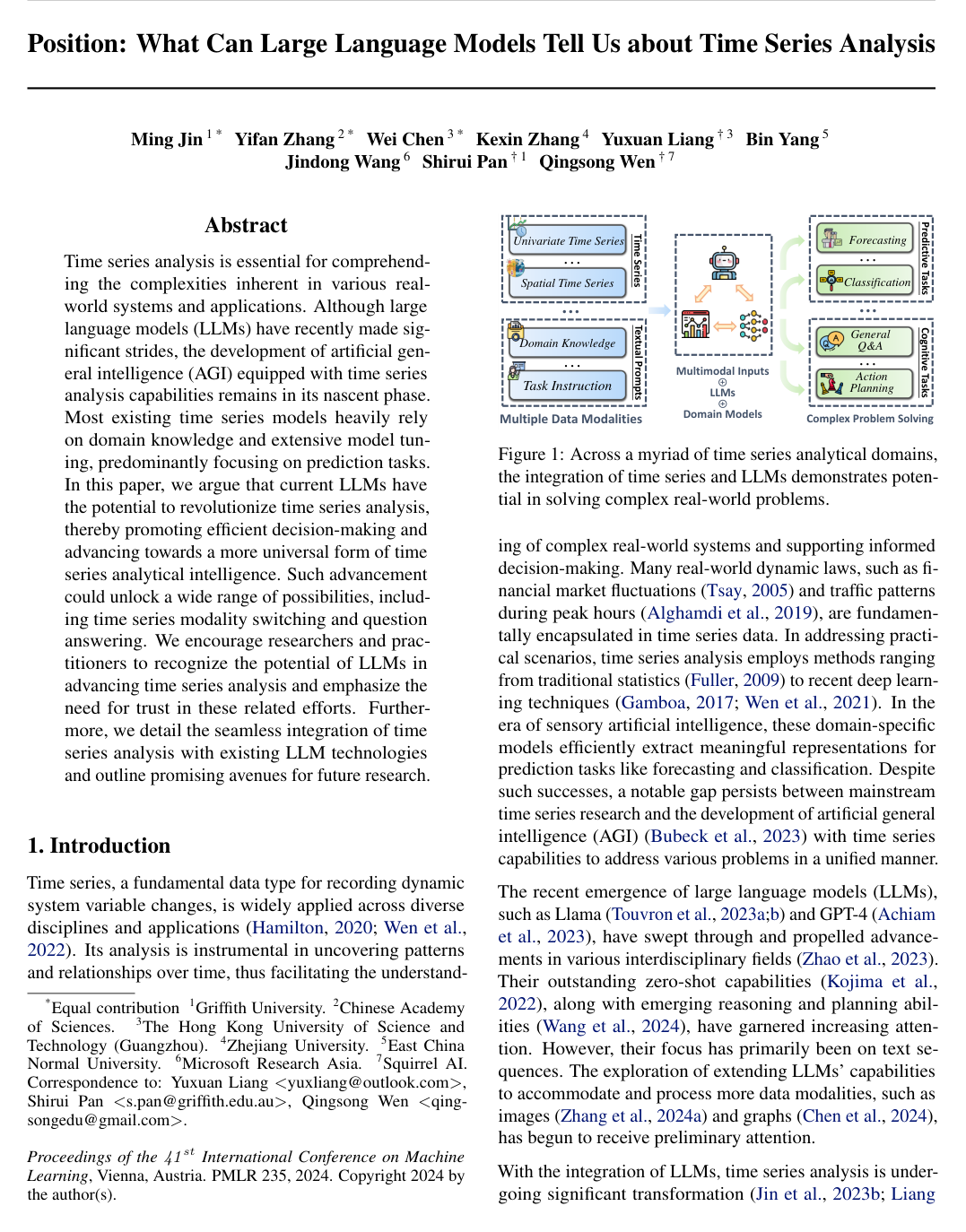
Time series modality switching refers to the capability of machine learning systems to translate, convert, or transition representations between sequential numerical time-series data and other distinct data modalities, such as natural language text, vision, or speech. Within multimodal architectures and foundation models, this process bridges the semantic and structural gap between continuous temporal signals and discrete symbolic tokens. By mapping temporal patterns into unified feature spaces, modality switching allows systems to interpret raw numerical sequences to produce textual descriptions, answers, or visual representations, as well as generate or forecast time series from natural language prompts and instructions.