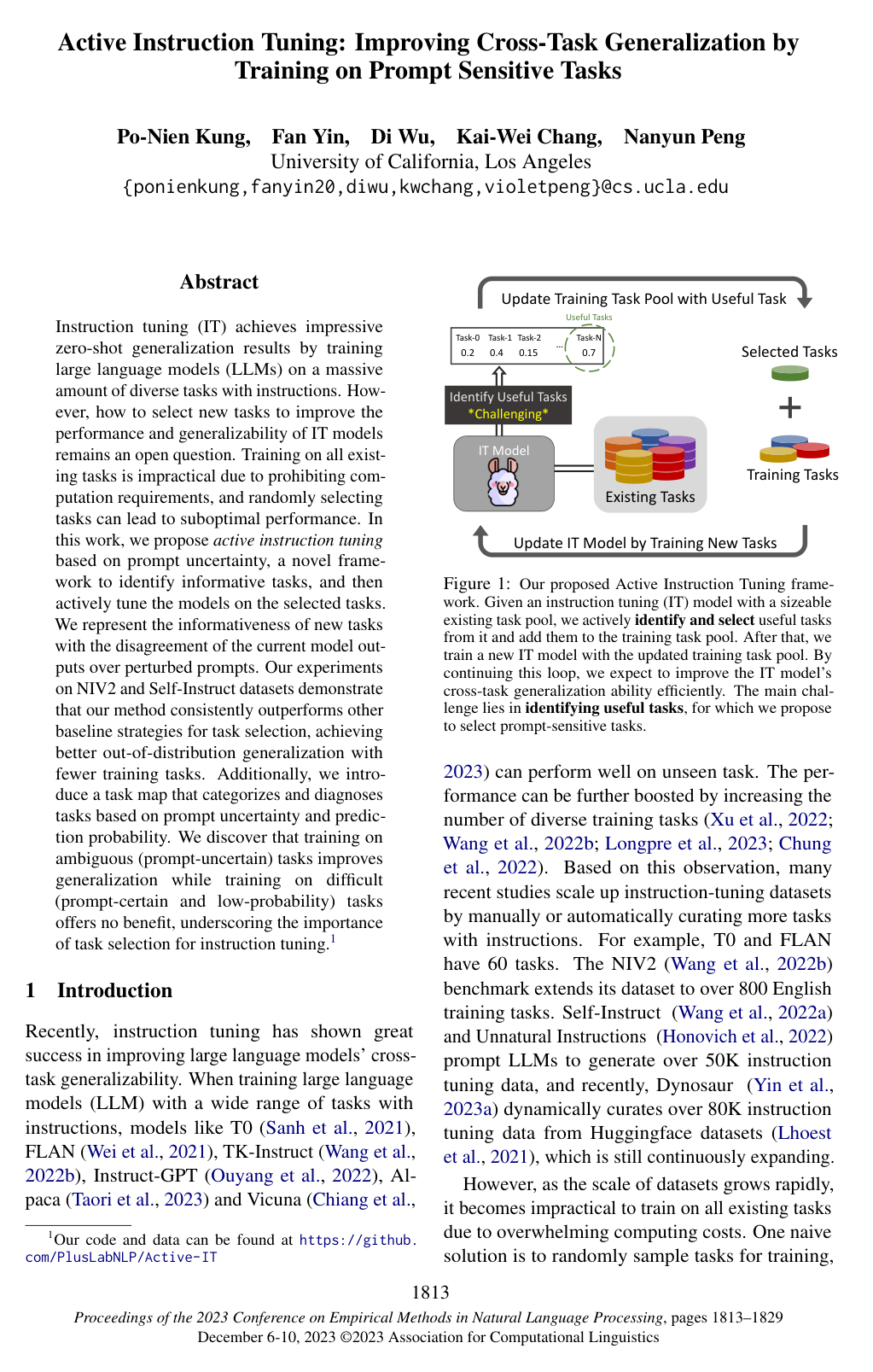
Task selection strategies are systematic methodologies used in machine learning to evaluate and choose a specific subset of tasks from a larger candidate pool for model training or fine-tuning. Rather than relying on arbitrary selection or computationally prohibitive exhaustive training across all available datasets, these strategies prioritize tasks according to metrics such as informativeness, model uncertainty, diversity, or task difficulty. By focusing training on the most beneficial tasks, these approaches aim to maximize data and computational efficiency while improving the overall capability, cross-task generalization, and out-of-distribution performance of trained models.