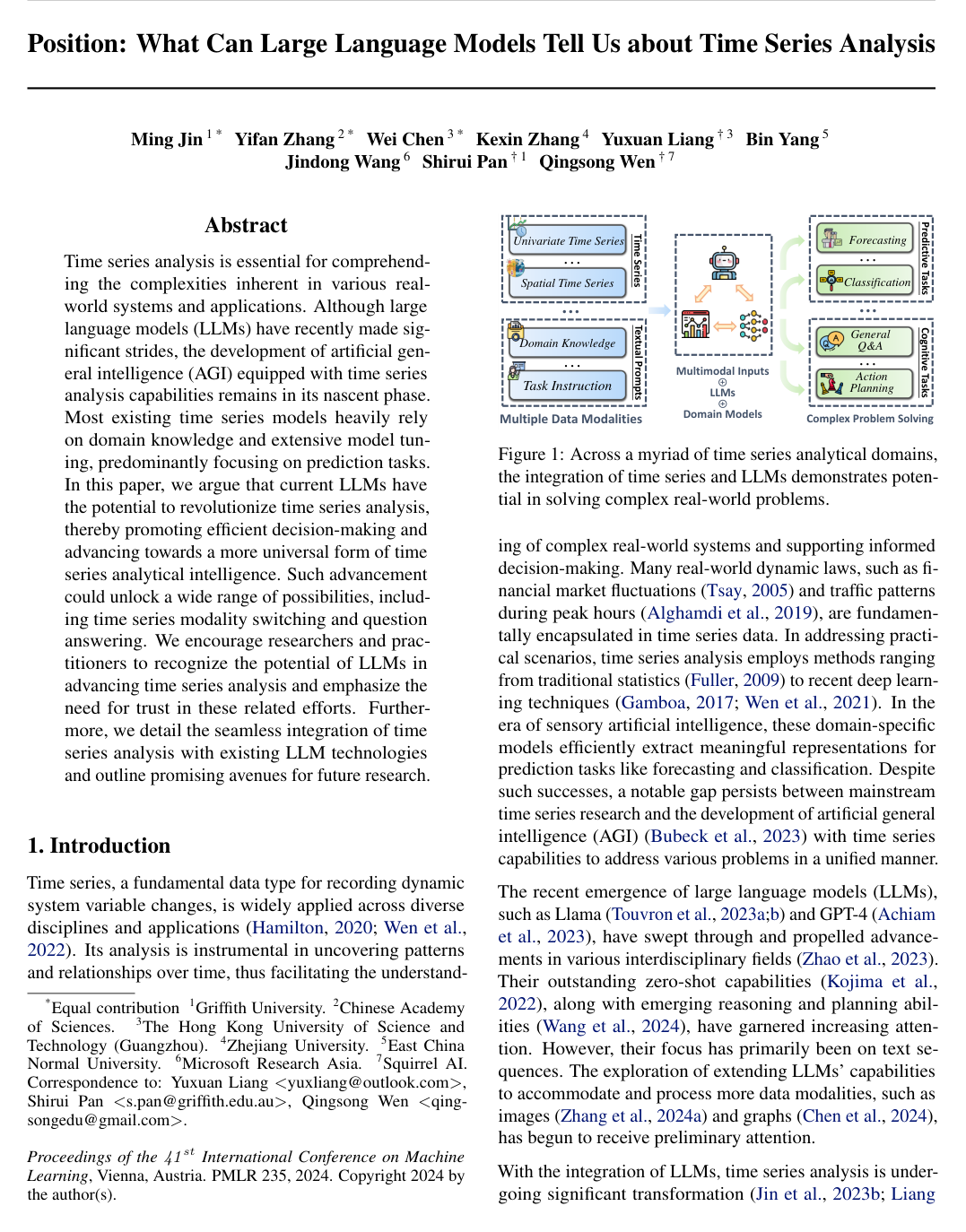
Single-agent time series systems are artificial intelligence frameworks in which an individual autonomous agent, typically powered by a large language model or foundation model, manages and executes end-to-end workflows for analyzing sequential temporal data. Unlike traditional static models that perform isolated operations such as basic forecasting or classification, a single-agent system functions as a centralized decision-maker capable of reasoning, planning, maintaining memory, and invoking external computational tools or specialized algorithms across multi-step processes. Through this unified architecture, the agent can interpret complex temporal patterns, adapt its analytical pipeline based on intermediate feedback, and facilitate natural language interactions, question answering, and multimodal data transitions for time series tasks.