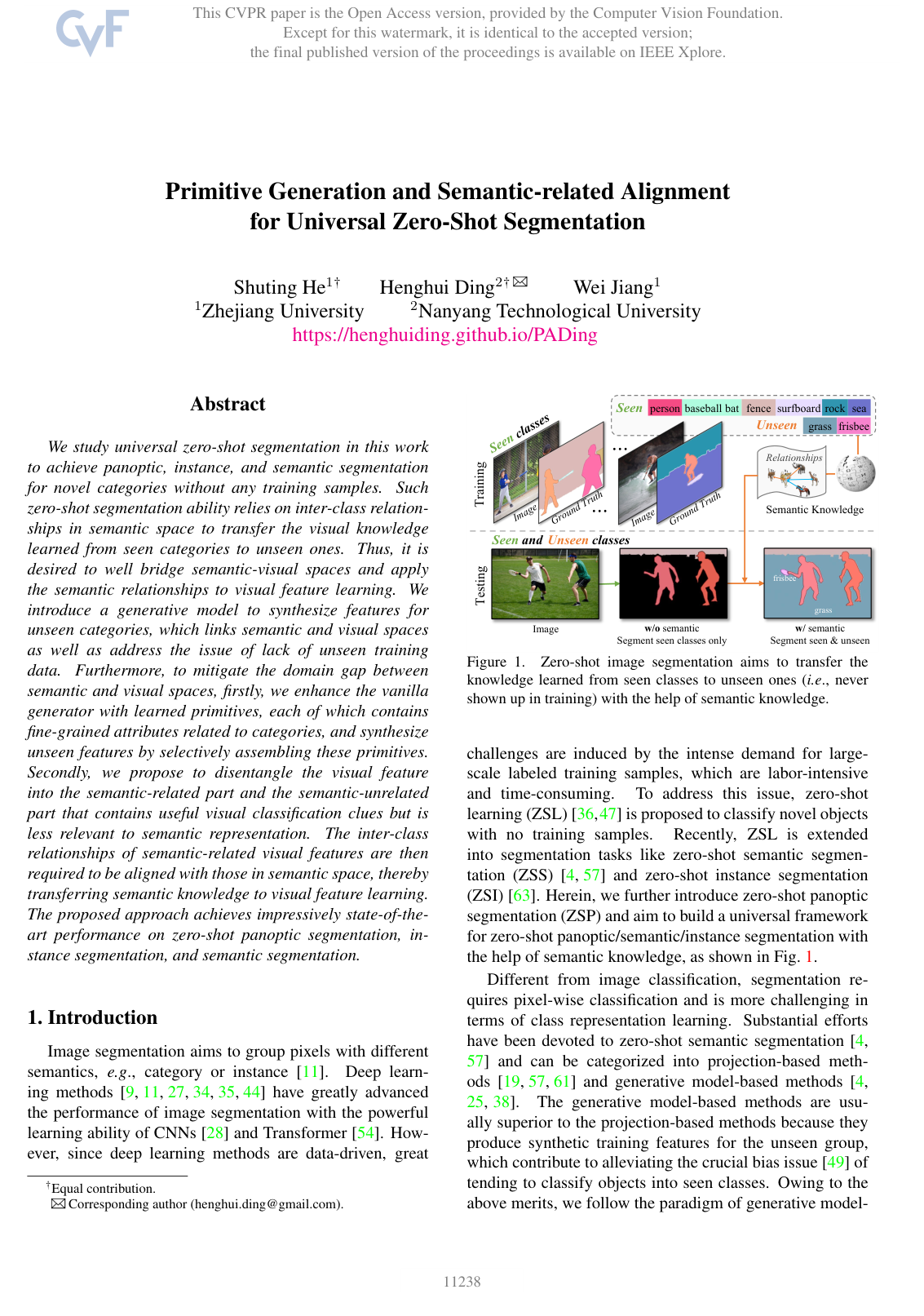
Semantic-related alignment is a machine learning process in multimodal and zero-shot representation learning that aligns visual feature components corresponding to conceptual descriptions with their counterpart representations and inter-class relationships in a semantic embedding space. Because high-dimensional visual representations often include variations that lack direct textual or category-level equivalents, models isolate the semantic-related components from semantic-unrelated visual clues. The alignment then enforces structural and relational consistency between these semantic-relevant visual features and class relationships in the semantic space, effectively bridging the cross-modal domain gap and facilitating the transfer of visual knowledge from seen categories to novel, unseen categories.