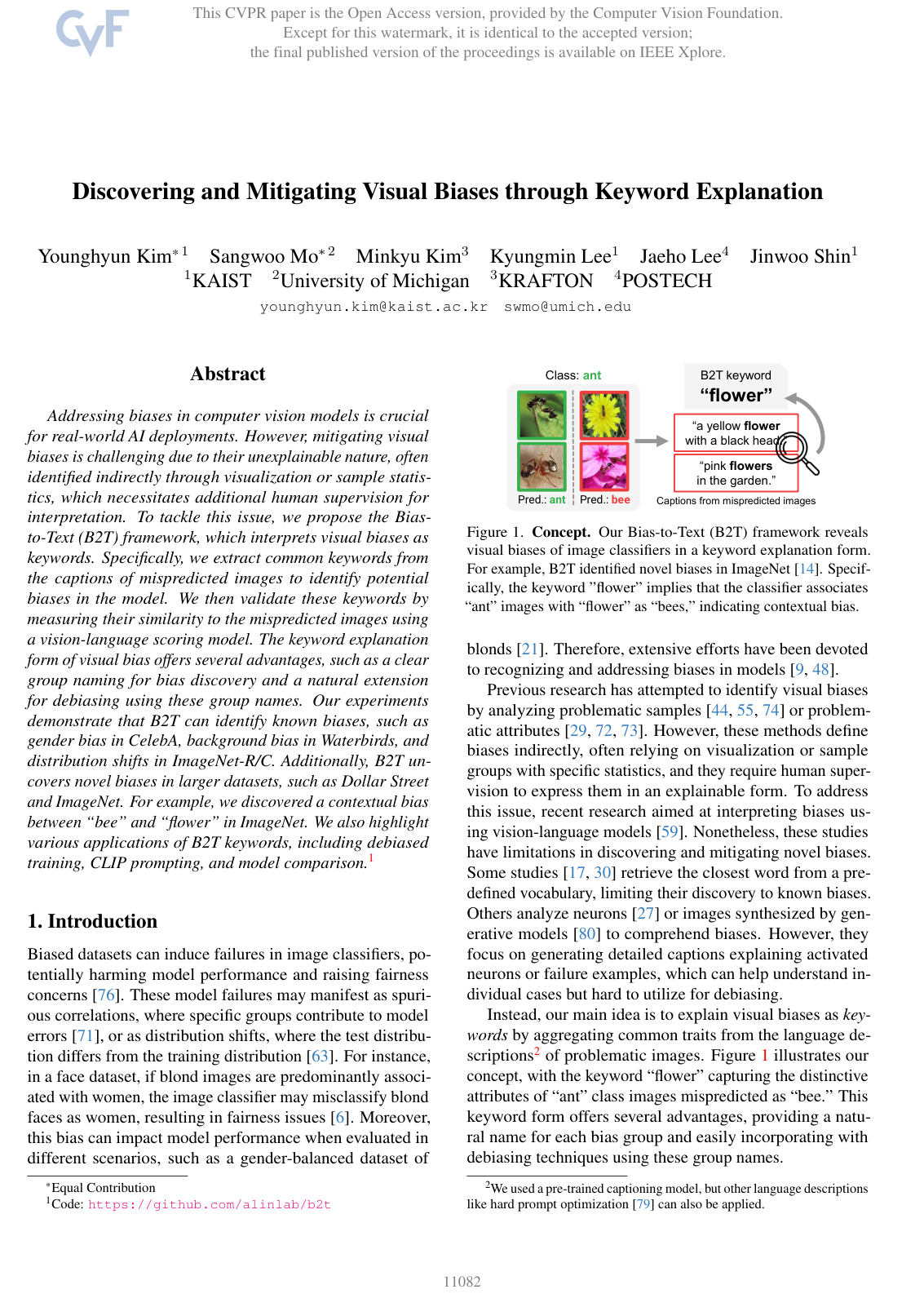
Sample-wise bias refers to a systematic distortion, confounding factor, or spurious correlation associated with individual data points in a machine learning dataset rather than the aggregate dataset as a whole. In predictive modeling and computer vision, it characterizes how specific instances contain misleading, non-causal cues—such as confounding background elements, demographic attributes, or co-occurring context—that cause a model to rely on unintended shortcuts during learning or inference. Identifying and evaluating bias at the sample level enables practitioners to detect fine-grained failure patterns, assign granular subgroup labels to individual examples, and apply targeted debiasing strategies such as instance reweighting, data filtering, or distributionally robust optimization to improve overall fairness and generalization.