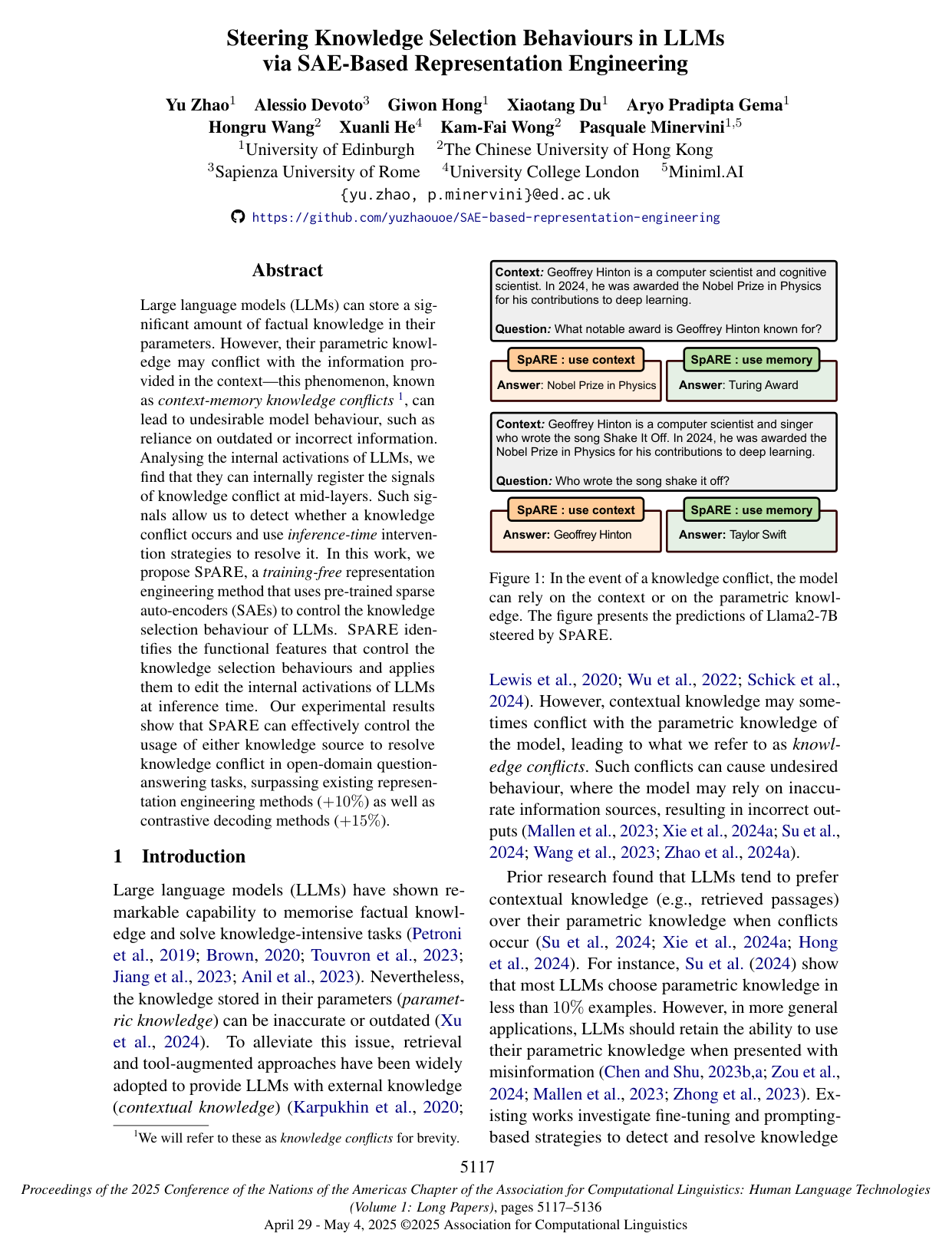
SAE-based representation engineering is a model-steering and interpretability framework that uses sparse autoencoders to analyze and manipulate the internal hidden activations of neural networks, particularly large language models. Rather than modifying model parameters through retraining or intervening directly on dense, polysemantic activation vectors, this approach projects internal representations into an expanded, sparse latent space where individual features correspond to interpretable concepts or functional behaviors. By identifying the specific latent features associated with targeted behaviors or cognitive states, practitioners can modify activations during inference to reliably steer model outputs, resolve internal information conflicts, and enhance behavioral alignment without altering the underlying model weights.