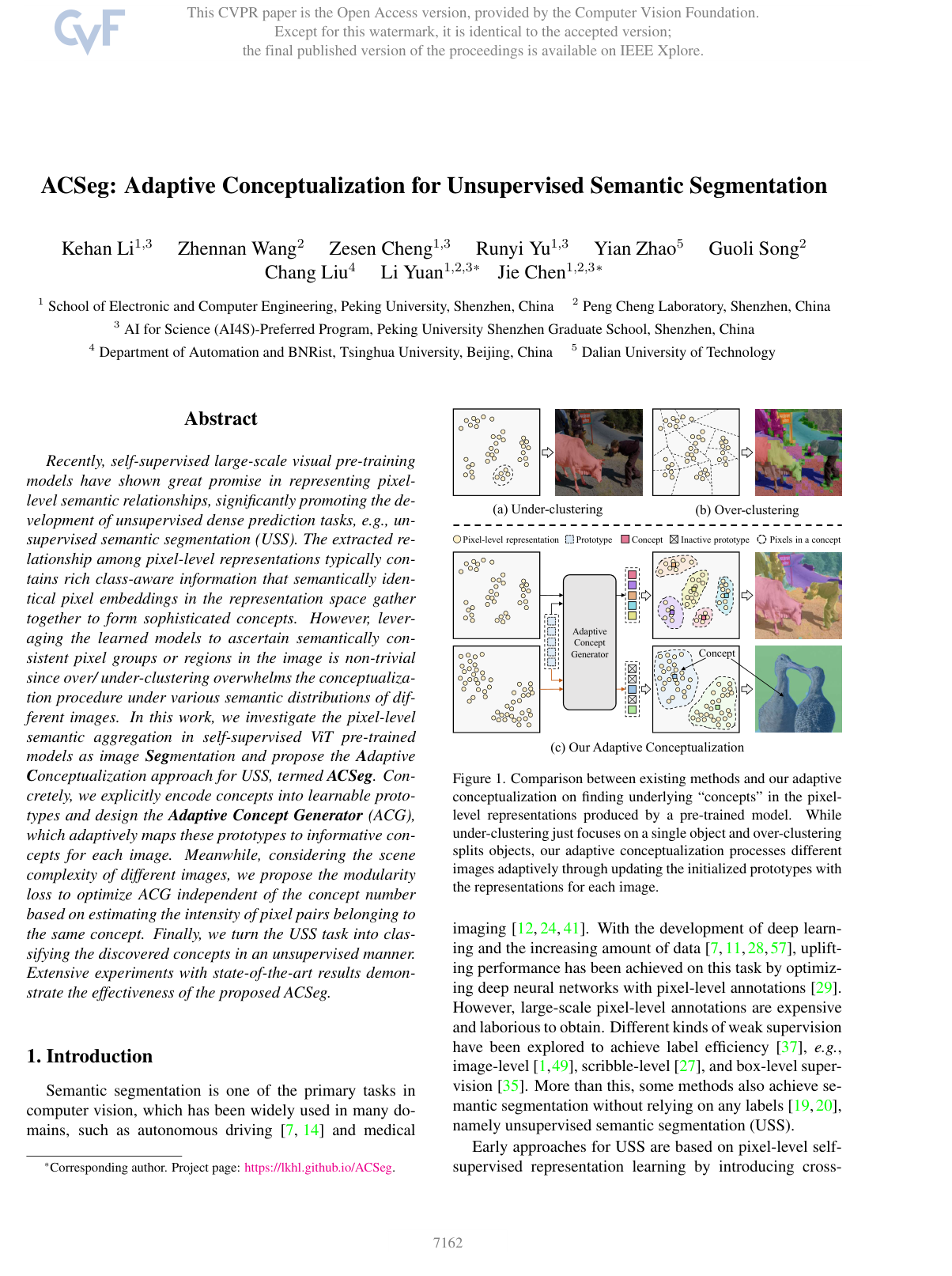
Region-level representations are feature embeddings in computer vision that capture the visual, spatial, and semantic attributes of specific coherent sub-areas or segments within an image. Unlike global representations that summarize an entire image or pixel-level representations that describe individual coordinate points, region-level representations aggregate localized visual information corresponding to distinct objects, parts, or semantic concepts. They are typically generated by pooling, clustering, or projecting features across bounded areas, masks, or contiguous groups of pixels that share visual characteristics. These representations serve as a crucial intermediate level of abstraction in dense visual perception tasks, facilitating localized reasoning, object detection, instance segmentation, and semantic segmentation by bridging granular pixel data with higher-level conceptual understanding.