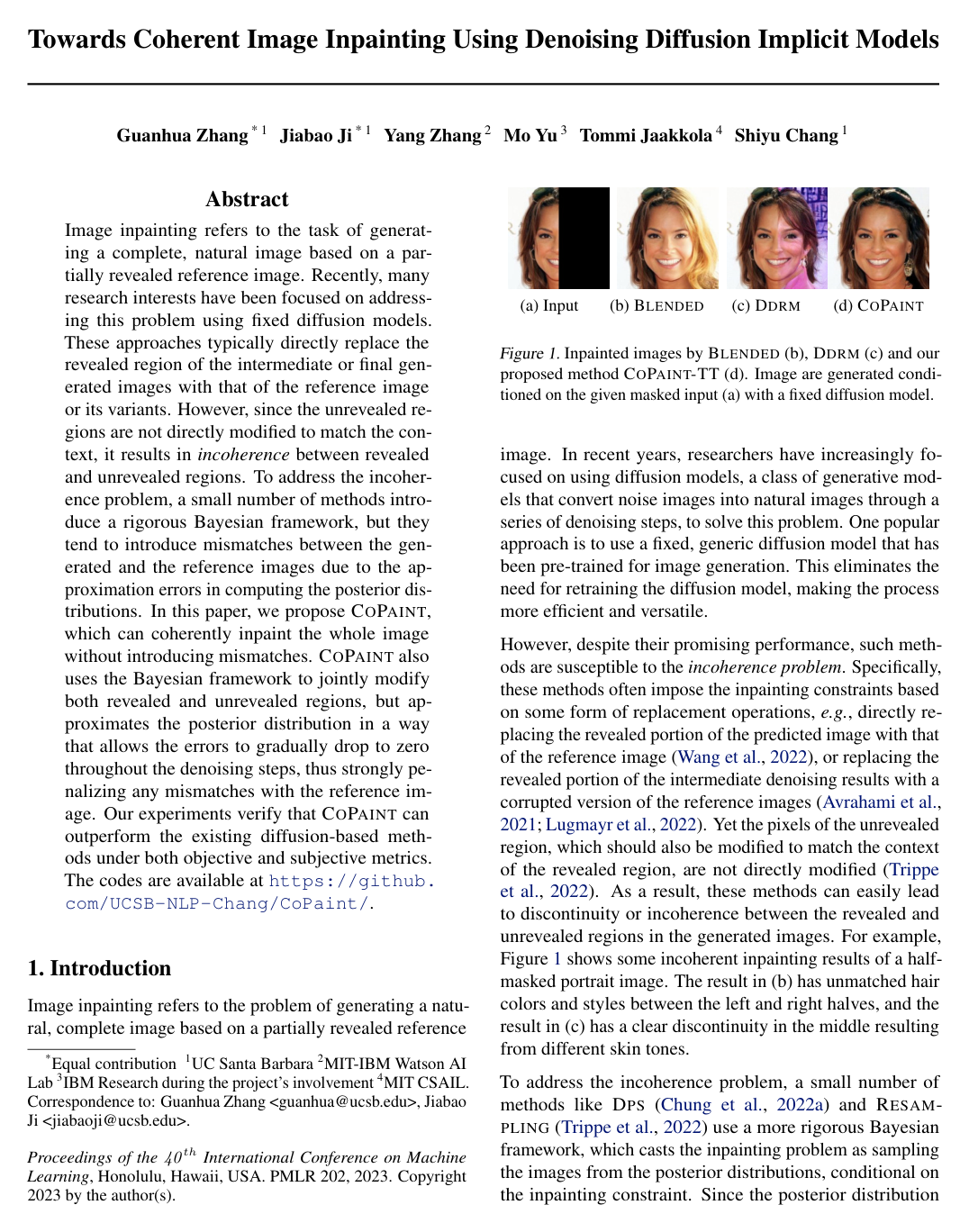
keyword
prior regularization
Prior regularization is a technique in machine learning, statistics, and inverse problem solving that incorporates prior knowledge or an assumed probability distribution into an optimization objective to constrain solutions and prevent overfitting. Grounded in Bayesian principles, it operates by pairing a data-fidelity term, which measures consistency with observed evidence, with a regularization penalty derived from a prior distribution over plausible states or parameters. This penalty guides the estimation or generative process toward solutions that conform to expected data characteristics, such as smoothness, structural consistency, or learned natural distributions. By biasing the optimization toward likely configurations, prior regularization stabilizes ill-posed tasks and ensures that reconstructed or estimated outputs remain coherent with established domain distributions.
1 item