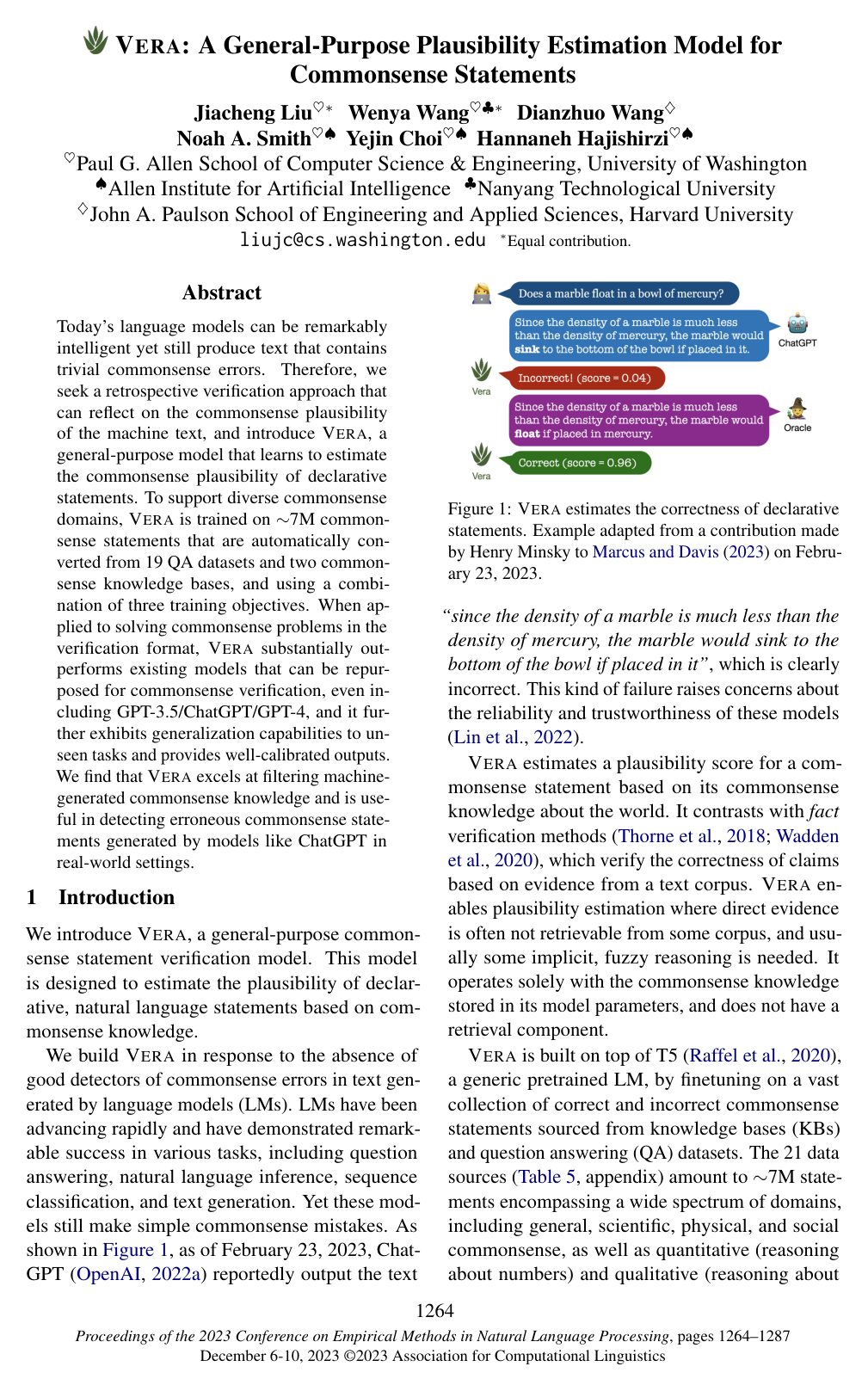
Plausibility estimation is the computational process of determining the degree to which a statement or piece of text aligns with general commonsense knowledge and everyday reality. Rather than verifying strict factual truth against an authoritative record, plausibility estimation evaluates whether an assertion is reasonable, likely, or conceptually and physically coherent in the real world. In artificial intelligence and natural language processing, this task functions primarily as an automated verification method used to evaluate machine-generated text, identify commonsense reasoning errors and hallucinations, filter candidate knowledge base assertions, and score the credibility of model outputs.