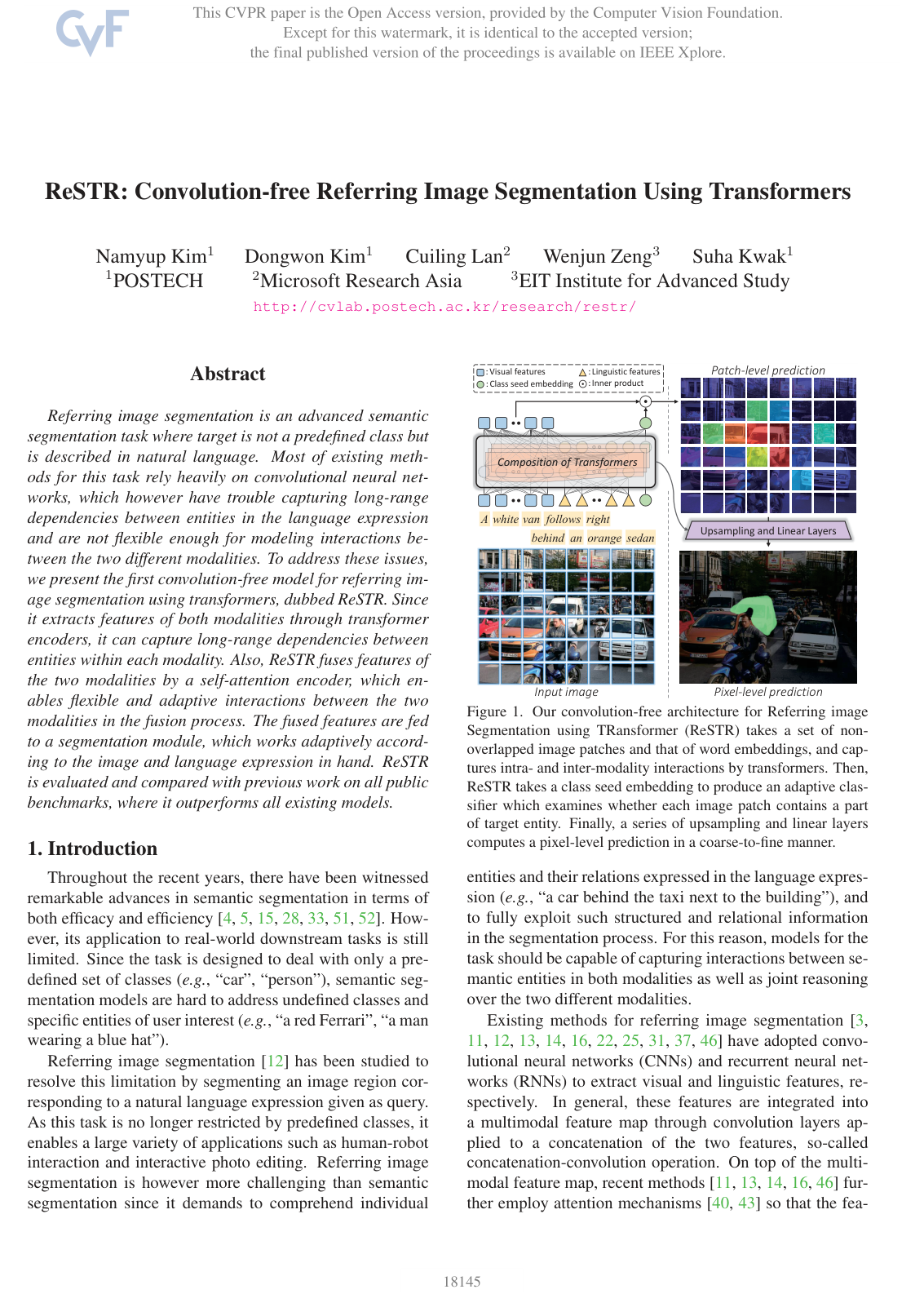
Patch-wise visual features are numerical representations extracted from localized spatial sub-regions, or patches, of an image. In modern computer vision architectures such as Vision Transformers, an input image is partitioned into a grid of distinct patches, which are linearly projected and processed through neural network layers. Each resulting feature vector corresponds to a specific patch, capturing local visual patterns such as color, texture, and shape while integrating global contextual information through self-attention mechanisms. By maintaining localized spatial information across the image grid, these features enable neural networks to perform fine-grained visual recognition, cross-modal alignment, and dense prediction tasks such as semantic segmentation and object detection.