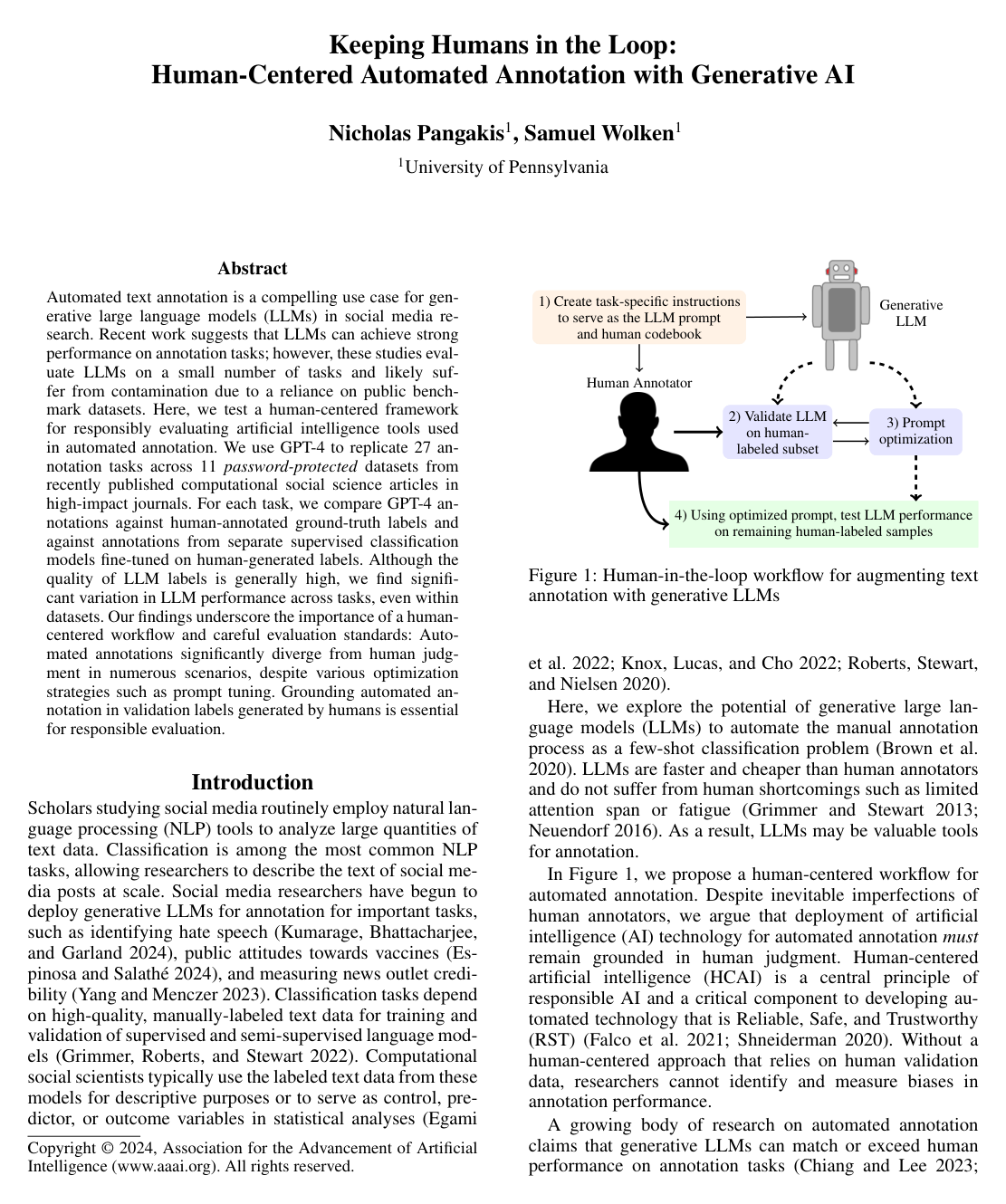
Multi-stage annotation refers to a structured data labeling workflow where the process of assigning labels to data is divided into multiple sequential phases rather than completed in a single pass. In data science and machine learning pipelines, this approach often begins with an initial step, such as preliminary tagging or automated pre-annotation by computational models, followed by subsequent phases dedicated to verification, error correction, refinement, and consensus resolution by human reviewers. Decomposing complex or nuanced labeling tasks into distinct stages helps scale annotation pipelines efficiently while maintaining high data quality, reducing label noise, and ensuring that dataset benchmarks reliably reflect rigorous evaluation standards.