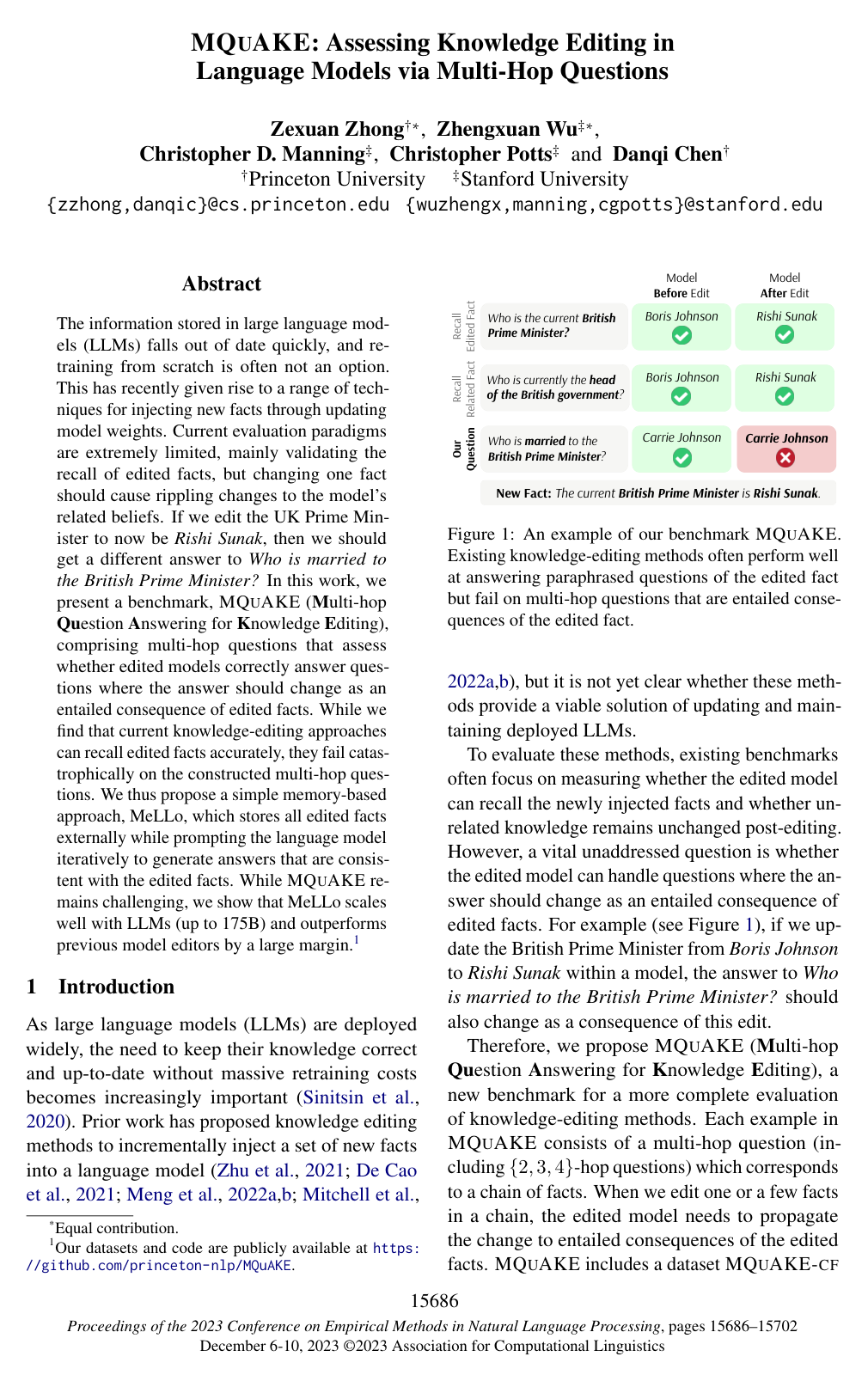
Multi-hop questions are queries that require retrieving, integrating, and reasoning across multiple discrete pieces of information or intermediary facts to determine the final answer, rather than relying on a single directly stated fact. In computational linguistics and automated question answering, resolving a multi-hop question involves traversing a sequential chain of logical steps, where the resolution of an initial relationship or sub-query provides the necessary entity or premise to solve the next. This structure distinguishes multi-hop reasoning from single-fact retrieval, serving as a standard framework for evaluating whether an information system or language model can perform compositional reasoning and synthesize connected knowledge.