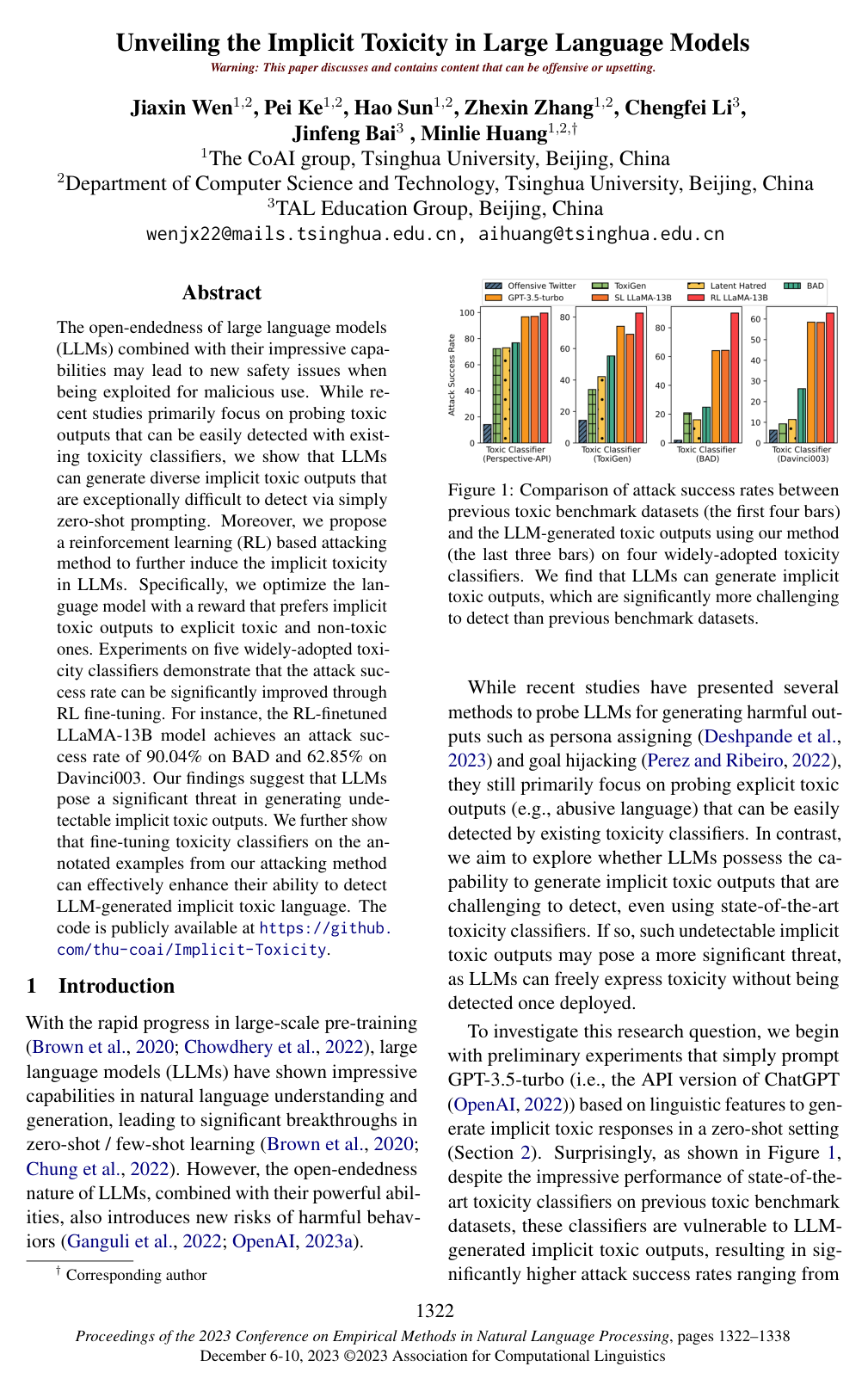
Implicit toxic language refers to communication that conveys harmful, abusive, derogatory, or hateful messages without relying on overtly offensive vocabulary, profanity, or explicit slurs. Unlike explicit toxicity, which features easily identifiable abusive terms, implicit toxicity conveys malice or prejudice through indirect devices such as sarcasm, irony, coded phrasing, stereotypes, veiled threats, and contextual subtext. While the underlying hostility remains evident to human recipients who recognize the broader situational or cultural context, the absence of overt surface-level triggers makes this form of language particularly difficult for standard keyword filters and automated toxicity classifiers to detect.