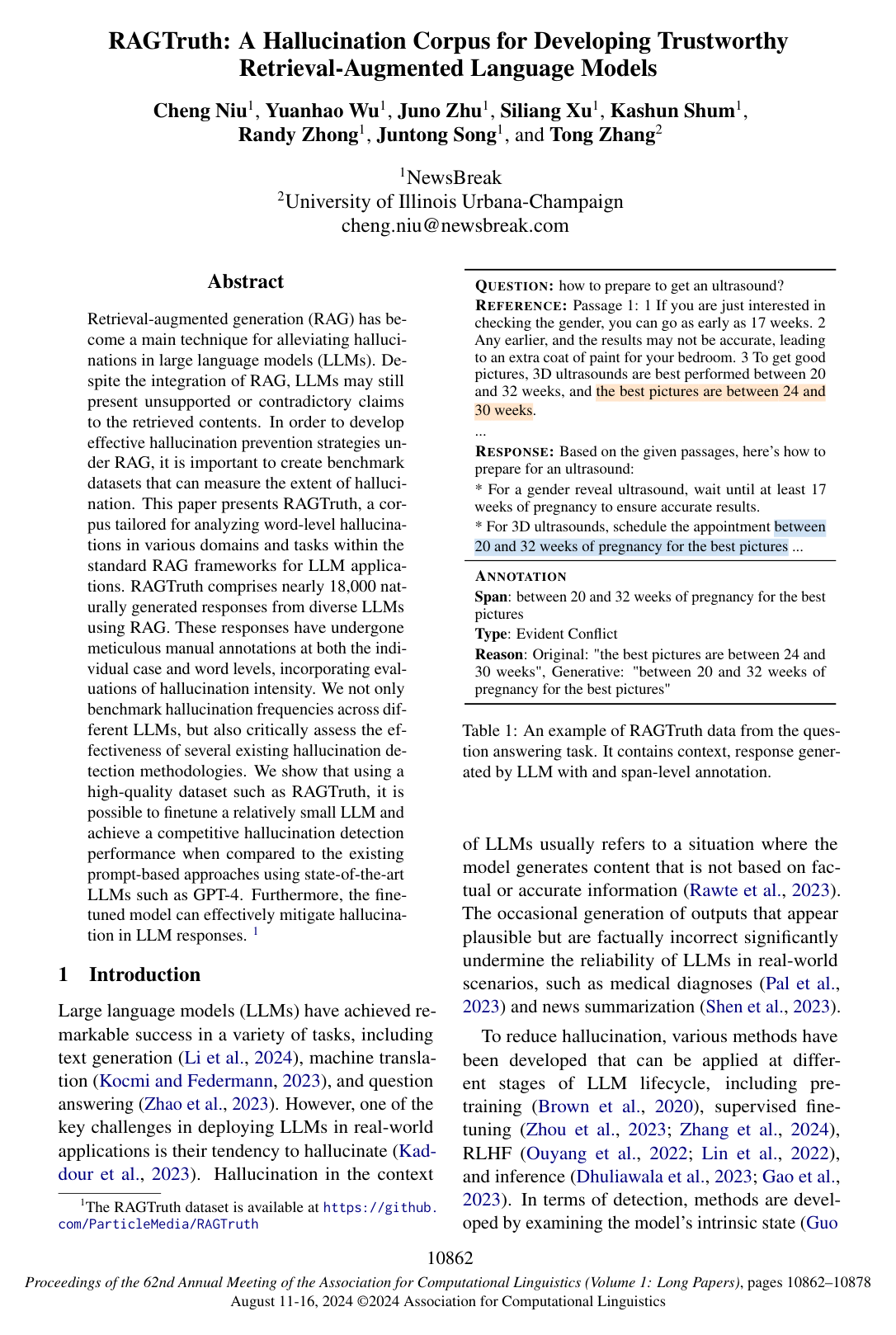
Factual hallucinations refer to outputs generated by artificial intelligence models, such as large language models, that present fabricated, incorrect, or unverifiable information as true facts. In natural language processing, these errors occur when a model produces text that directly contradicts established real-world knowledge or fails to align with provided reference materials, such as retrieved source documents. Such inaccuracies can manifest as invented events, false relationships, or fabricated citations, often delivered with high grammatical fluency and apparent confidence. Identifying and mitigating factual hallucinations is essential for ensuring the truthfulness, consistency, and practical reliability of automated generative systems.