Built independently by an author, for readers. Read the story and support ChapterPal

keyword

expert systems

An expert system is an artificial intelligence program designed to emulate the decision-making and problem-solving abilities of a human expert within a specific domain [1]. It typically consists of a knowledge base, which stores structured facts and domain-specific rules, and an inference engine, which applies logical rules and heuristics to the stored information to deduce answers or recommend actions [1]. Developed extensively during the early evolution of artificial intelligence, expert systems rely on explicit knowledge engineering rather than purely statistical learning, allowing them to provide structured, rule-based reasoning for specialized tasks such as medical diagnosis, financial analysis, planning, and engineering design [1].

1 item

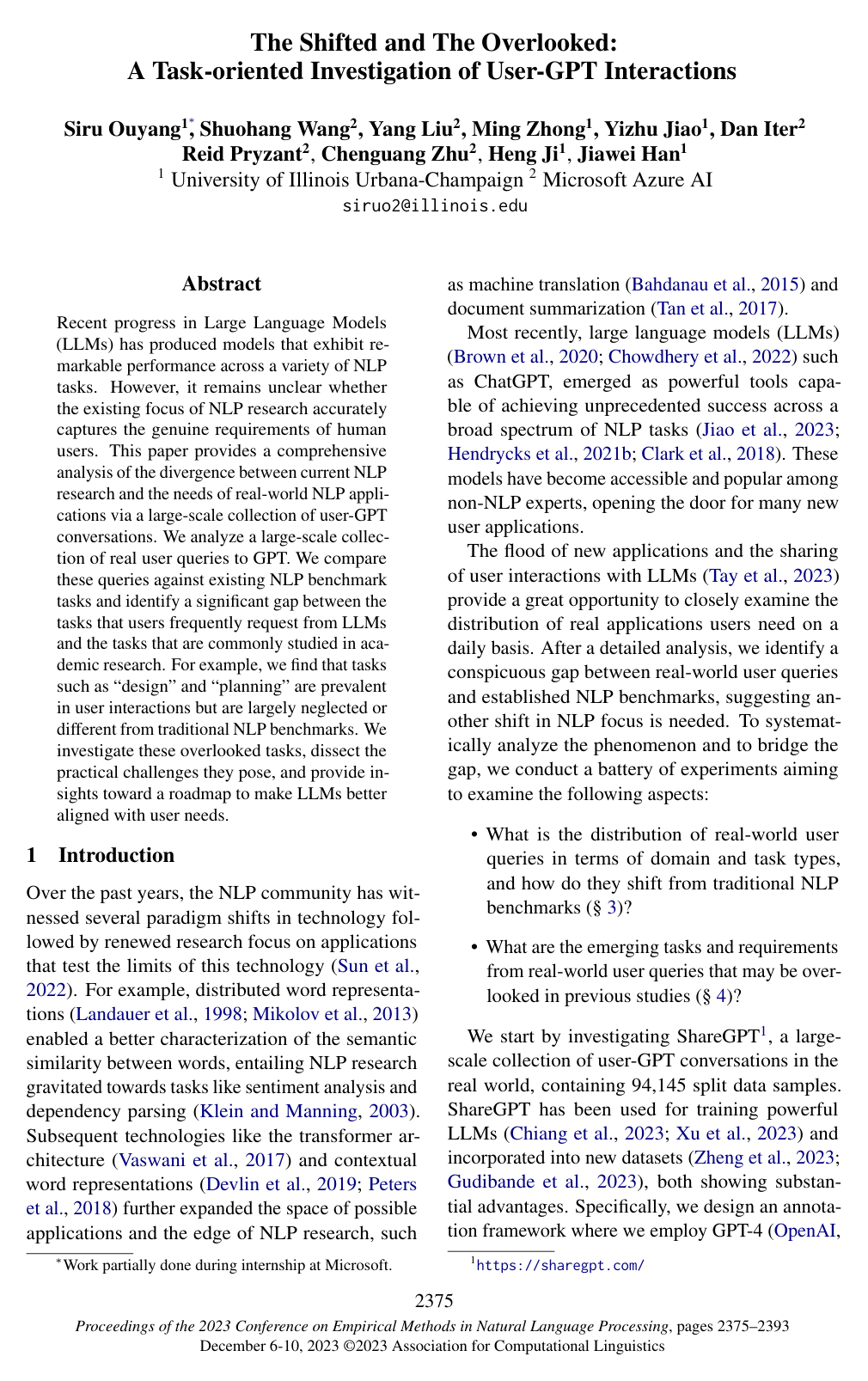
The Shifted and The Overlooked: A Task-oriented Investigation of User-GPT Interactions

The Shifted and The Overlooked: A Task-oriented Investigation of User-GPT Interactions

Siru Ouyang, Shuohang Wang, Yang Liu, Ming Zhong, Yizhu Jiao, Dan Iter, Reid Pryzant, Chenguang Zhu, Heng Ji, Jiawei Han

OrganizationsMicrosoftUniversity of Illinois Urbana-Champaign

Why you should read this

Reveals a critical misalignment between academic NLP benchmarks and real-world needs by analyzing over 94,000 user-GPT interactions, identifying frequently requested yet neglected tasks such as planning, designing, and advising.

Recent progress in Large Language Models (LLMs) has produced models that exhibit remarkable performance across a variety of NLP tasks. However, it remains unclear whether the existing focus of NLP research accurately captures the genuine requirements of human users. This paper provides a comprehensive analysis of the divergence between current NLP research and the needs of real-world NLP applications via a large-scale collection of user-GPT conversations. We analyze a large-scale collection of real user queries to GPT. We compare these queries against existing NLP benchmark tasks and identify a significant gap between the tasks that users frequently request from LLMs and the tasks that are commonly studied in academic research. For example, we find that tasks such as “design” and “planning” are prevalent in user interactions but are largely neglected or different from traditional NLP benchmarks. We investigate these overlooked tasks, dissect the practical challenges they pose, and provide insights toward a roadmap to make LLMs better aligned with user needs.

Added

2026-10-03