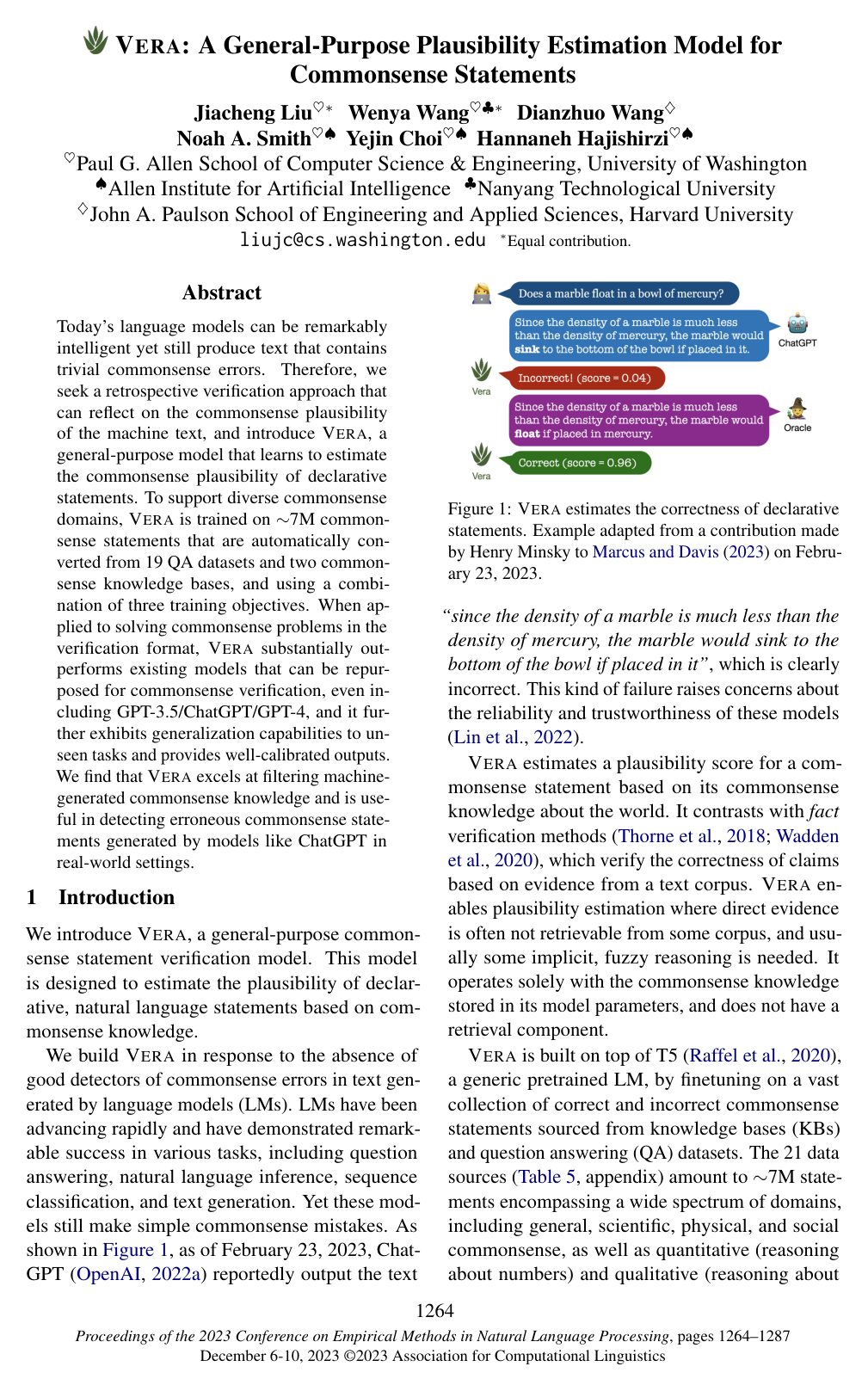
Commonsense verification is the computational task of assessing whether a statement or assertion is plausible according to everyday, real-world human understanding. Unlike formal fact-checking that references specialized databases or academic records, commonsense verification focuses on judging the likelihood and validity of ordinary physical, social, and practical scenarios that people intuitively comprehend. In artificial intelligence and natural language processing, this process typically involves estimating the plausibility of declarative claims to detect logical absurdities, filter flawed machine-generated text, and ensure that automated reasoning aligns with shared human knowledge.