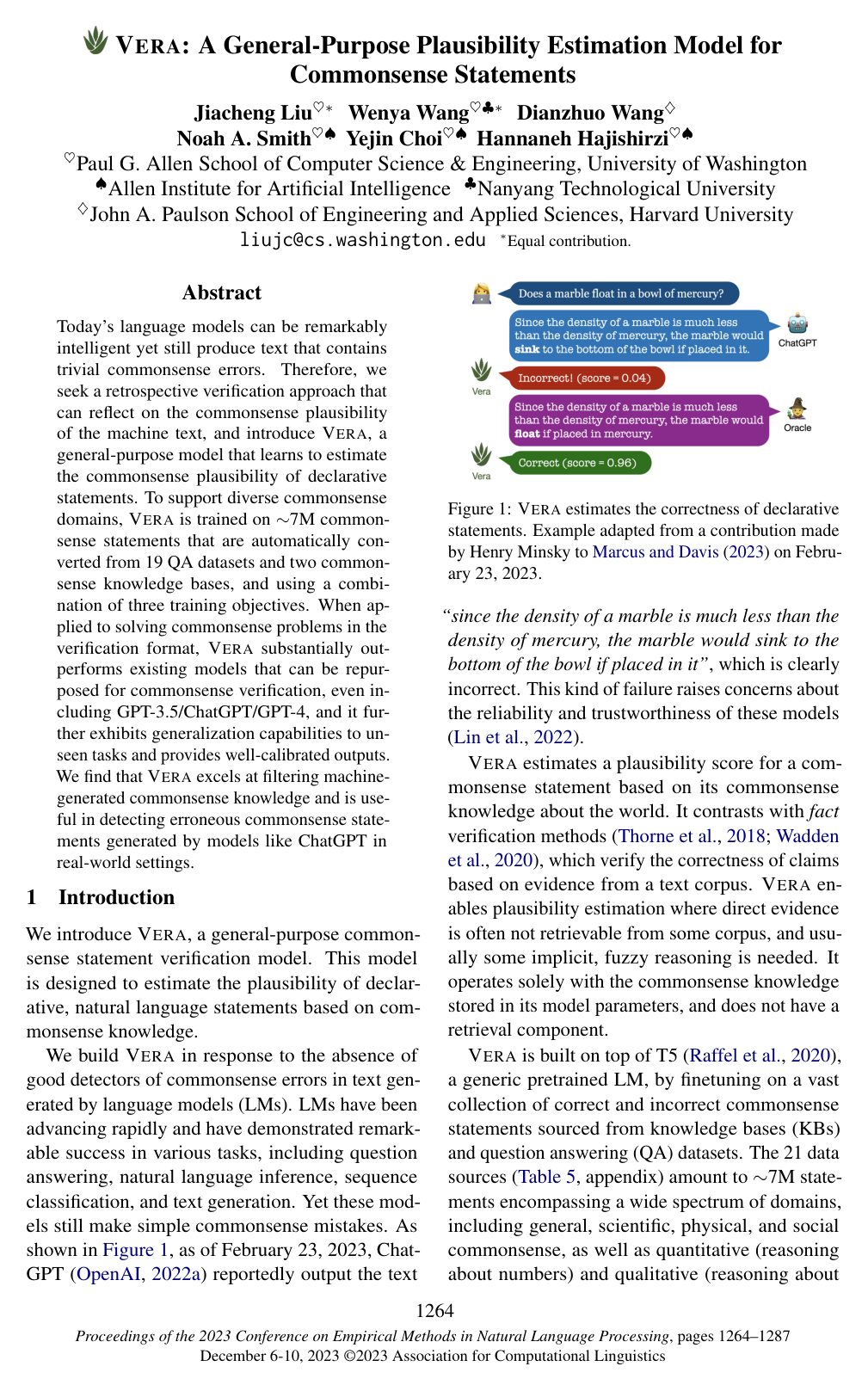
Commonsense question answering is a natural language processing task in which computational systems answer questions that require everyday background knowledge and intuitive reasoning rather than explicitly provided reference text or specialized domain expertise. Unlike traditional question answering benchmarks that evaluate reading comprehension or direct information retrieval from a document, commonsense question answering assesses a model ability to draw upon implicit assumptions about the physical, social, and temporal world that humans take for granted. This includes reasoning about cause-and-effect relationships, basic object properties, human motivations, and social conventions to determine the most plausible answer or outcome for a given scenario.